Alpine’s early-2026 bounce has been one of the paddock’s more uncomfortable surprises — uncomfortable, that is, for the teams that assumed Enstone would need a year simply to remember what competing feels like.
From being marooned at the back in 2025, Alpine has opened the new regulation cycle with a car that’s immediately credible across the calendar’s first handful of very different demands. Pierre Gasly’s points-scoring run through the opening three Grands Prix has done more than flatter a decent Sunday here and there; it’s helped push Alpine up to fifth in the constructors’ standings, a sentence that would’ve sounded like satire this time last year.
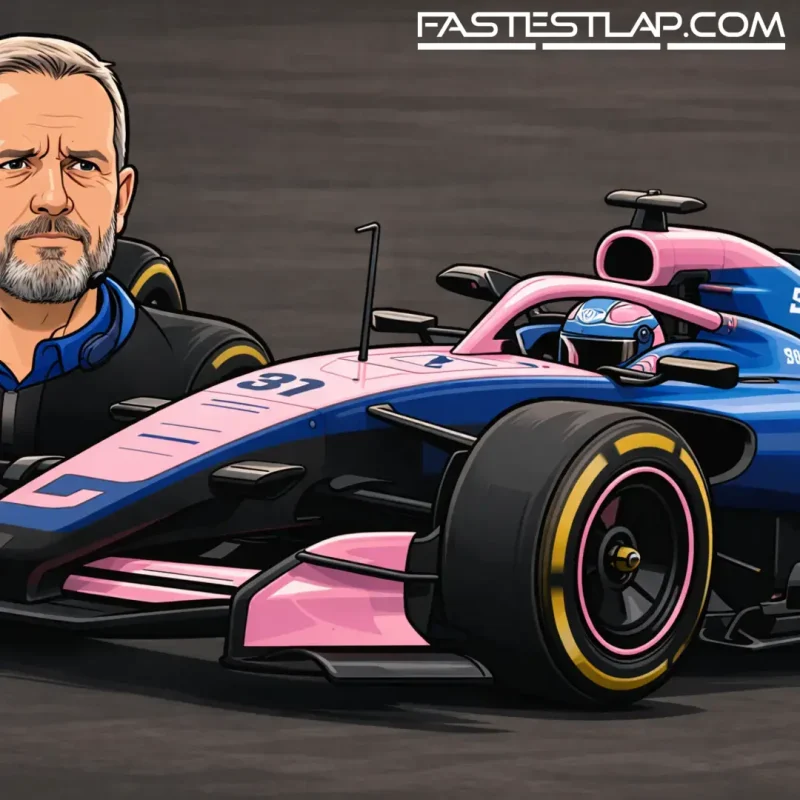
There’s an important caveat, though. This isn’t a miracle car with no vices — and Alpine isn’t pretending it is. Managing director Steve Nielsen has been unusually clear about where the A526 is giving performance away, and it’s precisely the kind of limitation that stops a “good upper-midfield” package from becoming an occasional nuisance for the front-runners.
“We’ve got some problems with high-speed understeer, which we need to fix,” Nielsen said at Suzuka. “High-speed changes in direction, that’s probably the biggest single weakness on the car we’ve got this year.
“So we knew coming here, Sector One would be tricky, and it is. It manifests itself as understeer. So we have high-speed understeer. We saw some of that in Bahrain.”
Suzuka is a brutal place to go looking for confirmation, because it doesn’t politely hint at a shortcoming — it puts it on a billboard. If your car resists rotation through the first sector’s fast direction changes, you’re not just bleeding lap time; you’re also forcing your drivers into that awkward compromise between carrying speed and keeping the front end alive for the next corner. Over a stint, that tends to become a tyre story as much as an aero story.
And yet, the key point in Nielsen’s assessment wasn’t the problem itself. It was what he said around it: that the rest of the baseline looks “pretty good”, especially on long runs and high fuel, and that the car is competitive against the teams Alpine expects to be fighting.
That matters because Alpine has already taken a major strategic swing with this project. The team effectively wrote off development of its 2025 car early to attack the 2026 rules with full focus — “low-hanging fruit” is how it’s been framed — and so far the logic is holding up. There’s a coherence to the A526 in race trim that you simply didn’t see from Alpine last season.
It’s also impossible to ignore the new power unit picture. Alpine is now a Mercedes customer team for 2026 after stepping away from being a manufacturer itself, and with Mercedes High Performance Powertrains widely regarded as setting the early benchmark under these rules, Alpine has clearly gained from that decision. The more interesting question is whether the A526 is merely a tidy, non-dramatic chassis being elevated by strong horsepower and energy deployment — or whether David Sanchez’s technical group has genuinely built a platform with enough aerodynamic headroom to keep moving forward.
Japan brought Alpine’s first visible step on that development path, and the timing felt telling. Suzuka’s first sector was always going to stress the car’s biggest weakness, so arriving with updates there was less about chasing a headline and more about drawing a hard line under the priority list.
The championship table says Alpine is already doing its job against the direct competition. Haas and Racing Bulls have been the most obvious points rivals so far, while Williams and Aston Martin have appeared to lose ground with the regulation shift. And even Red Bull has been close enough to bring a certain mischievous energy to Gasly’s weekend: he finished ahead of Max Verstappen at Suzuka after spending the race digging in and refusing to yield.
Gasly, for his part, sounds like a driver trying to recalibrate his internal expectations after a year spent living on scraps. “I’m just happy because the car seems to work on all types of tracks, really,” he said after Japan, pointing to the confidence boost that comes from a machine that doesn’t demand a different personality every Friday.
But there’s a sharper edge to what he’s saying once you strip away the politeness. Gasly isn’t interested in Alpine merely winning the midfield skirmish; he’s looking up the road and asking the team to aim there, even if the steps are small.
He framed it as a choice between two mindsets: obsessing over staying top of the midfield — difficult enough with Haas and VCARB close — or committing to the harder project of “jumping on the forward train” and slowly closing on the leading group. It’s the kind of talk you hear from a driver who believes the car has more in it than the lap time currently shows, and who doesn’t want the team to get comfortable just because the points column looks healthier than it did a year ago.
Of course, optimism in April has a habit of turning into realism by June. The real exam for Alpine is the one Nielsen and Gasly both hinted at: development rate. Getting the opening concept right is one thing; keeping pace as others understand their own cars is another. There’s also the historical warning sign Gasly’s form inevitably invites — the idea of a customer team starting strongly thanks to a leading power unit, only to be reeled in once the field’s aero development accelerates.
Alpine insists it won’t be backing off this time. Executive advisor Flavio Briatore was blunt after Japan: “With the short break, we absolutely won’t stand still. We will be working hard at Enstone to add more performance to the car and continue to give equal opportunity to both drivers to perform and score points.”
That last line matters as much as the first. Alpine’s 2026 start has given it momentum, but it’s also raised the stakes internally. When a team goes from last to credible, the margins are suddenly worth fighting over — in the wind tunnel, in the upgrade schedule, and in how each driver gets to access the car’s potential.
For now, though, the story is refreshingly simple. Alpine has built itself a real racing car again. It’s quick enough to matter, flawed enough to be honest, and — crucially — clear-eyed about what needs fixing. High-speed understeer might not be a glamorous problem to admit to, but it’s the right kind of problem to have when your bigger fear is irrelevance.