Bernie Ecclestone calls Hamilton-to-Ferrari a “financial marketing project” as patience wears thin in Maranello
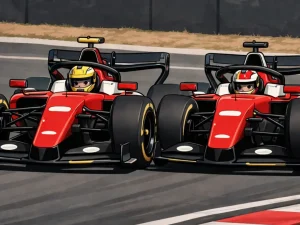
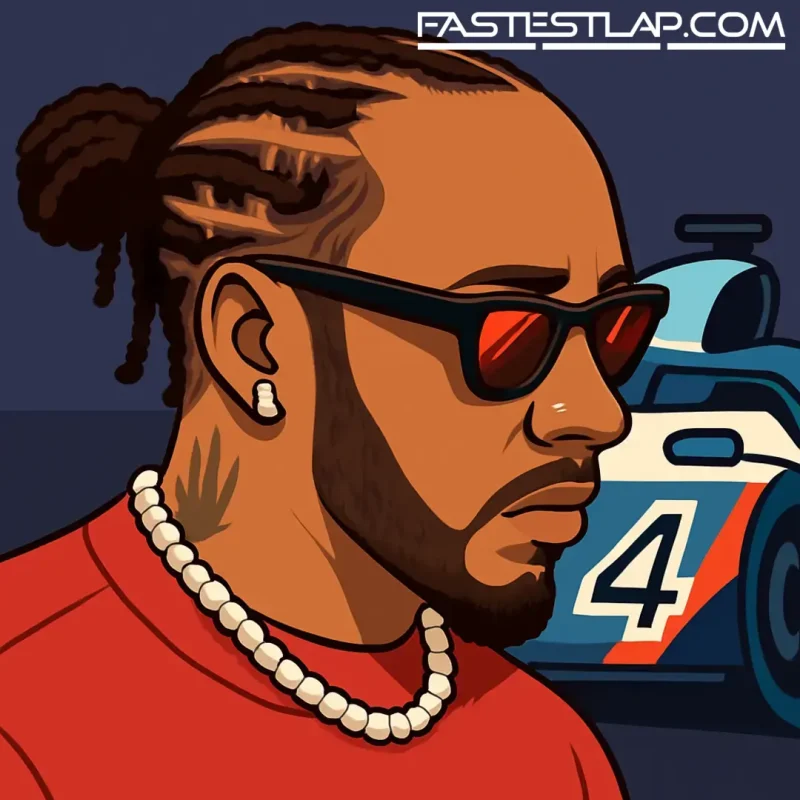
Bernie Ecclestone has never been one to tiptoe around a headline, and he isn’t starting now. The former Formula 1 boss has dismissed Lewis Hamilton’s first campaign in red as a “financial marketing project,” while throwing a grenade at Ferrari’s leadership for good measure.
Speaking to sport.de, Ecclestone said Hamilton is “one of the best of the last ten years, but he’s not the best,” and suggested the Ferrari move was more about brand power than lap time. On the team side, he doubled down: “The problem is that Ferrari needs a dictator at the top to be successful. They don’t speak Italian there, they speak Ferrarian. Everyone in Italy has a say and interferes in what is right and wrong.”
It’s classic Bernie: blunt, provocative, and impossible to ignore.
Hamilton’s debut year with Ferrari was never going to be a fairy tale from lights out. After a bruising end to his Mercedes chapter, the scale of the switch was always going to bite early. The seven-time champion has looked sharper as the season’s worn on, but rolls into Brazil still hunting a first Ferrari podium and trailing Charles Leclerc in the standings by a hefty margin. For a driver who built an empire on Sundays, that stings.
The paddock consensus? 2025 was always the build-up act to the main event. With the 2026 regulations looming — new chassis rules, new power unit formula, a hard reset baked into the rulebook — this partnership is meant to crest next year, not this one. But try telling that to the tifosi when a scarlet car isn’t standing on the rostrum.
Ecclestone also took aim at Fred Vasseur, arguing the Frenchman’s collaborative approach isn’t the Ferrari way. History lends him a sliver of cover: the Todt-Brawn-Schumacher era ran on clear lines and hard edges. But modern F1 is different. Vasseur has steadied a team once prone to self-inflicted chaos, earned a multi-year extension in the summer, and given Ferrari a fighting, if inconsistent, edge. Whether that’s enough in the Hamilton-Leclerc era is the subplot of the moment.
Hamilton, for his part, has preached patience. In Ferrari Magazine he leaned into the long game: “It’s beautiful and there have been plenty of positives, although a lot of responsibility and weight comes with it. Everyone expects to win straight away, but Rome wasn’t built in a day… Not many people are fully aware of how long it takes to win in Formula 1. Only when you’re inside a team can you really, truly understand how it works.” His focus, he says, is on preparation, building relationships, and bringing energy to the garage day after day.
It’s a mature stance, and a necessary one. Because beyond the headlines and the merchandising bump, this is a sporting equation. Ferrari’s constructors’ fight is tight — the team is clinging to P2 with Mercedes and Red Bull close enough to smell the espresso — and Hamilton’s points matter now as much as the 2026 development push does tomorrow. The team can’t afford to leave anything on the table in either column.
Is this marriage of megastar and megabrand a marketing play? Of course it is. So was Schumacher in ‘96, Alonso in ‘10, Vettel in ‘15. Ferrari’s lineage is built on mythology as much as metallurgy. The real question is whether the performance arc catches up with the narrative.
We’ve seen enough flashes to keep the optimism alive. Hamilton’s racecraft remains sharp, his feedback is gold dust for engineers, and the internal dynamic with Leclerc — competitive, but not toxic — is a crucial asset for a team that’s been guilty of turning tension into turbulence. If Ferrari’s operational polish continues and the development path holds through the winter, the payoff could come quickly once 2026 resets the deck.
Ecclestone’s critique lands because results are the only currency that counts. But there’s a risk in judging a long bet by its opening act. Hamilton didn’t go to Maranello to sell shirts. He went to win the hardest one of all. And for Ferrari, who haven’t tasted title glory since 2008, the hardest ones are precisely the point.
Four races remain to lay down a baseline, bank points, and carry momentum into the off-season. The marketing will take care of itself. The rest, as always in red, will live or die on Sundays.