Qatar setback deepens as Hamilton’s Ferrari fight turns into a stability war
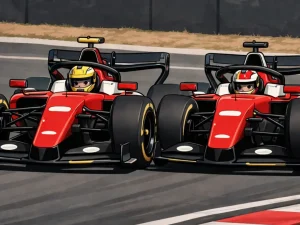
Lewis Hamilton’s Qatar weekend never really left the garage. Two Q1 knockouts in 24 hours, a pit-lane start for the Sprint after overnight changes, and a lonely P17 at the flag. For a driver who’s dragged worse cars to better places, this SF-25 is proving stubbornly uncooperative.
Ferrari’s Saturday at Lusail was bruising across the board. Hamilton’s qualifying ended early again, and while the tweaks that forced his Sprint pit-lane start made the car feel “better in quali,” the stopwatch didn’t agree when it mattered. Charles Leclerc, meanwhile, slipped from ninth to 13th in the Sprint. There’s no sugar-coating it: the Scuderia was off the pace.
“We’re constantly challenged with stability,” Hamilton said afterwards, summing up the thread that’s run through Ferrari’s tough run-in. The word keeps coming up, and you can see why. The SF-25 is on a knife-edge through fast sequences, and around a high-speed sweeper like Lusail, that’s a slow march to nowhere without confidence. Hamilton also pointed to a lack of downforce—no great shock with Ferrari diverting resources early.
Team boss Fred Vasseur confirmed in Qatar that Maranello moved focus to 2026 as far back as April, a bold pivot with sweeping chassis and power unit rules on the horizon. That long-game decision now has a very public short-term bill. “We haven’t developed the car for some time,” Hamilton admitted. The result is a machine he describes as on the ragged edge, short on grip and prone to moving around when he most needs it planted.
Saturday’s Sprint did little to change the mood. Overtaking was scarce, tyre management defined the pace, and even with DRS packs forming, moves were mostly aspirational. Hamilton called it how he saw it: “You saw in the Sprint there’s no overtaking.” With a 25-lap tyre life cap imposed for the Grand Prix on safety grounds, Sunday’s chessboard could look similar—tight windows, curtailed stints, and little room to invent pace if you don’t have it.
Starting 18th, Hamilton will have to gamble. Expect offset strategies, early stops, maybe even a willingness to burn tyres for track position if a Safety Car appears. “I’ll try something different with strategy,” he said, without much of the usual sparkle. It’s not defeatism—more a realistic read of a car that isn’t giving him the platform to do what he does best.
This mini-slump stings precisely because Hamilton had clawed his way back to Leclerc post-summer, rediscovering the rhythm that briefly went missing as he bedded in at Ferrari. Then came the recent wobble, the Vegas flashpoint where he called 2025 his “worst season ever” on TV before rowing back. The frustration is understandable. Nothing kills a driver’s trust in a car faster than instability. You can drive around understeer. You can compensate for oversteer. When it’s different in every corner, you’re just surviving.
The championship picture adds pressure. Hamilton sits sixth in the standings with two rounds to go, and Mercedes rookie Kimi Antonelli—on a serious roll—is only 12 points behind. It’s not the kind of subplot a seven-time champion wants on his home straight. The counterpoint is that Ferrari’s 2026 bet could yet be the right one; there’s no gentle landing in this rule reset, and they’re determined not to be caught short. But that doesn’t make Qatar any easier to swallow.
It leaves Ferrari in an awkward middle ground. The SF-25 still has days where the balance window opens and Leclerc or Hamilton can lean on it. But the baseline has slipped as rivals keep bringing bits. When the circuit demands a stable rear through high-speed commitments—Lusail, Suzuka, Barcelona—the margin for error disappears. You either trust the entry or you don’t. Right now, Hamilton doesn’t.
If there’s a way through on Sunday, it’s via old-school racecraft and a dose of opportunism. Track position will be king with the tyre limit in play, and Ferrari’s pit wall will have to be nimble. Clean air could be worth more than raw lap time. A bold undercut or a perfectly timed Safety Car might be the only way to turn a bruising weekend into something salvageable.
Hamilton sounded flat but not broken. “I’ve definitely felt better, but I’m okay,” he said, a line that matched the body language: controlled, pragmatic, still searching. He knows what he needs from the car. Ferrari knows where they’ve pointed the factory. The hard bit is getting through the last two Sundays of 2025 without letting the season’s narrative drift entirely out of their hands.
For now, Qatar is another reminder: you can’t fight at the front if you don’t trust the rear. And Hamilton, of all people, won’t pretend otherwise.