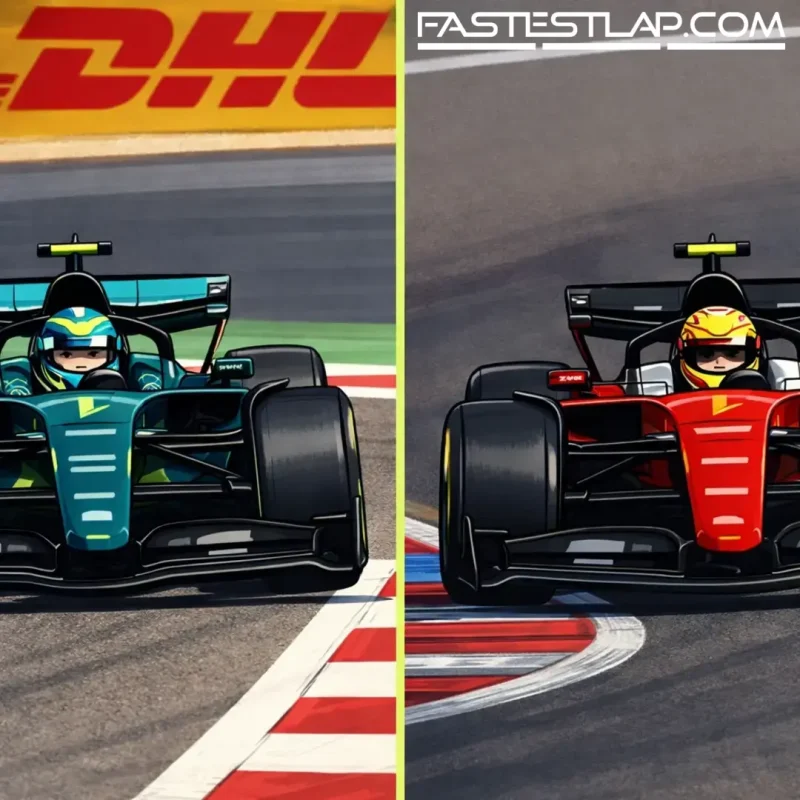
Bahrain testing did what it always does: it showed you just enough to start drawing conclusions, then immediately made you doubt every one of them.
With Melbourne now looming, the storylines that matter aren’t just about who looked quick on low fuel. They’re about who can actually get through a race weekend without the new-era hardware biting back — and which teams already look like they’re managing the transition with the sort of calm that wins championships.
Aston Martin and Honda, for one, don’t have that luxury yet. Their Bahrain running was repeatedly knocked off schedule by reliability problems, and the most damaging detail was how the final day and a half disappeared almost completely thanks to a battery issue compounded by a lack of Honda engine spare parts. Pre-season testing is always a compromise — programmes get interrupted, weather shifts, red flags happen — but losing that much time this close to the opener leaves you chasing answers rather than building confidence.
That’s why the conversation around Aston Martin has shifted from “how good is the car?” to “how quickly can they stabilise the whole package?” This is where the Newey factor inevitably enters the chat, not because one person can magic away a supply constraint, but because the discipline of how a team responds to early setbacks tells you a lot about whether it’s a blip or the start of a pattern. On top of that, there’s the FIA’s newly introduced initiative aimed at supporting struggling engine manufacturers — a potential pressure-release valve for Honda if it can be exploited cleanly and quickly. The interesting part is less the existence of the initiative and more what it signals: the sport knows this reset is sharp-edged, and not everyone will land it first time.
Over at Ferrari, the mood feels different. The Scuderia came out of Bahrain with the kind of quiet assurance that tends to make rivals squint at the lap times and wonder what’s being held back. And it’s in that context that Alex Albon’s comments landed with a bit more weight than a throwaway testing compliment. Albon reckons this generation of car could play to Lewis Hamilton’s strengths — and, by extension, put him firmly in the 2026 title conversation as he chases an eighth World Championship.
It’s easy to roll your eyes at “Hamilton’s back” narratives because we’ve lived through every version of them, but the more intriguing angle is that the new formula may have reset some of the habits teams built in the previous era. If Ferrari has hit a window where the car behaves in a way Hamilton likes — predictable platform, confidence on entry, consistency over a stint — that’s not just a feel-good headline. It changes how a season gets managed from round one. A Hamilton who believes in the car is a different opponent to one who’s still negotiating with it.
Mercedes, meanwhile, appear to be leaning into that old trick of giving everyone just enough to think they’re not the benchmark — without actually proving they aren’t. Jolyon Palmer’s read is that Mercedes deliberately avoided all-out performance runs at the end of the Bahrain test, and that the decision “speaks volumes”. Whether you buy that or not, it’s consistent with how front-running teams behave when they’re more interested in learning than flexing. If there’s a genuine concern, it’s not that Mercedes didn’t top a timing screen; it’s whether they’re already prioritising race-start and operational work because they know the new package can be temperamental when it’s stressed.
And that brings us to the part of 2026 that drivers have been side-eyeing since the rules were still just presentations and promises: energy management and reliability. Testing flagged that the new formula isn’t merely a performance challenge — it’s a systems challenge. The sport has already tweaked the start procedure with a blue-light change that appears to have alleviated safety fears over race starts, but the broader theme remains. Battery management is going to decide weekends, and not always in a way that flatters the racing.
Jeremy Clarkson, never shy about distilling a complicated issue into a single punchline, summed up the anxiety with a line that’ll probably outlast half the early-season hot takes: 2026, he warned, risks being less “Drive to Survive” and more “Don’t Break Down To Survive”. It’s funny because it lands close to the truth — and because Bahrain offered enough evidence that the reliability curve could define the opening flyaways. In a regulation reset, the first championship battle is often between engineering ambition and basic robustness. The fastest car isn’t always the best car in March.
Away from the track, there was at least one piece of good news in the wider F1 world: former Aston Martin and Alpine team boss Otmar Szafnauer was unharmed after an in-flight mechanical issue that resulted in a fire on a plane travelling from Savannah to Atlanta. A sobering reminder that the paddock bubble isn’t the only place where things can go wrong quickly.
So yes, we can argue about who “won” testing — and in two weeks we’ll pretend those conclusions were inevitable all along. But the more telling sign from Bahrain is this: the teams that look calm are the ones whose problems are optional, not existential. Ferrari and Mercedes appear, at minimum, to have a platform they trust. Aston Martin and Honda look like they’re still trying to earn that right.
Melbourne won’t just start the season. It’ll start the triage.