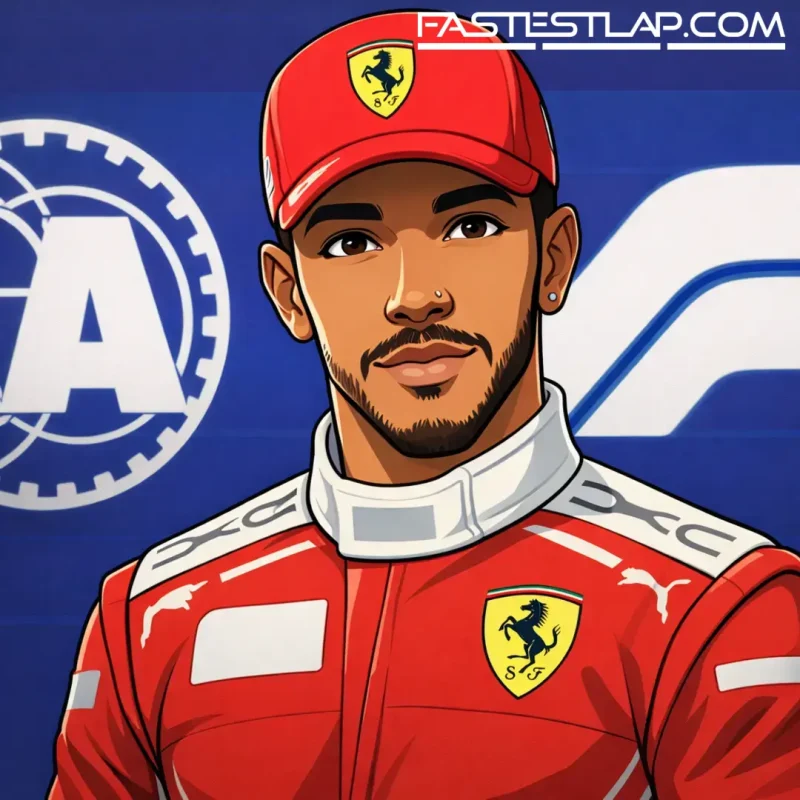
Lewis Hamilton’s afternoon at Spa took a sharp turn at Les Combes, where contact with George Russell ended the Mercedes driver’s race and left Hamilton to swallow a five-second penalty from the stewards.
The flashpoint came after an opening phase already made messy by the “yo-yo” effect created as drivers leaned on battery deployment and harvesting. On the run up the Kemmel Straight, Russell was among those who paid for it — losing speed and places in the concertina as the pack stretched and snapped.
Hamilton, now in Ferrari red, surged past Russell down the straight. But into the braking zone for Les Combes, Russell fought his way back alongside, committing to the outside line as they arrived at the first apex. The cars touched, Russell was pitched into a spin and slid into the gravel, his Belgian Grand Prix over on the spot.
Russell’s first verdict over the radio was that it was a “racing incident” between two drivers who know each other’s habits all too well from their time as team-mates. The FIA stewards saw it differently. After reviewing the incident, they placed the blame on Hamilton and issued a five-second time penalty, to be served at his pit stop.
For Russell, it was the sort of pointless, momentum-killing DNF that doesn’t just sting on the day — it bites into a wider championship narrative. Spa had already been described as a frustrating weekend for him, and leaving with zero points while a direct rival continues is exactly how title hopes start to fray, one avoidable incident at a time.
Hamilton, meanwhile, escapes with damage rather than disaster — the kind of penalty that can be manageable depending on pace and timing, but still a self-inflicted complication in a race where track position and clean air are often worth more than the stopwatch suggests. In a season where margins are thin and the field is volatile under the latest rules set, handing away five seconds is the sort of detail that tends to come back and haunt you.
And the broader subtext will be obvious to anyone in the paddock: collisions between former team-mates always carry an extra edge, not because of any personal history, but because each knows exactly where the other is likely to be brave — and where they expect room. At Spa, that mutual understanding didn’t prevent a clumsy outcome. It simply made it more consequential.