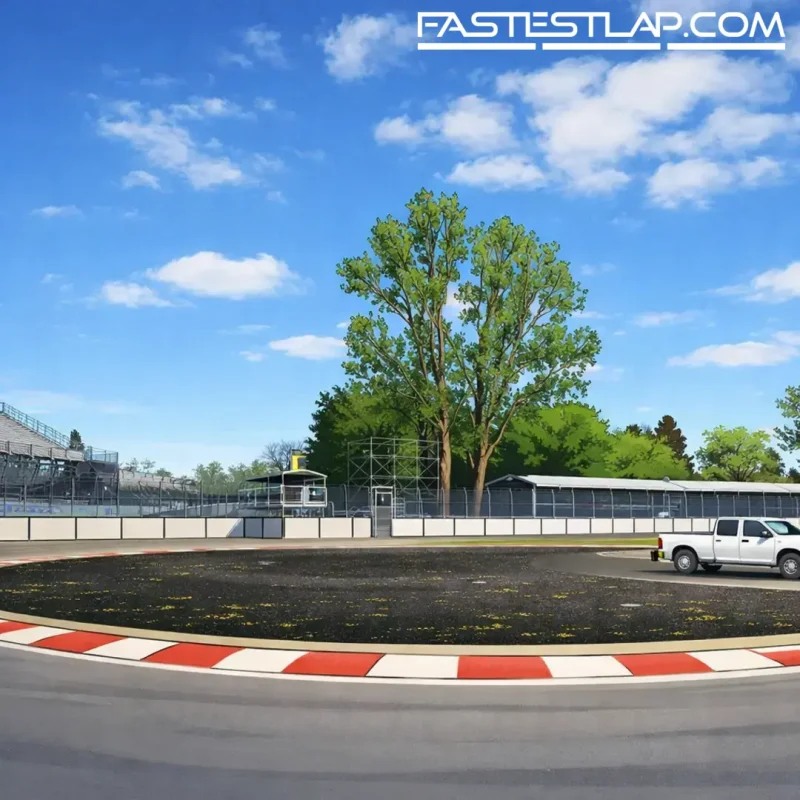
Montreal has a habit of turning small unknowns into big moments, and 2026 has handed the paddock a pretty juicy one: nobody has raced these new-generation cars in properly wet conditions yet. Four rounds in, drivers have a feel for the power delivery and the reduced aero grip on a dry track. What they don’t have is a reference point for what happens when you add standing water, painted lines and the Circuit Gilles Villeneuve’s unforgiving walls.
The forecast is doing its bit to stir the pot. Through the weekend it looks benign, but there’s a 60 per cent chance of light-to-moderate showers on Sunday. That’s enough to have teams gaming out scenarios they’d rather not meet for the first time at racing speed, on a circuit where mistakes don’t just cost lap time — they can block the road.
Martin Brundle put it plainly on Sky: drivers are “a bit scared” of what the 2026 cars will be like in the rain. Not because they’ve suddenly forgotten how to drive in the wet, but because the new ruleset changes the entire conversation about confidence. More power, less downforce, less inherent grip — and crucially, a lack of competitive wet running. Miami flirted with a proper rain race earlier in the season, but the track dried before lights out and the grid never had to find out where the edge really was.
If you want a reminder of why Montreal is a rotten place to be learning on the job, Brundle offered a neat stat: only one of the last eight Grands Prix here has gone without some form of Safety Car intervention. The reason is simple. This is an old-school layout with little runoff; when someone crashes, they tend to leave carbon fibre where the rest of the field needs to be. Add rain and you don’t just get a test of car control — you get a test of how quickly the event can unravel.
Pierre Gasly didn’t exactly soothe anyone’s nerves on Thursday. Fresh from a Pirelli wet tyre test at Magny-Cours — part of the development work for the 2027 wet rubber — he walked into the Canada press conference and lobbed a grenade in the direction of his peers.
“You guys are going to be shocked!” he said, sat alongside George Russell and Arvid Lindblad. Gasly sounded half-amused, half-deadly serious, the way drivers do when they’ve experienced something they’re not sure the rest of the room will enjoy.
He wasn’t done. “I’m glad I’ve done these two days… yeah, it’s going to be interesting for you guys,” he added, before referencing previous wet running that clearly left a mark: Silverstone on 20 January and now Magny-Cours. When asked what specifically makes these cars so tricky in the wet, Gasly smirked and shut the door: “You don’t want me to answer that question.”
That coyness tells its own story. Drivers rarely dodge a technical question unless the answer is either politically messy or genuinely alarming. Either the wet behaviour exposes a characteristic teams would rather not advertise, or it’s simply so raw and unpredictable that describing it out loud would set hares running up and down the pitlane.
And that’s the key thing: nobody is going into Sunday with the comfortable crutch of shared experience. In previous eras, the field might arrive with a fairly stable hierarchy of who’s good in the wet and which cars switch on their tyres quickest. This time, with a big rules reset and limited wet mileage across the board, it’s plausible that the usual assumptions get scrambled. A driver who’s been on top of the car in the dry could find the rear snapping on corner entry as the tyres struggle for temperature; another could look like a rain wizard simply because their package is kinder in low-grip conditions.
It also lands on a Sprint weekend, which only sharpens the edge. There’s less time to build confidence, less time to fine-tune a wet balance if Friday running is dry, and more pressure to make decisions without the comfort of long practice sessions. If the rain arrives late, it could force teams into that most uncomfortable of modern F1 positions: having to commit to set-up directions and tyre usage patterns without any meaningful data.
Montreal in the wet, with 2026 cars that drivers themselves admit they haven’t properly leaned on in these conditions, is the sort of scenario strategists hate and neutrals love. The margins are thin even when it’s sunny. In the rain, with walls waiting and visibility often miserable through the spray, “a bit scared” might be the most honest preview you’ll hear all weekend.
Now we wait to see whether the clouds actually do their part — and if they do, who finds the limit first, and who finds the barrier.