Martin Brundle has never been one to wrap a blunt message in soft packaging, and he didn’t start now when Max Verstappen’s increasingly public uncertainty about Formula 1’s direction came up again.
Speaking on Sky’s *The F1 Show* podcast in the wake of the Japanese Grand Prix, Brundle said the endless drip-feed of Verstappen hints and warnings is wearing thin — not just for the audience, but, in his view, for Verstappen as well.
“Either go, or stop talking about it,” was the essence of Brundle’s verdict, delivered with the sort of shrugging realism that comes from having watched this sport recycle drama into next week’s talking point for decades.
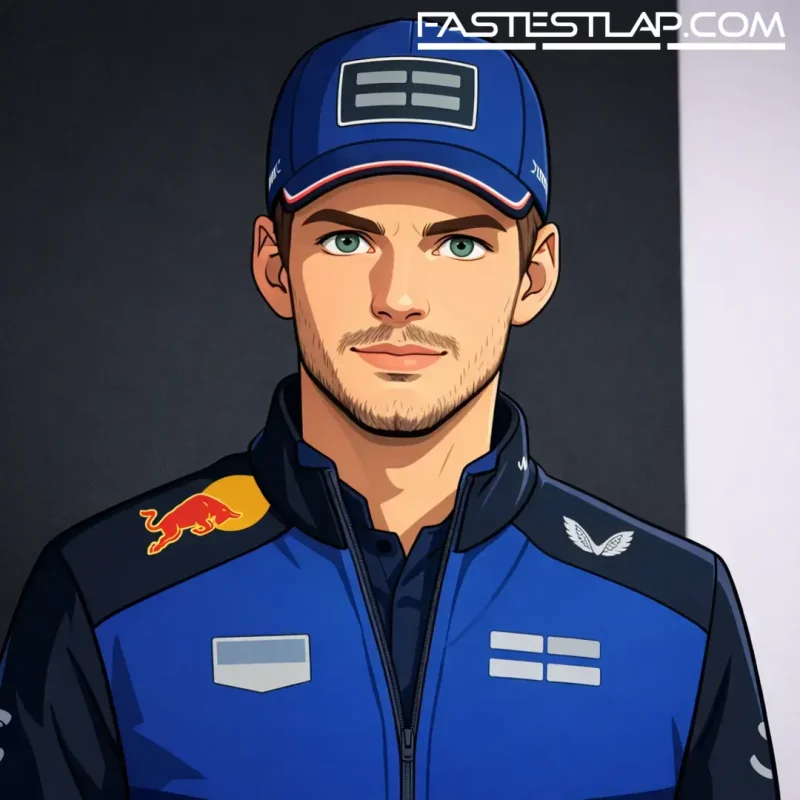
Verstappen has made it clear he isn’t enamoured with F1’s 2026 technical era, which he feels has tipped too far into battery harvesting and deployment. And after Japan he offered his most explicit line yet: that he is contemplating quitting Formula 1 after the 2026 season.
It’s that public posture — the way Verstappen has chosen to prosecute his case — that Brundle thinks is doing collateral damage. Not necessarily to Red Bull alone, but to the broader perception of where the sport is at, just as it’s trying to bed in a new ruleset.
Brundle’s argument isn’t that Verstappen’s criticism is automatically invalid. In fact, he more or less concedes the core point. The issue is the volume and venue. “Max is very unfiltered,” Brundle said, and he painted a contrast with how Michael Schumacher, in his telling, would have handled a similar situation: fists on desks and metaphorical throat-grabbing behind closed doors, followed by the carefully staged public smile. Sort it privately first; only go nuclear in public if nothing moves.
That’s not Verstappen’s style, and it never has been. He has long spoken about not hanging around for the long haul, not being the kind of driver still doing this into his 40s. But Brundle’s patience, and perhaps the paddock’s, seems tested by the repetition.
There’s another layer to this, too — and Brundle put it on the table without pretending it’s a criticism of character. Drivers’ affection for the regulations, he argued, tends to track suspiciously closely with how competitive their cars are.
“The drivers’ love and comments are directly proportional to how their cars are going at the moment,” Brundle said, adding that those with a difficult start to the season tend to be “more vociferous” than those at the sharp end. He framed it as instinct, not hypocrisy: they’re “hardwired to win”.
Verstappen has insisted his complaints are independent of Red Bull’s form, which has been under scrutiny amid a difficult start to the season. Others have voiced similar frustrations — Brundle pointed to Carlos Sainz and reigning world champion Lando Norris among those to have criticised the current shape of the rules — but Verstappen has been the loudest megaphone.
David Croft, also on the podcast, said he doesn’t read Verstappen’s words as empty. That’s a significant point, because Verstappen’s comments have moved beyond the usual “I don’t like this” grumbling and into something closer to an ultimatum about his own presence on the grid.
Brundle, though, still doubts the endgame is an actual retirement — at least not while Verstappen can see a route back to a car that allows him to do what he does best. He went out of his way to stress what the sport would lose: “generational speed and car control” that very few in the history of motorsport have possessed.
Yet Brundle also leant into a truth the sport rarely says out loud when it’s busy myth-making. Formula 1 moves on. It always has. He namechecked the late Murray Walker as one of the irreplaceable figures who, ultimately, did get replaced — not because anyone matched him, but because the show continues regardless.
And if Verstappen does walk away, Brundle suggested, there will be no shortage of talent ready to fill the space. He pointed to the next wave — Andrea Kimi Antonelli, Oliver Bearman, Arvid Lindblad — as evidence that the supply line doesn’t dry up, and that the economics of replacing a superstar are brutally attractive.
That doesn’t mean Verstappen is easily substituted competitively, of course. But it does underline why Brundle thinks the damage is being done now: by keeping the threat in the air, Verstappen fuels instability and invites every paddock stakeholder to start gaming scenarios — who’s available, who’s not, which door might open, which seat suddenly becomes political.
Brundle speculated that, with Red Bull building its own powertrain for the first time, Verstappen’s management would almost certainly have ensured an exit clause exists to give him options if the project doesn’t land. He also noted Mercedes’ stance that there is “no place at this particular inn at the moment”, leaving the obvious question hanging: if Verstappen does choose to leave, where exactly is he going?
Brundle’s answer, effectively, was that he isn’t convinced Verstappen will leave at all — not permanently, and not if there’s a competitive solution in front of him. He even nodded to Verstappen’s wider interests, from Nürburgring racing to running his own team and sim racing, as outlets that clearly matter to him. But those sound, in Brundle’s view, more like parallel passions than the main event.
For now, the broader backdrop is that Formula 1 and the FIA will hold a series of meetings through April to discuss potential tweaks to the regulations before the season resumes in Miami.
Whether that process produces meaningful change, or merely a set of cosmetic adjustments, is the part Verstappen is waiting to judge. Brundle’s point is simpler: if you’re going to play the game of leverage, do it with intent — and, ideally, with an endpoint. Otherwise it’s just noise, and even the people who love a bit of noise in this sport eventually start asking the same question Brundle did.
Go — or stop talking about it.