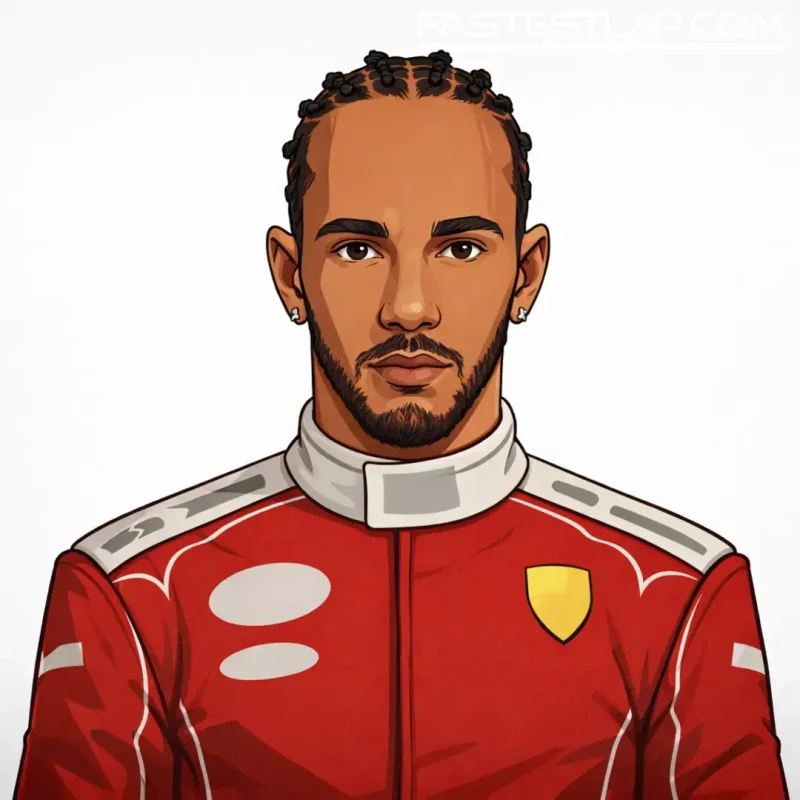
Lewis Hamilton doesn’t sound like a man treating 2026 as just another new chapter. Yes, it’s his second season in Ferrari red, but the way he talks about Formula 1’s reset makes it clear he sees something bigger coming — a season where the driver stops being the last piece in a simulation and becomes, again, an active part of how a team finds performance.
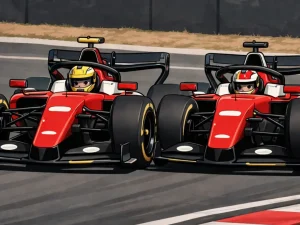
With the new chassis and power unit regulations now in play, Hamilton’s message from the Barcelona shakedown running in the background is simple: this one won’t be won purely on spreadsheet excellence. The cars are smaller and lighter, active aerodynamics are now part of the day-to-day business of a lap, and the engines have shifted to a 50/50 split between electric power and biofuel. If that all sounds like a technical talking point, Hamilton’s framing is far more pointed: it’s going to put more responsibility back in the cockpit.
“The regulation shift is monumental,” Hamilton said, calling it the biggest change he’s experienced since arriving in F1 in 2007. That’s not a throwaway line from a driver who’s lived through multiple eras and knows the sport’s habit of overselling “revolutions”. Hamilton’s point is that everyone is being forced to relearn the basics at once — and in that moment, when the field is theoretically compressed, the speed at which a team develops and the quality of its internal alignment can matter as much as raw concept.
He also leaned into a debate that never really goes away in modern F1: how much difference can the driver make when the cars are so engineered and the margins so tight? Hamilton’s answer is that 2026 will drag the sport into a more technical, more managed style of driving — and that the best drivers will be the ones who can treat all that complexity as an advantage, not a burden.
“I think the driver’s role is going to be critical,” he said, not just in the obvious sense of extracting lap time, but in managing the power unit “through a lap”, working the new wing systems, and feeding back the kind of information that helps a team decide what to prioritise in development.
That power management thread is where his comments get interesting, because it’s also where the new regulations are most likely to reshape racecraft. Hamilton referenced 2009, when drivers were already learning how to deploy battery power strategically. His suggestion is that 2026 takes that familiar discipline and turns the dial several clicks further. The car won’t simply be driven hard and then tidied up with a bit of energy deployment — it’ll require constant decision-making about efficiency, recovery and when to spend what you’ve harvested.
Hamilton separated the two big changes in his mind: aero is different, but not alien; the power unit, however, is “a lot, lot different.” He talked about “derates” and the challenge of understanding how to use power per straight and recover it efficiently — essentially describing a season where the quickest driver may also have to be the smartest accountant of energy and fuel.
There’s a subtle subtext here, too. For all the talk about active aerodynamics — front and rear wings moving, a new DRS-style operating window — Hamilton doesn’t sound particularly spooked by that part. He describes it as an evolution: less drag on the straights, quicker top speed, and an overtaking dynamic that will be fascinating to watch. But DRS itself has been around long enough that the sport has an established rhythm for how drivers adapt.
Where it becomes genuinely new is how the power unit dictates the lap. In Hamilton’s words, this is the moment where drivers will need to be “the most efficient” they’ve ever been, using “all the tools you have in your armoury” — saving fuel, recharging, deploying, and still finding time in the braking zones and traction phases. It’s a driver’s job that sounds less like pure instinct and more like orchestration.
And that’s where Ferrari’s season gets particularly intriguing, because the collaboration Hamilton keeps returning to isn’t theoretical. It’s structural. Ferrari will be pairing him with a new race engineer for 2026 after Riccardo Adami was moved into a different role within the team. In any other year, that kind of reshuffle would be a footnote — a change you’d note and move on.
In 2026, with procedures, tools and even the shape of a “good lap” being rewritten, it feels more consequential. Hamilton is adamant the only route to unlocking these cars is communication — not just the traditional “front’s washing out in Turn 3” feedback, but a deeper, more constant loop of information about where the systems are helping, where they’re hurting, and what’s actually usable in race conditions.
He also pointed at the other side of that partnership. “As drivers, we adapt,” Hamilton said — but he didn’t pretend it’s solely on the driver to figure it out. He expects heavy lifting from the engineering group to translate the new complexity into something a driver can repeatedly execute at 300km/h. In other words, the best teams won’t just build the fastest car; they’ll build the most drivable operating model around it.
Hamilton’s been around long enough to know that regulation resets don’t guarantee a fairytale. Someone will nail the concept early, someone else will be stuck in an upgrade spiral, and development rate will quickly replace winter optimism. But his read is that, at least at the start, the sport is stepping into an era where the driver’s contribution becomes more visible — not because the cars are suddenly “harder” in the old-fashioned sense, but because they’re more demanding in how they must be managed.
If he’s right, 2026 won’t just shuffle the competitive order. It’ll also change who looks comfortable doing the job — and who looks like they’re still learning what the job is.