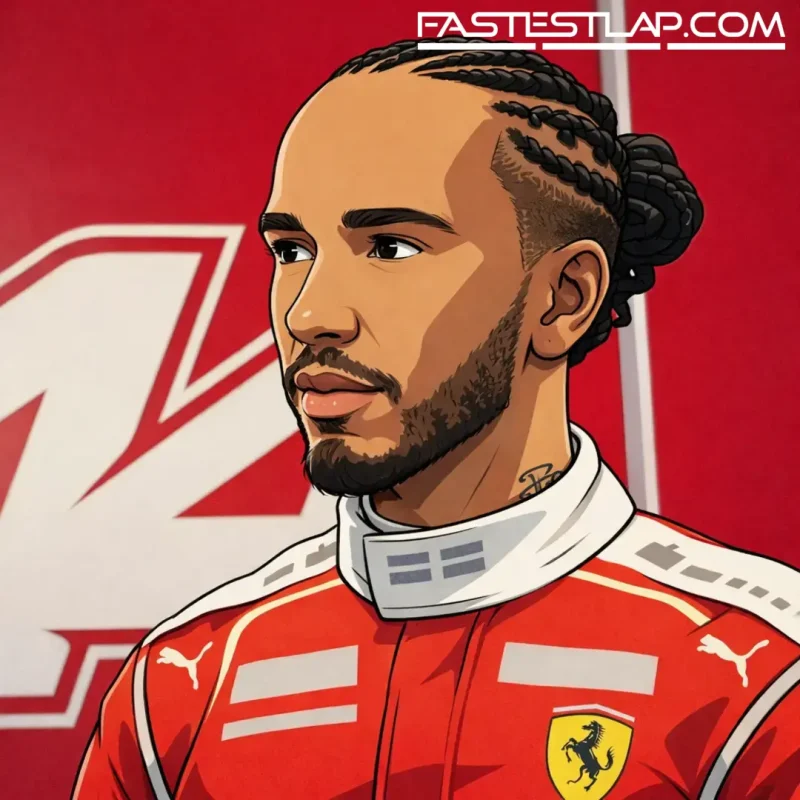
Lewis Hamilton’s name sat at the top of the timesheets at Barcelona and, on paper at least, it was the sort of first-week headline Ferrari’s marketing department dreams about. In the paddock, though, nobody’s mistaking one sharp lap for a clean bill of health.
The early read from rival camps is that the SF-26 can be quick but not necessarily friendly. Sky’s Craig Slater reported that multiple sources across the pitlane have described Ferrari’s new car as “quite a handful” to drive — the kind of phrase engineers use when they’re politely saying the thing looks nervous at the limit, or that it asks uncomfortable questions of the driver. If that’s accurate, Hamilton’s late-session flyer may have done a neat job of hiding the car’s downside rather than disproving it.
That’s not a crisis in itself. Everyone’s still exploring what these 2026 cars want — and what they refuse to tolerate — but it does underline the risk of over-reading a headline time. A car that’s tricky can still produce a mega lap in the right window, especially in the low-fuel, soft-tyre moment that testing inevitably gravitates towards. The more important question is whether Ferrari can access that performance repeatedly, in different conditions, and without asking Hamilton to live on the edge every weekend.
While Ferrari tries to separate the optics from the engineering reality, the team’s also being advised — not gently — to choose its battles in the politics swirling around the new power unit rules.
Ralf Schumacher, never shy of a pointed reminder, has effectively told Ferrari to pipe down amid rumours that two rival manufacturers have found a loophole in the 2026 engine regulations tied to compression ratio. The claim doing the rounds is that this could unlock a meaningful advantage. Ferrari’s interest in the matter is obvious. Schumacher’s view is that the Scuderia is not the outfit best placed to lead the outrage, given it reached a settlement with the FIA after the 2019 season following controversy over its own power unit.
It’s classic paddock theatre: everybody wants clarity and fairness, but everybody also wants their competitor to be the one seen asking for it. Ferrari pushing too hard in public risks turning a technical query into a reputational own-goal — and gifting rivals the opportunity to re-litigate 2019 every time Maranello asks the FIA a question.
The larger point is that 2026 isn’t just a reset on track; it’s a reset in how teams choose to apply pressure. The first whispers of a “loophole” are rarely the end of the story. They’re often the opening move.
Over at Aston Martin, the conversation has a different flavour: less about compliance and more about nerve. The AMR26’s first on-track appearance in Barcelona turned heads for being “strikingly different” to much of the early 2026 field, and Sky pundit Bernie Collins raised an intriguing possibility — that Adrian Newey is pushing the design into territory other engineering groups might avoid.
Newey’s first Aston Martin car since his headline move from Red Bull was always going to be a statement. The only question was what kind. If Collins is right, Aston Martin hasn’t hired him to blend in or to build a safe, middle-of-the-grid baseline; it’s hired him to weaponise imagination, and accept that the first draft might be uncomfortable before it becomes devastating. That approach can look genius when it works — and painfully exposed when it doesn’t — but it’s very much the Newey way.
Then there’s the Mercedes noise, which has been growing steadily through the Barcelona running. Martin Brundle’s take is that Mercedes appears to have “aced” the 2026 rules after four seasons of fighting the ground-effect era, a period in which it managed seven wins across 2022-2025 and even suffered a winless 2023.
Testing form is always a dangerous currency, but the detail that matters is workload as much as outright pace. Mercedes completing the most laps with the W17 points to a programme that’s running smoothly, and a team that’s not spending half its day trapped in the garage unpicking new-car gremlins. In the first week of a new era, that’s not a glamour statistic — it’s often the one that predicts who will arrive at the first race with their operational house in order.
Meanwhile, Christian Horner’s next move is being framed in increasingly specific terms. After his Red Bull exit last summer, he’s now said he wants to return to F1 only if he can be “a partner as opposed to just a hired hand”. With Alpine confirming he’s among those interested in buying a stake in the Enstone squad, the picture being painted is of a team boss looking for ownership-level influence rather than another traditional principal role.
Put it all together and Barcelona has delivered exactly what winter testing is meant to: not answers, but leverage. Ferrari has a fast lap and a car that might be edgy. Mercedes has early momentum and a lot of clean running. Aston Martin looks like it’s taking a design swing that could either reshape the pecking order or create a long season of bruises. And in the background, the 2026 power unit rulebook is already being prodded for weak points — with Ferrari being warned to pick its words carefully.
The grid has barely turned a proper lap in anger, yet the new era is already taking shape in familiar ways: speed, suspicion, and the quiet fight to define what’s “clever” before the FIA decides what’s legal.