The 2026 season hasn’t even properly started and you can already feel the grid recalibrating around the sport’s biggest variable: the new power-unit rules. Some teams are trying to sound breezy about it; others are quietly admitting the clock got away from them. Honda, back in Formula 1 as Aston Martin’s works partner, has landed firmly in the second camp.
Honda’s senior figures have conceded the company is now paying for the dead time between the regulations being published and the project being formally green-lit — a gap that effectively left it watching the new era begin without it. In an environment where every month of dyno running and systems integration counts, “inactivity” is a poisonous word. The competitive damage isn’t always immediate, but it tends to show up in the places that matter most: how quickly you find reliable performance, how much headroom you have to chase the next step, and how painful your first in-season upgrades become.
For Aston Martin, that admission is awkward not because anyone in the paddock believes this reset will be simple, but because it undercuts the sense of momentum the team has been trying to project heading into its first year with Honda hardware. A challenging pre-season is manageable; being on the back foot structurally is harder to spin. The new partnership was always going to be judged on trajectory as much as results — and right now Honda is essentially asking for patience while confirming the early phase hasn’t been ideal.
The ripple effects of that aren’t limited to the engine department. A works tie-up changes how a team organises itself, how it sequences its design choices, and how confidently it can commit to aggressive packaging or cooling targets. When the power-unit programme is chasing time, the car team can end up designing with one eye on risk mitigation rather than pure performance. That’s the sort of compromise rivals love, because it’s rarely visible until you see the car’s behaviour over a stint or the frequency with which it needs to be nursed.
Over at Ferrari, the mood is very different — not because everything is solved, but because the winter has at least offered something the team craves: reasons to believe. Bahrain testing produced a strong run and, crucially, the outright pace that inevitably turbocharges optimism around Maranello. In a season where the grid is being shuffled by new rules, early confidence can be worth more than the lap time itself. It sharpens decision-making and calms the kind of internal noise that tends to creep into big organisations when the pressure rises.
For Lewis Hamilton, though, the reset has been more personal than technical. After an underwhelming first year in Ferrari red in 2025, he’s spoken about asking himself “uncomfortable questions” over the break — a candid phrase that cuts through the usual pre-season scripting. Drivers talk about learning and adapting all the time, but Hamilton’s wording suggests something deeper: a deliberate audit of habits, approach, maybe even the emotional rhythms of a season that didn’t meet expectation.
The interesting part is what that means in practice. At Hamilton’s level, it’s rarely about discovering some new trick; it’s about stripping away the things that aren’t helping and being ruthlessly honest about where the margins went. Ferrari doesn’t need him to reinvent himself. It needs the version of Hamilton that turns good weekends into great ones, and messy weekends into salvage operations, because championships in a new era are often won by the team that bleeds the least while it learns.
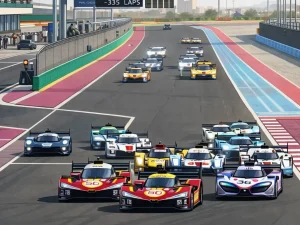
Elsewhere in the broader FIA ecosystem, the mood has turned more serious. The season-opening round of the 2026 World Endurance Championship in Qatar — due at the end of March — has been postponed amid military conflict and heightened geopolitical tension in the Gulf region. The situation has obvious implications beyond sport, but it’s also being watched closely by Formula 1 given the calendar’s footprint in Bahrain and Saudi Arabia. The paddock will always insist it focuses on racing; the reality is that logistics, security and contingency planning become the real priority when events escalate.
There was, at least, one piece of unambiguously good news: Sky F1 presenter Natalie Pinkham has confirmed she’ll return to broadcasting duties at the Japanese Grand Prix after being given the all-clear following neck surgery last year. It’s the kind of update the sport can rally around — a reminder that the travelling circus is held together by far more people than the ones in the cars.
And then there’s Cadillac, preparing to make its Formula 1 debut in Melbourne. The new team’s first weekend was always going to come with a reality check, but Valtteri Bottas will start it with an additional complication: a carry-over five-place grid penalty. Bottas, though, has framed the team’s first year in straightforward terms — “clear progress” as the marker of success.
That’s a refreshingly sane target, and probably the only sensible one for a newcomer entering at the exact moment F1 hits a regulation reset. The temptation will be to judge Cadillac the way we judge established teams, on points and headlines and immediate disruption. Internally, it’ll be about whether the operation functions under pressure, whether the weekends get cleaner, whether the development decisions land more often than they miss. Progress in modern F1 isn’t linear, but you know it when you see it.
Put it all together and Tuesday’s news cycle reads like the early sketch of 2026: a new power-unit era already punishing lost time, a superstar driver publicly taking stock, and a brand-new team trying to set expectations that won’t collapse under their own weight. The season hasn’t started yet. The sorting has.