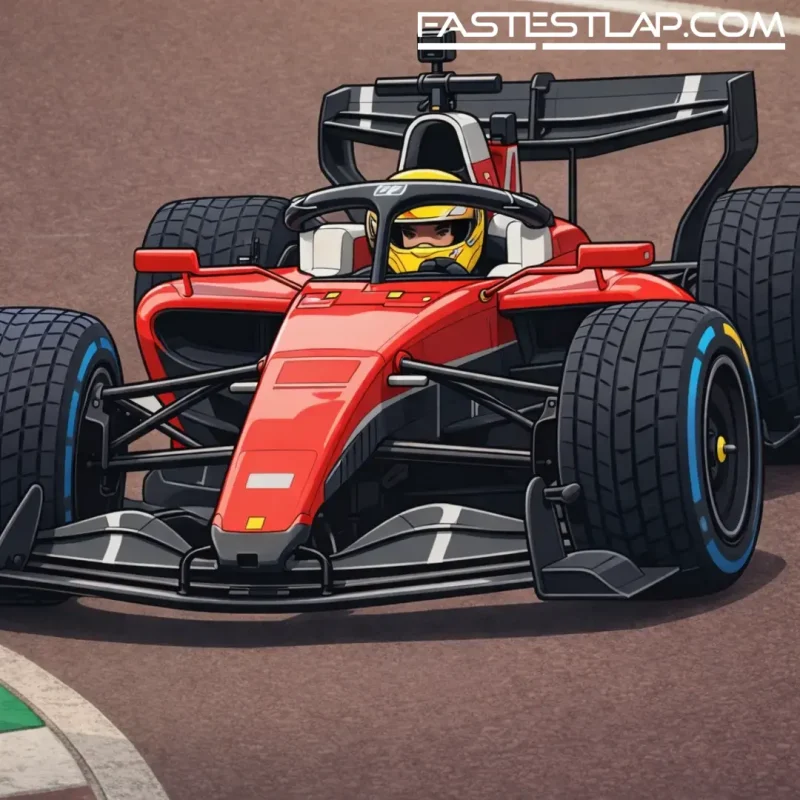
Ferrari have done the one thing they always do at this point in the year: look ominously quick before the points are on the table.
Lewis Hamilton’s headline-grabbing benchmark at Barcelona in the pre-season shakedown put the SF-26 on top, a tenth clear of George Russell’s Mercedes, and it’s hard to ignore what that does to the temperature around Maranello. But the paddock has been here before. Ferrari have ended five of the last 10 pre-seasons with the stopwatch in their favour and still watched championships drift away once the racing turned messy, political and relentlessly iterative.
What’s different in 2026 isn’t just the name on the timing sheet. It’s the fact that this is the first Ferrari built in a rules reset with Hamilton involved from the ground up — and, crucially, willing to be a nuisance in the productive sense.
Last season, Hamilton spoke openly about feeding the team a stream of written feedback: multiple documents, delivered at different points through the year, framed not as demands but as prompts. “Have we tried this?” rather than “Do this.” That dialogue was about the SF-25 and how to extract something usable from it, but the more interesting implication is what it’s trained Ferrari to do: treat driver input as part of the development loop, not just a post-session debrief ritual.
That matters because the SF-26 isn’t an evolution in the lazy, winter-upgrade sense. Formula 1 has turned the page: shorter, lighter cars, active aerodynamics, and a new power unit concept with a 50/50 split between electrical and combustion power. The sport’s biggest technical lurch comes with the usual temptation for teams to disappear into the maths and come out with a car that works brilliantly in theory and awkwardly for the person paid to put it on the limit.
Anthony Davidson, speaking to Sky Sports F1, basically landed on the one question that tends to decide whether Ferrari’s fast winters become meaningful springs: have they actually listened?
He pointed to the obvious asset Ferrari have in the cockpit: two top-tier, highly experienced drivers, both capable of giving you detail you can build around. In Davidson’s view, that’s not a nice-to-have; it’s the insurance policy against designing a car that looks clever and feels alien.
“It’s a confidence game,” he said — and that phrase carries more weight with Hamilton than most. Whatever you make of his difficult 2025, the most unsettling element wasn’t simply that the results didn’t land. It was that the mistakes did. Spins and self-inflicted offs, moments you don’t normally associate with a seven-time world champion operating in his comfort zone. Davidson described it as “alarm bells”, the kind that suggest a driver isn’t just missing a tenth — he’s missing trust in what the car will do next.
That’s why Ferrari’s Barcelona P1, on its own, is background noise. The real story is whether Hamilton climbs out of this car after the first rough weekend of the season still speaking like someone who has a platform under him. The 2026 regulations will amplify that dynamic. With active aero and a fundamentally different balance of electrical deployment and combustion power, confidence isn’t merely psychological; it’s the prerequisite for committing to braking points, throttle shapes and corner entry speeds that the data says are there but your instincts won’t let you access if the rear end feels like it’s negotiating separately.
Ferrari’s internal challenge, then, is almost a cultural one. It’s not enough to have Hamilton sending neat PDFs full of suggestions, or Charles Leclerc delivering his usual sharp read on what the car’s doing mid-corner. The point Davidson was nudging towards is whether the factory is prepared to channel that information into the design philosophy — the under-the-skin mechanical platform and aero map that decides if the car is forgiving at the limit or always one input away from snapping.
There’s also an interesting tension here: Hamilton’s presence can raise standards, but it can also sharpen accountability. If the SF-26 is quick but edgy, the old shrug — “that’s the car, deal with it” — won’t wash in a team that has committed to building around two drivers of this calibre. Ferrari have invested in a driver pairing that can tell them, precisely, where they’ve overreached.
And if they *have* listened? Then this Barcelona headline starts to look less like another February mirage and more like a sign Ferrari have built a car that a champion can actually lean on. That’s when the conversation shifts from “fastest in testing” to the dangerous one Ferrari fans can’t resist: whether Hamilton has a genuine route to that record-breaking eighth title.
It’s early. Everyone in F1 knows it’s early. But the sharper truth is this: in a regulation reset, the teams that get the driver-car relationship right first don’t just win races — they set the development direction for everyone else. Ferrari have shown the paddock a number. The harder part, as ever, is showing they’ve built something their drivers can believe in when it counts.