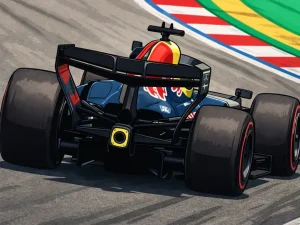
Gianpiero Lambiase picking McLaren as his next stop was always going to land like a stone in Red Bull’s pond. In modern F1, engineers move around all the time, but race engineers who’ve effectively become part of a driver’s identity? That’s different. And when the driver in question is Max Verstappen — still the gravitational centre of Red Bull’s project even in 2026 — every paddock whisper suddenly gets a megaphone.
McLaren’s announcement that Lambiase will join Woking no later than 2028 is, on paper, a long-lead hire. In reality, it’s a message. Lambiase has been Verstappen’s voice since May 2016, the conduit for everything from ruthless tyre calls to those clipped, occasionally spiky radio exchanges that have become their shared trademark. Verstappen’s first win for Red Bull came with Lambiase in his ear; so did four consecutive world titles from 2021 to 2024. You don’t unwind that sort of relationship without consequences.
Lambiase himself more or less wrote the script for how this would be interpreted. Back in 2023 he said the day he and Verstappen stopped working together “in this set-up” would be the day he’d be keen for a new challenge. Now the new challenge is real, and the “set-up” has changed around them — including Red Bull’s own internal reset — which is why the Verstappen question has resurfaced with such force.
Riccardo Patrese has gone further than most, arguing that Lambiase’s decision is effectively the tell for Verstappen’s next move. Speaking to a betting outlet, Patrese claimed: if Lambiase is leaving, Verstappen is leaving Red Bull next year too. The only debate, in Patrese’s mind, is whether Verstappen walks away from Formula 1 entirely or heads to Mercedes.
It’s easy to roll your eyes at ex-driver predictions delivered via sponsorship-friendly soundbites, but Patrese’s read on Verstappen’s mood is at least consistent with what the Dutchman has been saying for a while: if the fun goes, he won’t hang around just to make up the numbers. Verstappen has already been blunt that he’s finding his pure driving enjoyment elsewhere, notably in GT3 machinery as he prepares for the Nürburgring 24 Hours. And Patrese leans hard into the same idea — that Verstappen, with four titles and the financial security that comes with them, doesn’t need F1 in the way most drivers do.
Patrese also used Verstappen’s gripes to take aim at the current breed of cars under the new regulations, describing the process of lifting to recharge and deploying energy to overtake as “totally against the philosophy of a racing driver”. That’s a very Patrese way of putting it, but it speaks to a wider point: Verstappen’s patience isn’t unlimited when the job becomes more about system management than instinct.
Where it gets more pointed is Patrese’s suggestion that Mercedes, not McLaren, would be the more compelling destination if Verstappen stays in F1. He argues Mercedes are the benchmark right now, ahead of reigning champions McLaren, with a strong car “with the new specifications” and a potent works engine. He even floats the old customer-versus-works suspicion — that Mercedes, as the factory outfit, might be able to do things its customers can’t, down to mapping. That’s the kind of insinuation F1 never really kills off, even when the regulations say everything’s tightly policed.
The problem for the Verstappen-to-Mercedes idea is that Toto Wolff is publicly pouring cold water on it. After a long stretch in 2024 — and, by his own admission, into last year — where Wolff openly courted Verstappen, the Mercedes boss now insists there are “not any Max discussions”. He says he’s “could not be happier” with his current pair, and frames it as a strategy decision: age gap, timing, continuity.
That’s a clean, sensible line. It’s also the kind of line team bosses deliver right up until the moment the situation changes.
Because the Verstappen question isn’t just about whether Mercedes have a seat. It’s about whether Verstappen believes Red Bull are still the place where he can win and enjoy himself. Lambiase leaving doesn’t prove Verstappen is packing boxes, but it does remove a stabilising pillar — the guy who’s translated Verstappen’s talent into race-winning execution for a decade, and who understands the driver’s rhythm as much as his vocabulary.
Red Bull will tell you — and not incorrectly — that drivers have won titles with different engineers and that great teams are bigger than any two individuals. But F1 isn’t run on theory, it’s run on trust, momentum and the small margins inside a garage. If Verstappen is already feeling a bit worn down by the direction of the sport, losing the one constant on his side of the wall is exactly the sort of thing that can nudge a thought into a plan.
And there’s another layer here. Lambiase isn’t moving to an also-ran. He’s going to McLaren, a team that has been operating with the confidence of a front-runner, and one that will happily weaponise his insight — not just into Verstappen, but into how Red Bull actually functions on a race weekend when the pressure’s on. Even with a start date “no later than 2028”, the paddock will treat this as a seismic shift now, not later.
So does this mean Verstappen is done with Red Bull? Not necessarily. It does mean the rest of 2026 just got a new subplot, one that won’t be settled by press-conference denials or contract jargon.
If Verstappen stays, Red Bull will need to replace more than an engineer — they’ll need to replace a relationship. If he goes, Lambiase’s move will be remembered as the first public crack that didn’t get plastered over. Either way, the Verstappen era at Red Bull suddenly feels less like a fixed point and more like a countdown clock you can finally hear ticking.