Mercedes is heading into the 2026 season with a notable name missing from the Brackley roll call. John Owen, the team’s long-serving Director of Car Design and one of the quieter constants of the operation through its various identities, has left the squad and stepped away from Formula 1.
Owen’s exit brings the curtain down on a 19-year stint at Brackley, a stretch that’s spanned everything from Honda to Brawn GP to the all-conquering early Mercedes era. The team says he’s chosen to “take a break from F1”, and he’ll now serve a period of gardening leave — the sort of detail that tends to matter in this business, particularly with 2026’s regulatory landscape making experienced technical leadership a prized commodity.
Internally, Mercedes is moving quickly to shore up continuity. Engineering Director Giacomo Tortora will assume Owen’s responsibilities, with Deputy Technical Director Simone Resta overseeing the wider group. That’s a clear signal Mercedes wants a smooth handover rather than a dramatic reshuffle, but it doesn’t lessen the significance: design leadership changes rarely happen in isolation, and they always land hardest when teams are deep in the cycle of a major technical reset.
Owen’s career path reads like that of a modern F1 engineer who’s grown up in the aero age. He started in 2001 as an aerodynamicist at Reynard Motorsport, then moved to Sauber in 2002. His return to Brackley came as Principal Aerodynamicist under Honda, and he held that role through the Brawn GP transformation — one of the sport’s most famous pivots, and a period where adaptability wasn’t a nice-to-have but a survival skill.
When Mercedes arrived in 2010, Owen’s responsibilities broadened. He became Chief Designer and later Director of Car Design, staying in that position for 15 years. Those were the years in which Mercedes turned organisational stability into a competitive weapon: eight Constructors’ Championships and nine Drivers’ titles came during Owen’s tenure in senior design roles, success that often gets attributed to the headline names but is built on the accumulation of correct decisions deep inside the technical structure.
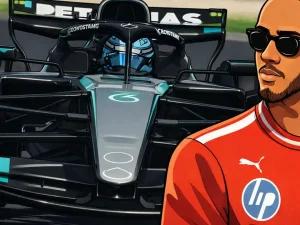
His final contribution is the W17 — the 17th Mercedes car he’s worked on — a neat piece of symmetry that underlines just how long he’s been embedded in the Brackley machine.
Mercedes, for its part, struck an appreciative tone in its message, thanking Owen for “the considerable role he has played in the team’s success” and wishing him “all the very best for the future”. It’s the sort of statement teams keep measured, but it’s also a reminder that in the era of complex cars and even more complex organisations, the people who stay for the long haul are increasingly rare.
What happens next will be watched closely. Not because Mercedes is suddenly short of technical muscle — Tortora and Resta are serious operators — but because 2026 is a year when every department’s interfaces get stress-tested. Car design leadership is as much about stitching groups together as it is about drawing lines on a screen, and Owen’s value to Mercedes was built over time in precisely that space between the org chart boxes.
If Owen’s departure is simply what the team says it is — a personal choice to step away — Mercedes will back itself to manage the transition quietly and efficiently. But in a paddock where timing is never ignored, a senior exit on the eve of a new era always invites one question: how well is the machine really humming behind the scenes?
For now, Mercedes is presenting this as evolution, not disruption. The next few months will reveal how true that is.