Yuki Tsunoda’s first public outing in a Red Bull since losing his race seat didn’t just deliver the usual tyre smoke and selfie-sticks. It ended with him unbuckling in a hurry and stepping away from a burning car on the streets of San Francisco.
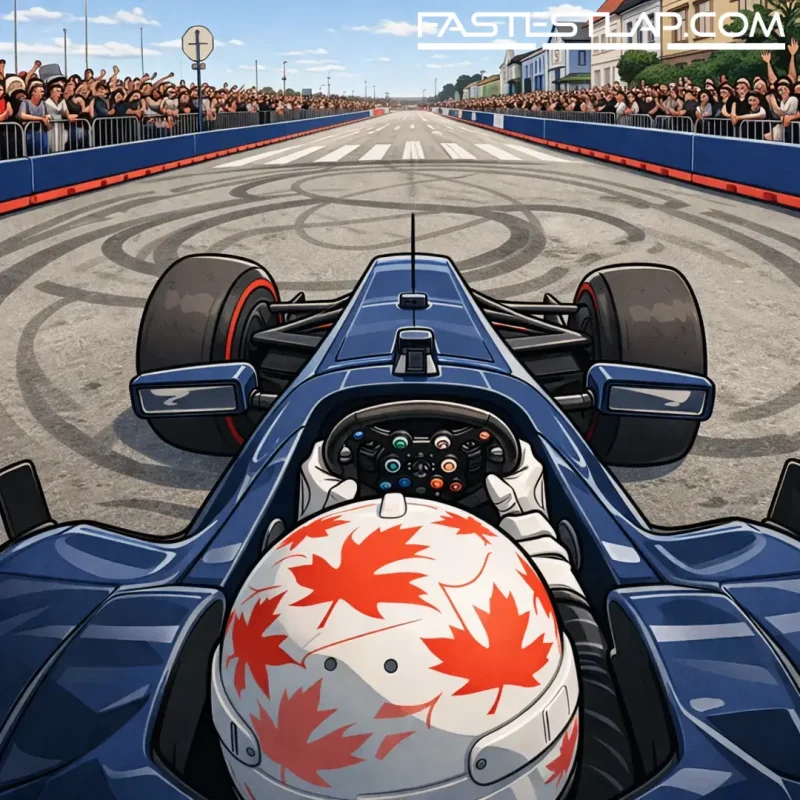
Tsunoda was driving Red Bull’s RB7 — the 2011 machine that carried Sebastian Vettel to one of the sport’s more ruthlessly efficient title runs — as part of a Saturday show run. It was Tsunoda’s first time back in an F1 cockpit since the final round of 2025, and a rare chance for fans to see a modern-era Red Bull on the move outside a circuit environment.
Instead, the lasting image was smoke pouring from the rear of the car after Tsunoda came to a stop. As the situation escalated into visible flames, spectators could be heard shouting for him to get out. Tsunoda released his belts, stood up, and climbed out without drama — pausing to glance back at the fire as response vehicles arrived.
For Red Bull, it’s an unwelcome kind of viral moment: not the choreographed, sponsor-friendly theatre these demos are designed for, but a reminder that even heavily managed show runs carry real risk when you’re running complex, high-temperature machinery in a non-race setting. For Tsunoda, it was a jarring punctuation mark on what was meant to be a straightforward reintroduction to the public eye.
The Japanese driver enters 2026 as Red Bull’s reserve after being displaced from a full-time seat at the end of last season, with Isack Hadjar taking the vacancy. Tsunoda had been drafted into the senior Red Bull team after just two races of 2025, but struggled to make consistent headway alongside Max Verstappen and scored points in seven of his 22 appearances for the main outfit. He was present with Red Bull at last week’s pre-season test in Bahrain, keeping close to the machinery and the engineering group — the standard rhythm for a reserve, but also a clear signal he’s still in the mix.
San Francisco was supposed to be the lighter side of that role: a high-visibility day, a few full-throttle bursts, and a reminder to the wider world that he can still handle the sharp end of a top team’s hardware. The RB7 is also a crowd-pleaser — loud, aggressive, instantly recognisable — and the kind of car that makes even a short demonstration feel like an event.
The fire itself appeared to originate at the back of the car, with smoke first, then flames. No official cause was stated in the information available, and it’s the kind of incident that can have several mundane explanations on a demo day — but the optics don’t change. Red Bull will be grateful Tsunoda was out quickly and that the situation was contained before it became something uglier.
Tsunoda’s broader story still sits in the background here. He’s no longer on the grid, but he isn’t gone from the paddock either. He made 111 F1 starts from his 2021 debut with AlphaTauri — now Racing Bulls — scoring 124 points across five full seasons. His standout finish remains that fourth place in Abu Dhabi at the end of his rookie year, a result that hinted early at both speed and opportunism when the door opened.
In 2026 he’s also listed as Racing Bulls’ reserve, and those dual obligations tell you plenty about how Red Bull views him now: useful, trusted enough to be kept close, but no longer central to the immediate plan. The next step is obvious. Tsunoda is expected to angle for a full-time return in 2027, and every kilometre he gets — even in a show car on city streets — becomes part of his case.
For now, though, the weekend’s takeaway is simpler. Tsunoda walked away from a burning RB7 in front of a crowd, calm enough to look back at the blaze before stepping clear. It’s not how you’d script a comeback-adjacent cameo, but in Formula 1’s ecosystem of narratives, it’s a moment people will remember — and one Red Bull will be keen to file under “incident contained” rather than “headline.”