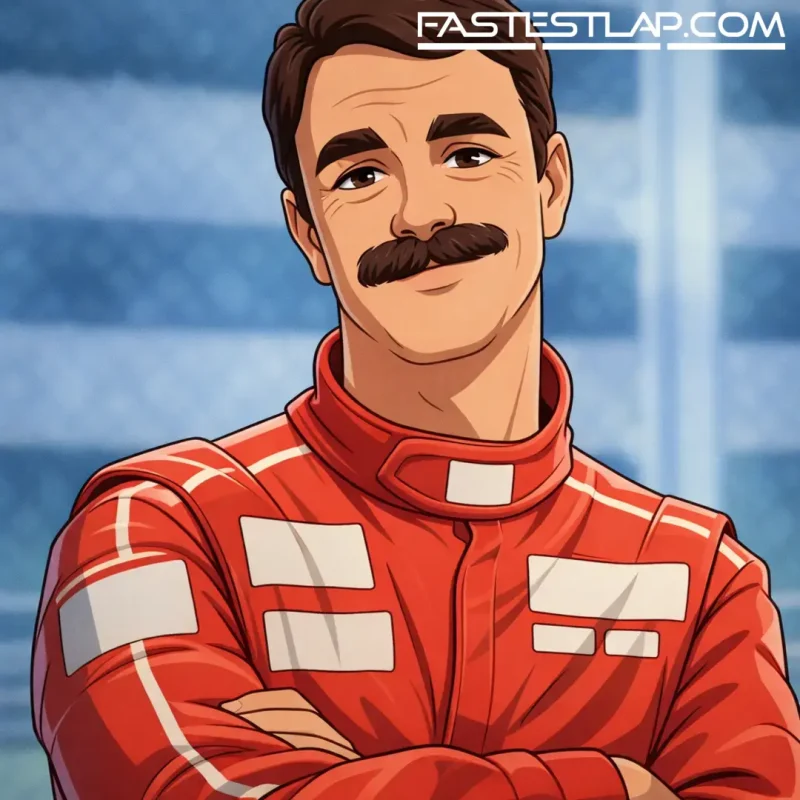
Nigel Mansell has never been shy about picking a side, and he hasn’t mellowed with time. Asked to choose between the two teams that framed his finest years in Formula 1, Mansell didn’t hesitate: Ferrari, every day of the week.
Williams, he stressed, remains “a great team” — which is about as close as Mansell gets to diplomatic. But Ferrari, in his telling, operates on a different emotional frequency. Not merely a racing outfit, not merely an employer. Something else entirely.
“It’s got to be Ferrari,” Mansell said in an interview with BUDDS, before leaning into the kind of anecdote that only works if you’ve actually lived it. He recalled casually admiring a Ducati while walking around Maranello, then finding a brand-new bike turning up at his home a week later. The same pattern, he said, repeated itself with Ferrari’s road-car royalty: a test in a new Testarossa, a bit of feedback about it being “too pointy” and needing some understeer for safety, and then another Testarossa arriving soon after — free.
It’s classic Mansell: wide-eyed enthusiasm delivered with the certainty of a man who’s never once felt the need to understate his own value. And it’s also, in its own way, a revealing little window into why Ferrari gets under drivers’ skin like no other team. The kit, the theatre, the sense that you’re not just part of a project but part of an institution that wants you to feel special — even when the stopwatch isn’t being kind.
By contrast, Mansell’s Williams recollections come with a sharper edge. When he was asked what he got from Williams, he responded with a double thumbs-down and a laugh. Then came the line that still carries a sting: his “gift” from Williams was being fired after winning the world championship.
That barb, while delivered as a joke, has a long shadow. Mansell’s 1992 title — his only one — remains one of the most dominant seasons of that era, achieved during his second stint with the team after racing there from 1985-88. But despite that peak, Mansell and Williams didn’t agree terms to continue, and the partnership ended in the blunt, unsentimental way the sport often reserves for its champions.
If Ferrari is romance, Williams in Mansell’s story is realism: clinical, efficient, and ultimately transactional. “I had a great time with Williams,” he said, “but I didn’t really receive too many gifts!”
Mansell’s Ferrari spell came after he first left Williams, and while his time in red didn’t deliver the title his Williams years finally did, he still talks about Maranello with the fondness of someone remembering a city that never quite let him go. He even joked about “finding the limit” of Ferrari’s generosity when the team were travelling late to a test in Lisbon.
“I’m a jet pilot,” Mansell said, before describing how Ferrari asked if he’d like to fly a large three-engined plane down to Portugal. Mansell took the left-hand seat and flew it there himself, noting the aircraft’s value at the time was around $34 million — and, with a grin, adding that he’s “still waiting for it”.
It’s easy to dismiss all of this as Mansell being Mansell: a charming exaggerator with a punchline ready. But beneath the stories is a familiar truth about Ferrari that still resonates in the paddock in 2026. Drivers don’t just join Ferrari; they get absorbed into it. The team’s power has always been its ability to make even hardened racers feel like kids again — the museum, the road cars, the red overalls, the sense that your name might matter there in a way it won’t anywhere else.
That doesn’t make Ferrari better at winning titles, as history repeatedly demonstrates. It does, however, help explain why drivers often speak about Ferrari in a different tense — more personal than professional — even when their results were stronger elsewhere.
Mansell’s own career is the perfect case study. His defining achievement came with Williams. His defining affection, it seems, belongs to Ferrari.
And perhaps that’s the point. In Formula 1, the trophies tell you who was fastest. They don’t always tell you what it felt like.