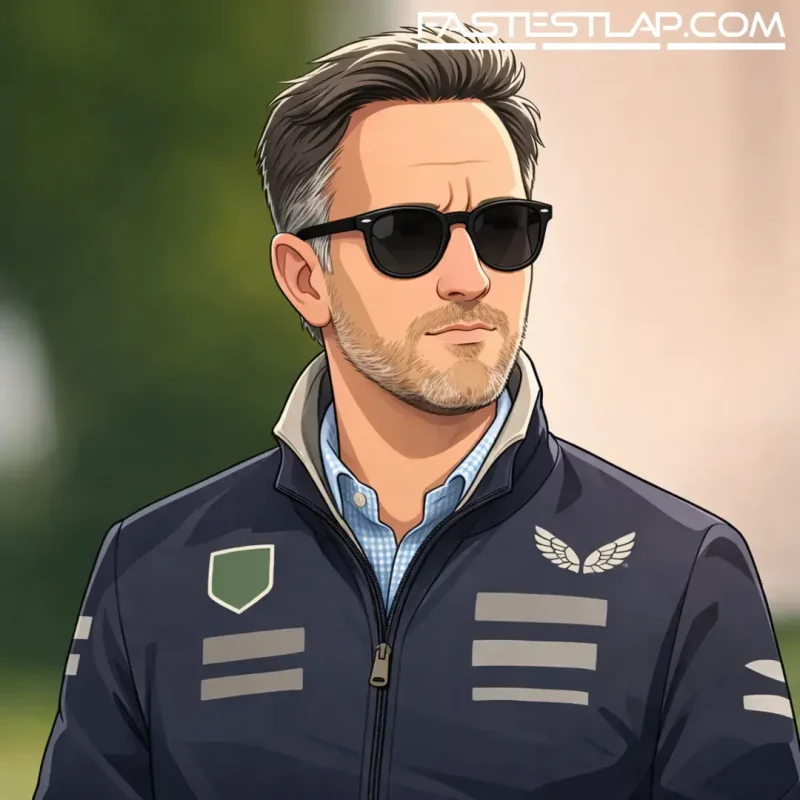
Ten years on, it’s easy to talk about Max Verstappen’s mid-season promotion in 2016 as if it was destiny — the sort of call Red Bull makes in its sleep. But Helmut Marko is adamant it didn’t feel tidy or unanimous at the time, and he’s now thrown a pointed detail back into the mix: he claims Christian Horner wasn’t on board with moving Verstappen into the senior car after just four races that season.
Marko’s version of events is blunt. In an interview with De Telegraaf, the long-time Red Bull motorsport adviser said Horner “did not agree” with the idea of promoting Verstappen so early, portraying the decision as one pushed through amid internal resistance and external scepticism.
Given what Verstappen went on to become — a debut win for Red Bull, then a haul that’s since swelled by another 70 grand prix victories, and four consecutive world titles from 2021 to 2024 — the idea anyone in Milton Keynes needed convincing sounds almost absurd. But 2016 Verstappen wasn’t 2024 Verstappen. He was still a teenager with 23 F1 starts, a reputation for fearlessness that some viewed as raw speed and others as recklessness, and a profile that made every mistake look like proof he’d been rushed.
Marko insists the pushback wasn’t limited to rivals sniping from the sidelines. He says Horner was against promoting Verstappen after only four races, and he pairs that with the wider criticism Red Bull knew it would wear.
There’s also the human collateral Marko doesn’t gloss over: Carlos Sainz Jr., Verstappen’s Toro Rosso team-mate at the time, believed he had a case for that Red Bull seat himself. Marko claims Sainz was “very disappointed” not to be chosen, but frames the choice internally as “clear and simple” — a line that rather underplays how combustible those driver-market moments can be inside Red Bull’s ecosystem.
What Marko is really doing here is reminding everyone how Red Bull works when it’s at its most ruthless. Daniil Kvyat’s form dipped, and the response wasn’t patient development or careful shielding — it was a switch. Marko points to Kvyat’s Russian Grand Prix as the tipping point, saying he “crashed twice” and that, compared to the previous year when he’d sometimes been faster than Daniel Ricciardo (especially in the rain), he simply wasn’t the same driver in 2016.
Marko adds a detail that captures how quickly this moved. Jos Verstappen, sensing the moment, called to ask if they should come to Graz — with Marko deliberately not saying exactly why. A day later, Marko says, they were together in Austria and the plan was effectively in motion.
If you want to understand why Marko still sounds possessive about this decision a decade later, it’s because it’s one of the cleanest examples of his talent-spotting philosophy paying off on the biggest stage. He says he first met Verstappen when Max was 15 and was immediately taken by his potential. And when the time came to act, Marko and late Red Bull owner Dietrich Mateschitz were prepared to absorb the backlash.
That backlash would’ve been deafening had the early races gone wrong — and that’s the part often lost in the highlight reel. Swap Kvyat mid-season, throw a 18-year-old into a top car, then watch him bin it in his first few grands prix? It would have become a defining indictment of Red Bull’s driver programme. Even for a team that thrives on sharp edges, the reputational risk was real.
Instead, Verstappen won on debut.
Marko describes the moment Lewis Hamilton and Nico Rosberg collided on the opening lap as “a bit lucky” — which is fair enough — but he’s more interested in what came after: Verstappen immediately being faster than Ricciardo, and then managing the closing stages with Kimi Räikkönen glued to his gearbox.
Marko’s telling of that final stint is effectively his evidence exhibit. Räikkönen had the straight-line advantage, couldn’t find a way through, and Verstappen — the supposed kid promoted too early — drove “smart and mature”. Marko says even Jos Verstappen and Raymond Vermeulen struggled to believe what they were seeing in real time.
For Marko and Mateschitz, he calls it “enormous relief”. Not satisfaction. Not triumph. Relief — because relief is what you feel when the outcome you needed arrives just in time to stop a decision becoming an organisational crisis.
As for Horner, Marko’s claim is the kind that will always invite a raised eyebrow. Team principals are political animals; they’re paid to balance risk and optics as much as lap time, and their public posture rarely matches every internal argument. Whether Horner disputes the framing or not, Marko’s comments underline something that still resonates in the paddock in 2026: Red Bull’s biggest successes have often come from decisions that didn’t feel “safe” even to the people making them.
And that, more than the trophy count, is why Verstappen’s promotion remains such a reference point. It wasn’t just a talent call. It was a power move, a culture statement, and a high-wire bet that happened to land perfectly — before the critics could even draw breath.