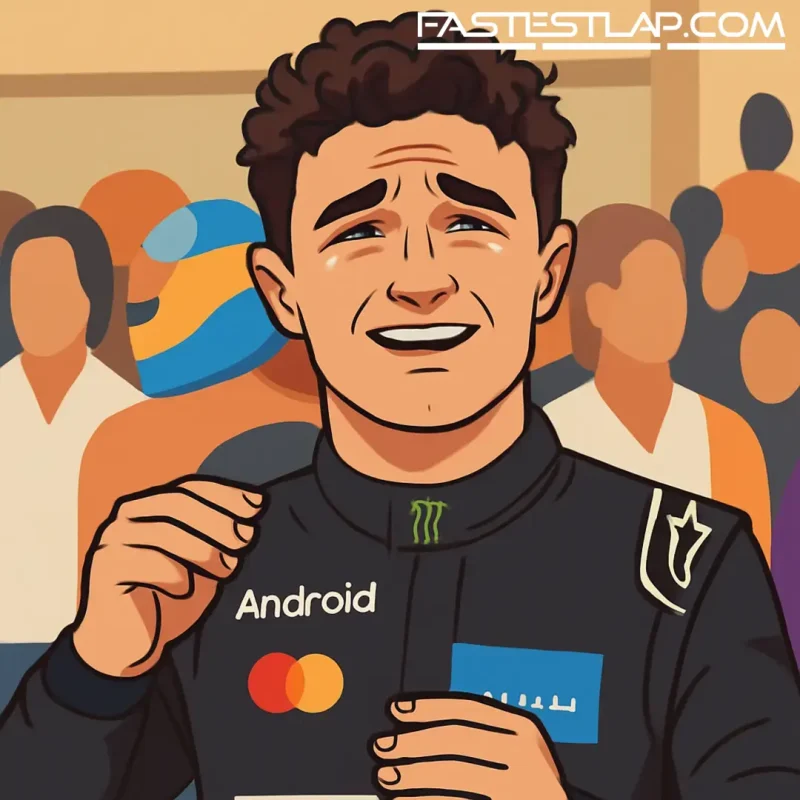
Lando Norris finally let the mask slip. Helmet off, eyes glassy, he caught his face on the big screen and laughed through the tears: “I look like a loser.” In reality, he’d just joined the sport’s most exclusive club.
A measured third place under the Yas Marina lights was enough to seal his first Formula 1 world title, the McLaren driver converting a 12-point cushion over Max Verstappen into the crown on a night that demanded calm heads and clean judgment.
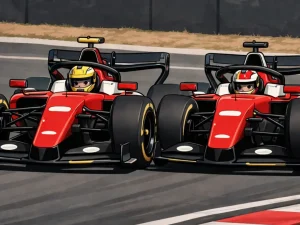
It wasn’t smooth. Oscar Piastri mugged his team-mate off the line, a jolt that briefly dropped Norris within striking distance of trouble. Charles Leclerc loomed, Verstappen was forever in the mirrors, and for the first half-hour it looked like the kind of Abu Dhabi finale that turns fingernails to confetti.
But Norris settled. He played the long game—backed out where others might have lunged, protected the tyres, and took only the risks he had to. When race control noted him for passing Yuki Tsunoda off track, there was a flicker of jeopardy. The stewards ultimately decided Tsunoda had moved twice under braking; no action. Norris, for his part, shrugged it off.
“I had no idea, and I didn’t care,” he said later, still red-eyed in parc fermé after speaking to David Coulthard. “I knew what I did was fine. I was just trying to enjoy the moment.”
By the flag, that moment had arrived. Champion. And the normally deadpan Brit allowed himself to feel it.
“Oh God, I’ve not cried in a while,” he admitted. “It’s a long journey. A big thanks to my guys, everyone at McLaren, my mum and dad—people who’ve supported me since the beginning.”
Norris has been a McLaren man for nine years, from junior testing mileage to the sharp end of grand prix Sundays. The project has ebbed and surged, threatened and retreated, then finally found its teeth. On the toughest nights he carried the car; this season, the car often carried him. The combination was lethal when it mattered.
“I now know what Max feels like a little bit,” he smiled, tipping a nod to Verstappen and Piastri. “Congratulations to both—my two biggest competitors all season. It’s been a pleasure to race against them. I’ve learned a lot.”
The race told a story of a driver in his prime choosing control over chaos. The opening-lap loss to Piastri stripped away the safety net, but Norris kept the core numbers in his head and the bigger picture in his hands. Even when he could ease off, he didn’t quite.
“You can’t not think about the title,” he said. “But it’s a long race. Anything can happen in Formula 1. I just kept pushing until the last two or three laps. Then I could breathe.”
That discipline has defined his year. The raw speed has always been there; what arrived in 2025 was the consistency that turns contenders into champions. Precision in traffic, fewer unforced errors, sharper racecraft at the margins—plus a McLaren pit wall that repeatedly made the right calls under pressure.
It’s also the first Drivers’ crown for McLaren in, as Norris put it, “many, many years.” The weight of that matters in Woking. This isn’t a team that forgot how to win; it’s one that had to relearn it. Long nights in the tunnel, a car that responded to development, a crew that backed two young stars and let the points fall where they may. There will be debates over turning points and sliding doors and whether this was lost by Red Bull or won by McLaren. From inside the orange garage, it’ll be framed more simply: the plan worked.
“They certainly didn’t make my life easy,” Norris joked of Verstappen and Piastri chasing him down the stretch. “But we did what we had to do. I feel like I brought something back to McLaren this year. I’m proud of myself, and even more proud of everyone that I’ve hopefully made cry.”
There was typical self-deprecation. There was also the steel of a driver who, on a night like this, didn’t blink. He didn’t need to beat everyone to become champion—he just needed to be enough of himself. Third place did the job. The trophy says the rest.