Mercedes might’ve turned up to 2026’s opening week wanting to talk about its new W17, but the paddock’s first proper argument of the year has landed exactly where you’d expect in a regulation reset: the power unit.
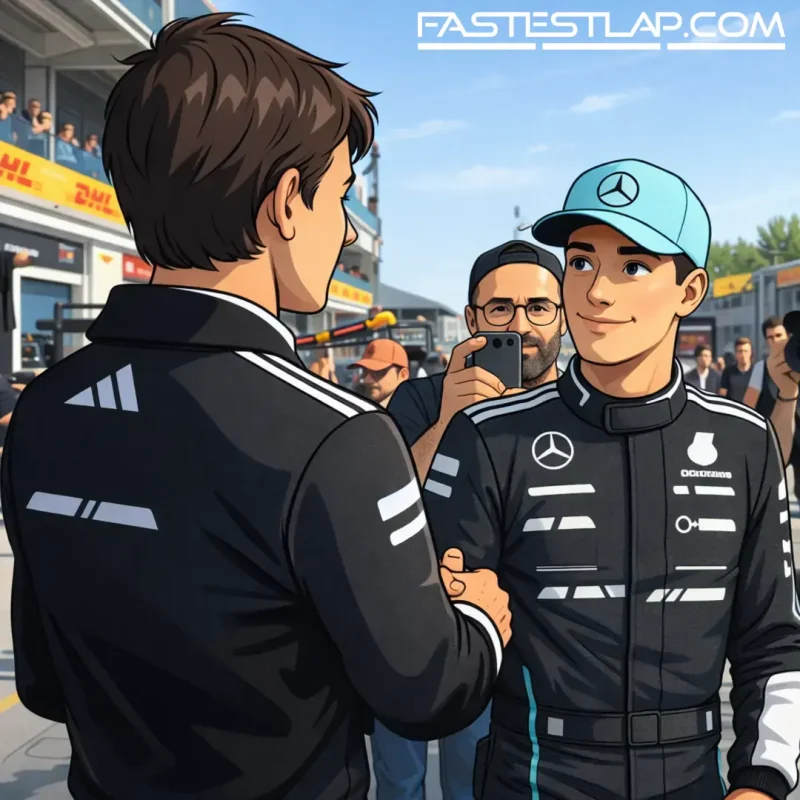
Toto Wolff didn’t so much pour cold water on the latest “loophole” chatter as lob a bucket straight at the people stirring it. With rivals sniffing around Mercedes’ compression-ratio approach and pushing the FIA to take a look, Wolff insisted the team’s 2026 power unit is “fully legal” and said the factory has been in positive dialogue with the governing body throughout. What really irritated him wasn’t scrutiny — everyone expects that when the rules change — but the manner of it. He took a clear swipe at the habit of “secret letters” and political fishing expeditions designed to slow competitors down rather than genuinely safeguard the regulations.
In Wolff’s view, asking the FIA to invent tests that don’t exist in the rulesbook is a step too far. The message to the rest of the pitlane was blunt: stop trying to win 2026 in the postbag and get on with fixing your own problems.
It’s classic early-season theatre, but it’s not meaningless. The first few races of a new era are where narrative hardens into “truth” — legal, grey, or otherwise — and Mercedes plainly wants this one stamped out before it grows legs. The fact Wolff feels comfortable being this direct also tells you the team believes it’s on firm ground technically. In a year when everyone’s relearning the car and the power unit at the same time, nobody wants to spend February answering insinuations.
On track, George Russell is already leaning into the competitive framing that sells this new cycle best: him versus Max Verstappen. Russell has been installed as the early favourite for the title — which, in February, is worth roughly the same as being quickest on the out-lap of a shakedown — but his comments were more interesting for what they implied about the competitive order than for any chest-thumping.
He said he’d relish a head-to-head fight with Verstappen, even if their history suggests the relationship has never been particularly cosy when elbows come out. Russell also took a measured line on Mercedes’ new car, downplaying expectations while still making it clear the W17 isn’t, as the team has previously described other projects, a “turd” to drive. That’s a low bar, sure, but in the first week of a new ruleset it matters: drivers can feel very quickly whether a concept has fundamentals or is simply wearing fresh paint.
Russell also sounded genuinely surprised by how smoothly Red Bull has adapted to the new regulations, especially with the added complexity of producing its own power unit for the first time. That’s not just a compliment — it’s an acknowledgement that, whatever this reset was meant to do, the Verstappen/Red Bull operation isn’t arriving disorientated. If Mercedes wants the fight it’s talking about, it may need more than a clean-sheet design and a happier driver.
Away from the noise and the markets, the early driver feedback on 2026 machinery has started to form a pattern. There was plenty of winter worry about “clipping” — cars topping out partway down straights as electrical deployment runs out — plus the prospect of awkward downshifts on full-throttle sections and a return of lift-and-coast being baked into race craft rather than used as a situational tool.
What’s emerged so far is a more nuanced reality. Drivers have suggested the overall experience hasn’t been as dramatic a departure as some feared, although downshifting on straights has, in fact, become part of life in this era. That’s the sort of detail that sounds jarring to fans but quickly becomes normalised once everyone’s doing it and the racing rhythm resets. The bigger tell is that the complaints haven’t been universal panic; it’s more a list of adaptations, the kind drivers grumble about in testing and then quietly master by round three.
Lewis Hamilton, meanwhile, has offered the sort of quote that will make engineers roll their eyes and drivers nod along: the 2026 cars are “more enjoyable” than the ground-effect generation that preceded them. After getting a proper introduction in Barcelona testing, Hamilton described the new machinery as “oversteery and snappy and sliding” — but also “a little bit easier to catch”. In other words, the cars move around, but they do it in a way that makes sense to a driver’s hands and feet. That’s not nothing. When the limits are readable, confidence comes quickly, and confidence is performance.
Not every driver will want a car that dances, and not every team will be thrilled if the new rules reward those who can live on the edge. But Hamilton’s read hints at something important: this era might produce a different kind of speed. The last generation could feel like it was daring you to trip over its aerodynamics. If 2026 machinery really does let drivers lean on the car more naturally — even if it comes with its own quirks in deployment and straight-line management — that will shape racing as much as any spreadsheet about energy.
And then there’s the off-track move that feels designed for the long game. Aston Martin has brought Jenson Button in as a team ambassador on a multi-year basis, putting a familiar champion back into the paddock in an official capacity. Button never raced for the Silverstone outfit through its various identities, but his long connection to Honda adds an obvious layer of relevance, and the role is framed broadly: marketing, media, partners — the full outward-facing portfolio.
It also creates a neat partial reunion with Fernando Alonso, given the pair’s McLaren stint together in the mid-2010s. Button’s presence won’t change lap times, but teams don’t make these appointments for nostalgia alone. In a sport that’s increasingly about projecting momentum as much as generating it, Aston Martin is stacking recognisable credibility around its project — and doing it early, before the season defines the story for them.
So yes, Mercedes has launched a car, drivers have started calibrating expectations of a new technical era, and a world champion has reappeared with a lanyard. But the first proper tone-setter of 2026 has been political: Wolff drawing a line in the sand and daring the rest to beat Mercedes on merit, not correspondence. That’s the sort of fight that tends to spill from the emails into the lap times soon enough.