If you want a neat snapshot of how Formula 1 is rewiring itself for 2026, you could do worse than the last few days of paddock noise: Red Bull’s new engine project already has rivals peering over the fence, Adrian Newey has Aston Martin packaging itself into shapes it hasn’t dared before, and the sport’s own broadcasters are still treating pre-season like a soft launch.
Then, hovering over all of it, came Christian Horner with the kind of retrospective that always lands because it contains an uncomfortable little truth.
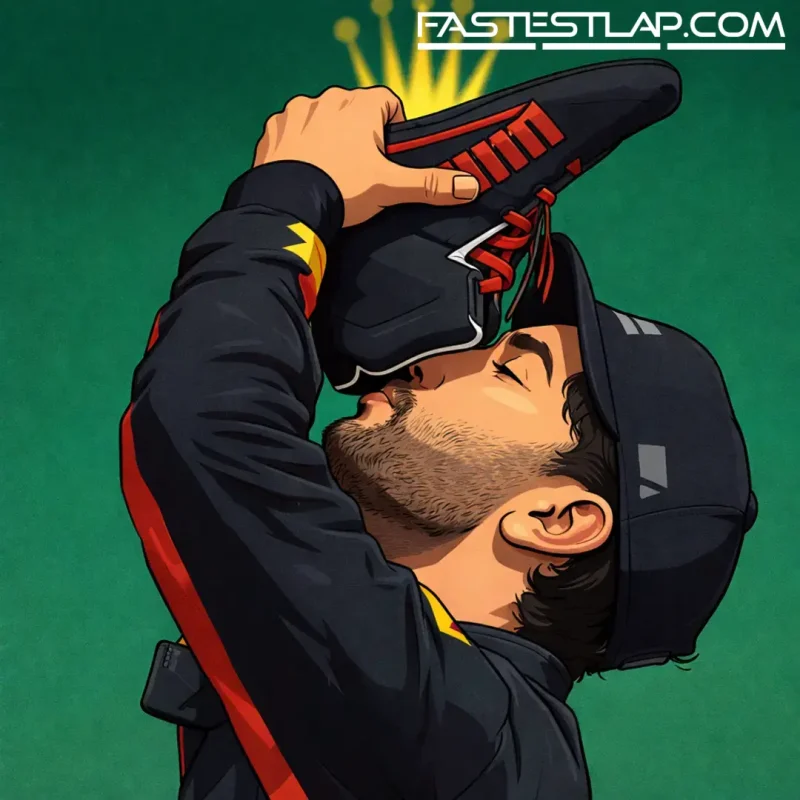
Horner, who oversaw Daniel Ricciardo’s best years in a Red Bull between 2014 and 2018, has said the Australian could have been world champion if the team had simply given him a better car at the right moment. It’s not a wild claim dressed up for headlines; it’s more the sort of admission you get once the competitive sting has dulled and the “what ifs” stop being politically dangerous.
Ricciardo took seven of his eight F1 wins with Red Bull in that spell, and whatever you think of the way his later chapters played out — Renault, then McLaren — there was a window where he looked like the kind of driver who could’ve carried a title campaign if the machinery had met him halfway. He’s now out of motorsport, having retired last year around a year after his final F1 appearance, and he’s still tied to the brand as an ambassador for Ford, Red Bull’s new engine partner. That last detail matters, too: Ricciardo’s story has become a useful reminder of what happens when timing, team trajectory and talent don’t align perfectly.
Because right now Red Bull is in a timing game of its own.
The Red Bull Powertrains-Ford project made its first public impressions at the Barcelona shakedown last month and, if you’re looking for an early indicator of whether the established order might get messy, Zak Brown’s reaction was telling. McLaren’s CEO called the new Red Bull-Ford engine “very strong” and, with the sort of candour you only get from Brown, added that he’d “rather them not be as competitive”.
That isn’t just a throwaway line. McLaren and Red Bull have sharpened into proper rivals in recent years, and Brown’s interest reads as equal parts compliment and concern. It’s also notable that he’s already flagging “deployment” as an area he wants discussed with the FIA — the kind of topic teams raise when they suspect the real performance separation might be hiding in the way energy is used rather than in the headline horsepower.
For Red Bull, this is the entire point of the project. Building its own engines for the first time via the Powertrains division — with Ford alongside — is a bet on control: control over development direction, integration, and the competitive destiny that in previous eras could be hostage to a supplier’s priorities. Early praise from a rival doesn’t win you anything in February, but it does underline that the paddock is taking the programme seriously far sooner than many would’ve expected.
If Red Bull’s 2026 storyline is about proving it can be a full works outfit on the power unit side, Aston Martin’s is about what happens when you hand a fresh sheet of paper to the most influential designer of his generation.
Newey has described the AMR26 as “much more” tightly packaged than anything Aston Martin has attempted before, and those words alone are enough to make rival engineers sit up. Packaging is never just about aesthetics; it’s about how aggressively you can arrange cooling, bodywork, and internals to open up aerodynamic possibilities — and, in the cost-cap era, how cleanly you can execute those ideas without stumbling into reliability gremlins.
The AMR26, Newey’s first Aston Martin F1 car since completing his move from Red Bull last year, apparently did what Newey cars often do when they first appear in public: it stopped the paddock. Shakedowns aren’t designed to give away lap time, but they do reveal intent. A tightly-wrapped car is a statement that a team believes it can live on the edge without falling off it.
Not everyone will get to see much of this week’s next step, though. Sky F1 has confirmed that only the final hour of each day of running will be shown live during the second pre-season test in Bahrain. Full coverage is expected to return for the final test on February 18-20, but the limited window is still a frustration for fans and, quietly, a gift for teams that would prefer to operate without every garage twitch turning into a social-media “analysis thread”.
It also speaks to a broader reality of modern testing: we’re all trying to extract meaning from fragments. One hour of pictures, a handful of speed-trap numbers, a quote about deployment here, a “tight package” there — and then we pretend we’ve got the competitive order mapped out.
Finally, amid the 2026 noise, Lewis Hamilton provided a different kind of moment: a simple image from Maranello, lifting the cover to look at Michael Schumacher’s Ferrari F2004. The car needs no introduction — 15 wins from 18 races in 2004, 13 of them with Schumacher as he sealed his seventh and final title — and this year marks 20 years since Schumacher’s last season with Ferrari. Hamilton’s visit wasn’t a performance update or a teaser; it was a nod to what Ferrari has been at its most ruthless, and what every driver who walks through those doors ends up measuring themselves against.
In a week where new engines are being appraised, new cars are being unwrapped, and the sport’s access remains oddly rationed, that quiet glance under a dust cover landed with its own weight. F1 loves the future — especially in a regulation reset year — but it still can’t resist the pull of the past. And sometimes, in Ricciardo’s case, the past comes with a reminder: even the right driver can miss a title if the sport doesn’t meet him at the right moment.