Quiet power plays: Ferrari and Red Bull reset their comms benches for 2025
While the spotlight stays locked on drivers and wind tunnel hours, the paddock’s quiet power brokers have been shuffling too. Ferrari and Red Bull — and a good slice of the rest of the grid — have reworked their communications structures ahead of the 2025 season, a reminder that how a team tells its story can be almost as important as how fast it is.
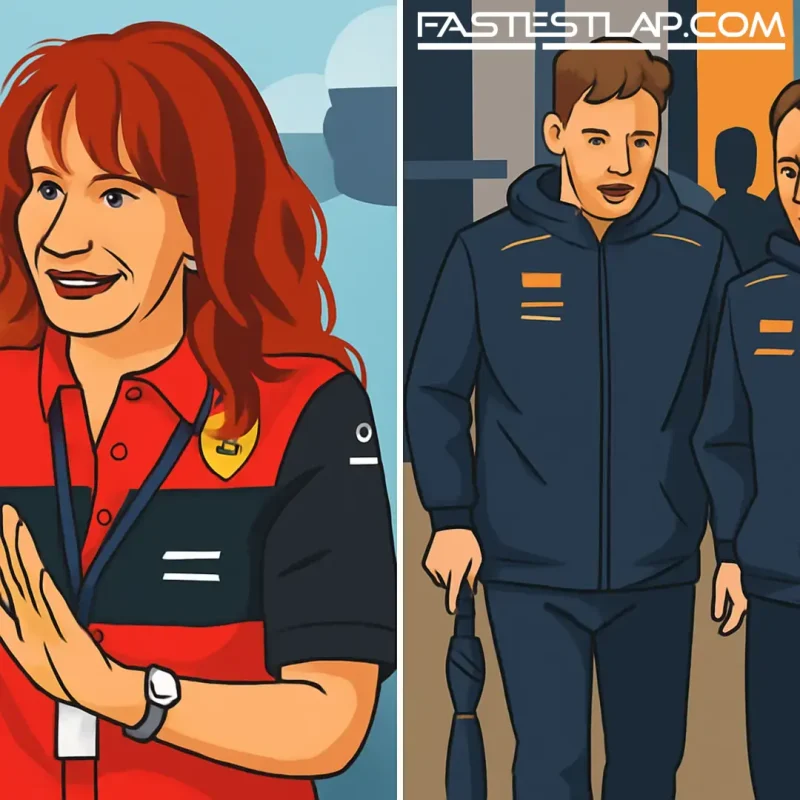
At Maranello, Silvia Hoffer Frangipane has moved on from her role leading Ferrari’s F1 PR and media after seven years steering the Scuderia’s messaging through some turbulent chapters. The veteran communicator, whose Formula 1 career stretches back to Minardi and Williams before a long stint at McLaren, will take up a new position inside Ferrari’s corporate communications arm.
Her F1 brief will be handled on an interim basis by Maria Conti, who joined Ferrari as chief communications officer in November and sits on the company’s leadership team reporting to CEO Benedetto Vigna. Conti’s CV runs through Maserati Corse, Maserati, Alfa Romeo, BMW and Mini, and she’s already set the tone: Ferrari’s voice, she’s said, should blend tradition with innovation — which is exactly the balance you need when your badge carries that kind of weight.
Across the paddock, Red Bull has installed Benjamin Ippoliti as director of communications, reporting directly to Laurent Mekies. Ippoliti’s background is deeply Red Bull-flavoured: five years embedded with RB Leipzig during the club’s rise, then into Red Bull’s Salzburg headquarters as global head of marketing and communications for corporate projects. He replaces Paul Smith, who departed in July alongside Christian Horner. During the transition, former head of communications Eric Silbermann kept the shop running.
If you think these are merely HR footnotes, you haven’t watched how quickly a story can get away from a team in the mixed zone. Comms directors set the tone of a season just as surely as a technical director sets the car’s direction — when to front up, when to hold the line, when to let your drivers be a little bit rock ’n’ roll.
There’s been movement almost everywhere you look:
– Racing Bulls has shifted long-time head of communications Fabiana Valenti into a factory-based corporate role. Alexandra Horton steps up from senior comms manager to lead the F1 side. Horton’s been central to shaping the team’s fresher, youth-leaning identity; now she gets the top job to push that further.
– Williams sees Dominique-Heyer Wright take charge of F1 communications, reporting into group head Craig Woodhouse, after Rebecca Banks moved on. Expect a steady, data-literate voice out of Grove, consistent with the team’s recent reset.
– In Hinwil, Sauber’s chief communications officer Florian Buengener has exited for personal reasons. The department is currently led by Will Ponissi — a familiar face in the paddock and a safe pair of hands — pending a broader update, coming not long after Audi’s comms director Guido Stalmann departed.
– Haas continues its upward organizational curve with Jessica Borrell promoted to head of F1 communications under director Stuart Morrison. The American team has been scaling up its media output; more hires are expected.
– Over at McLaren, former Ferrari and Pirelli comms chief Luca Colajanni has arrived to replace Sophie Ogg — a heavyweight addition to a team that’s been increasingly sharp in how it communicates its resurgence.
All of which subtly alters the sport’s media landscape heading into 2025. Ferrari’s change is the most symbolic: Frangipane’s tenure spanned upheaval, revival, and a team relearning how to manage noise. Conti’s interim stewardship — backed by her corporate remit — hints at a more integrated, brand-first approach between road car storytelling and F1’s weekly theatre.
Red Bull’s appointment, meanwhile, tightens the link between its wider corporate machine and the F1 operation after a summer of headlines that didn’t always revolve around lap times. Ippoliti is a company man with a track record of navigating high-attention environments. That matters when every Thursday press conference can turn into a referendum on culture as much as pace.
There’s also a generational thread running through the changes. Horton at Racing Bulls and Borrell at Haas represent the wave of operators who came up during Drive to Survive’s boom years, who understand that your TikTok tone can influence how Sunday lands. At the other end of the timeline, the sport’s institutional memory remains anchored by a couple of stalwarts: Mercedes’ Bradley Lord, in Brackley since 2011 and now the team’s chief communications officer and representative under Toto Wolff, and Aston Martin’s Will Hings, who joined in the Force India era and continues to work alongside CCO Luke Skipper.
The cars will have the final say, as always. But in a year where every storyline feels like it can swing a tenth — contract chatter, technical tweaks, a stray radio message — the people shaping the message matter. Expect press pens that are a touch shrewder, Friday briefings that are a little tighter, and fewer unforced errors when the microphones appear. The lap times will tell you who’s fast. The comms teams will tell you why it matters.