‘We almost had him’: Sauber’s two-year bet that kept Lewis Hamilton from Hinwil in 2007
Some sliding doors in F1 are barely ajar; this one was yanked shut on the tarmac at Zurich’s Kloten Airport.
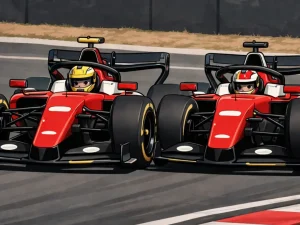
Peter Sauber says Lewis Hamilton came within a whisker of racing for his team in 2007, only for a proposed McLaren loan to collapse over the length of the deal. The former team boss told Swiss outlet Blick that McLaren wanted to park its protégé in Hinwil for a single season, while Sauber insisted on two. No agreement, no debut in BMW-Sauber white and blue.
“Hardly anyone knows that, around 20 years ago, Lewis Hamilton almost drove for us,” Sauber said. “The Brit belonged to McLaren and they wanted to send him to Hinwil for Formula 1 training. So the McLaren delegation met with Lewis and his father, as well as our in-house lawyer Monisha Kaltenborn and myself, at Kloten Airport. The deal fell through because McLaren only wanted to loan him for one year – but we insisted on two years!”
The context matters. Hamilton had detonated GP2 in 2006 and looked every inch the future star. McLaren, meanwhile, had already lured Fernando Alonso from Renault on a deal signed at the end of 2005. Kimi Räikkönen’s switch to Ferrari then set off the final domino: a vacancy alongside Alonso for 2007.
Had Sauber blinked on the loan term, Hamilton might have learned the ropes in a works-backed BMW outfit, a team that would win a race with Robert Kubica in Canada the following year. Instead, McLaren stuck to its one-year plan and, when Sauber wouldn’t bite, rolled the dice on Hamilton themselves.
It’s hard to imagine that season playing out any bigger. The rookie went toe-to-toe with a two-time world champion, finished level on points with Alonso, and lost the title by a single point to Räikkönen in Brazil. The next year, he sealed his first World Championship. That’s a pretty emphatic rebuttal to any idea he needed a gentler introduction.
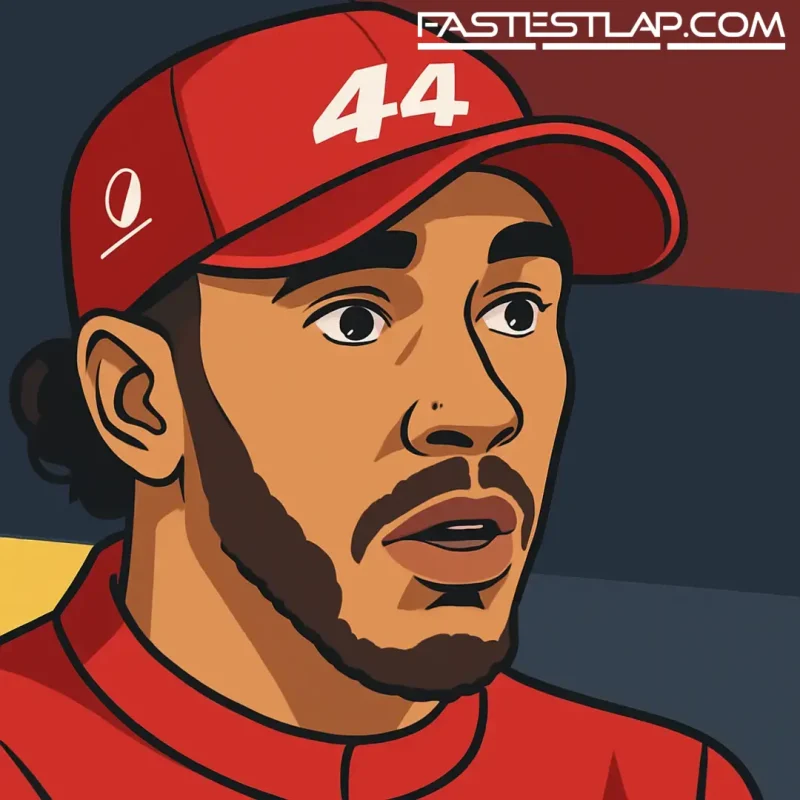
Hamilton’s career since is the history you know: the late-2012 move to Mercedes that turned into an era, six more titles between 2014 and 2020, and the bold call to join Ferrari for 2025. He’s still hunting, still shaping the sport in red now, a long way from the airport meeting that never became a contract.
As for Sauber, the “what if” lingers. BMW’s partnership delivered only one victory before the manufacturer bowed out at the end of 2009. The Hinwil operation kept reinventing itself, and as of January 2025, Audi has completed its full takeover ahead of a factory entry in 2026. Imagine the symmetry if Hamilton really had started there — the most decorated driver of his generation beginning life at the team now set to become Audi’s works project. F1’s alternate timelines write themselves.
There’s a subplot to those McLaren decisions, too. In a separate anecdote from that era, former McLaren communications chief Matt Bishop recently recalled that when Alonso exited at the end of 2007, Robert Kubica wasn’t pursued as a Hamilton teammate — with an offhand remark about appearance tossed into the mix. Bishop suggested Martin Whitmarsh joked that Kubica’s nose was “too big,” an aside the ex-PR man himself framed as likely tongue-in-cheek, but emblematic of how image-conscious the team could be in the Ron Dennis years. McLaren ultimately signed Heikki Kovalainen for 2008.
Seen from 2025, Sauber’s airport standoff with McLaren reads like a small contractual squabble with outsized consequences. A two-year insistence cost them a star who went supernova on debut. For McLaren, the refusal hastened a spectacular season, then a champion. For Hamilton, it was the difference between a careful apprenticeship and a headline act from lights out.
He chose the deep end. The rest of us got one of the great rookie seasons — and a reminder that in F1, the tiniest terms can tilt the future.