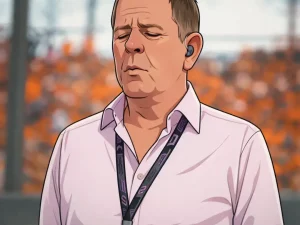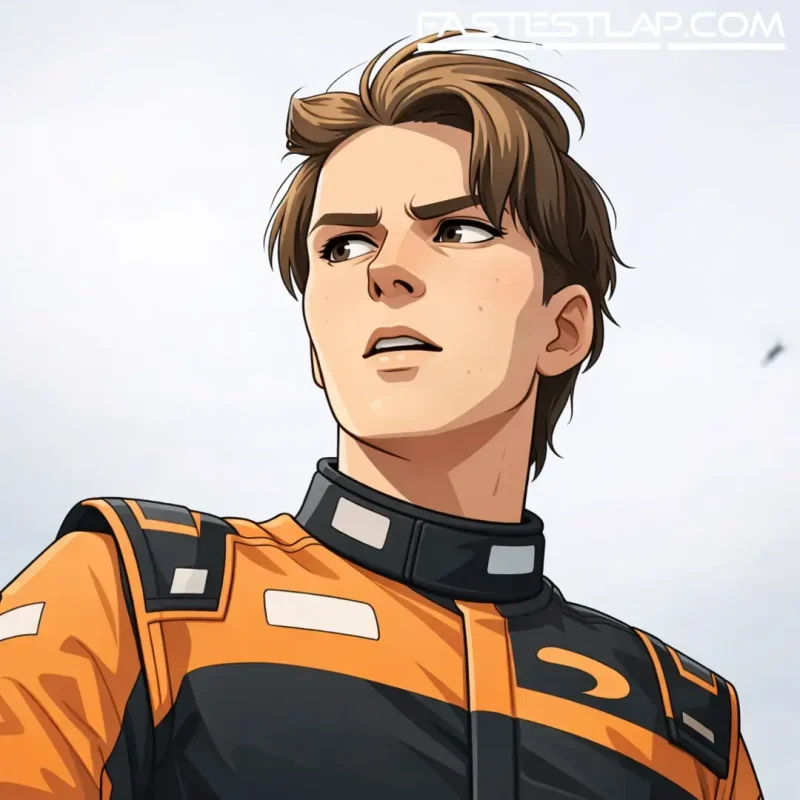
Oscar Piastri stood on the Suzuka grid this weekend wearing the same expression he seems to carry through most of his Formula 1 life: neutral, unreadable, almost stubbornly consistent. In a paddock that can’t resist psychoanalysing every twitch of a visor, that’s become his calling card — and, increasingly, one of his competitive tools.
It’s tempting to mistake that restraint for a lack of edge. It isn’t. What Piastri has cultivated is something rarer: emotional economy. He doesn’t spend much. Not on celebrations, not on complaints, not even on moments where plenty of drivers would feel entitled to vent.
You only have to look back to last season, when McLaren’s title fight turned inward and messy without ever becoming public theatre. Piastri and Lando Norris took points off rivals and, eventually, off each other. Piastri carried a 34-point advantage before the campaign swung hard, Norris overturning it in the final third to win the championship by 13. It was the sort of momentum shift that usually leaves scar tissue — and soundbites.
Piastri didn’t really offer either.
Even the Monza episode, the kind of intra-team flashpoint that can poison a garage for months, didn’t bring a typical reaction. Asked to hand second place to Norris after a situation Piastri felt wasn’t his fault, he pushed back just enough to make the point — and then did it anyway.
“I mean, we said that a slow pit stop was part of racing, so I don’t really get what’s changed here,” he told the team. “But if you really want me to do it, I’ll do it.”
And he did. Then he went out and defended the team in interviews, smoothing over the kind of awkwardness that normally invites a week of loaded quotes and passive-aggressive “we’ll discuss it internally” lines. Piastri simply moved on, as if the drama belonged to someone else.
When the title finally slipped away at the last round in Abu Dhabi, the radio message was almost disarming in its control — not robotic, not performative, just flatly sincere.
“It’s been a great season trying to beat each other, so congratulations,” he said. “Well done to everyone. Fantastic season. Thanks for all the work. Tried our best to get there, but it wasn’t quite to be… Well done everyone. Thank you.”
That’s not the language of a driver who doesn’t care. It’s the language of a driver who refuses to let the emotion lead the driving.
Piastri has talked about that balance more openly as he’s become established. Speaking to Fox Sports, he admitted he feels more comfortable now than he did in his first year, but stressed that comfort hasn’t come from reinventing himself into an “F1 personality”.
“I think it’s always been something that’s pretty important to me, being just who I am off the track as well and not trying to force something that isn’t me,” he said. “It’s always attached to performances on the track.”
That link — personality unlocked by credibility — is something the paddock understands instinctively. Drivers can be as sharp, dry or playful as they want once they’ve banked results. Until then, everything risks being read as overcompensation. Piastri, typically, sees it in functional terms: he doesn’t like talking unless he’s got something to stand on.
“I think often I find it very hard anyway to be kind of jokey or making shots at people and stuff if you can’t back it up on track,” he continued. “For me just being relaxed and being myself has always been how I am.
“Once you’ve got some results and let’s say some street cred to back it up, then you naturally feel a bit more comfortable, showing yourself more and not being maybe the super professional F1 driver all the time and letting your personality show.”
It’s a revealing window into how he’s wired. Not shy, not aloof — just selective. The calmness isn’t an act; it’s his default setting. Which is why it stands out so much in F1, where the job isn’t only to drive quickly but to manage pressure as a public sport, to keep sponsors fed, to satisfy the modern demand for narrative.
Piastri doesn’t give narrative easily. He gives laps.
That temperament has earned him a certain reverence among broadcasters and former drivers who’ve seen enough championship fights to know what breaks people. On Sky’s coverage, David Croft summed up the impression many have formed: “He doesn’t get too flustered or excited or too down and depressed.” Martin Brundle’s response carried the more pointed observation — that a “calm head” in a title showdown can pay “big dividends”.
The obvious counter is that it didn’t pay dividends in 2025, when the season turned after Monza and Piastri’s advantage evaporated. If anything, that collapse is what makes the conversation interesting now. Because composure is not the same thing as passivity, and serenity doesn’t automatically solve the brutal arithmetic of a championship run-in. Titles swing on tiny margins: one compromised weekend, one operational wobble, one slightly wrong call on a Sunday when you needed a perfect one.
But if last year proved anything, it’s that Piastri can take a hit without flinching publicly — and that has value in a team environment. McLaren didn’t escape the tension of having two genuine title contenders, yet it also didn’t implode into the kind of civil war that destroys seasons. Piastri’s refusal to escalate moments like Monza mattered, even if it didn’t change the trophy engraving.
Now, in 2026, he looks like a driver who’s subtly expanding the edges of his public self — a little more willing to show humour, a little less locked into the “super professional” shell — while keeping the same internal thermostat that makes him so hard to read in the car.
F1 has never been short on loud confidence. What it’s always struggled to quantify is quiet certainty. Piastri’s bet is that you don’t need the noise — not if you’re quick enough, and not if you can keep your head when the season starts asking awkward questions again.
Last year asked plenty. He didn’t give much away. And that, more than any quote, might be the point.