Brazilian GP Sprint: Piastri bites the kerb, Verstappen saves it, chaos at Turn 3
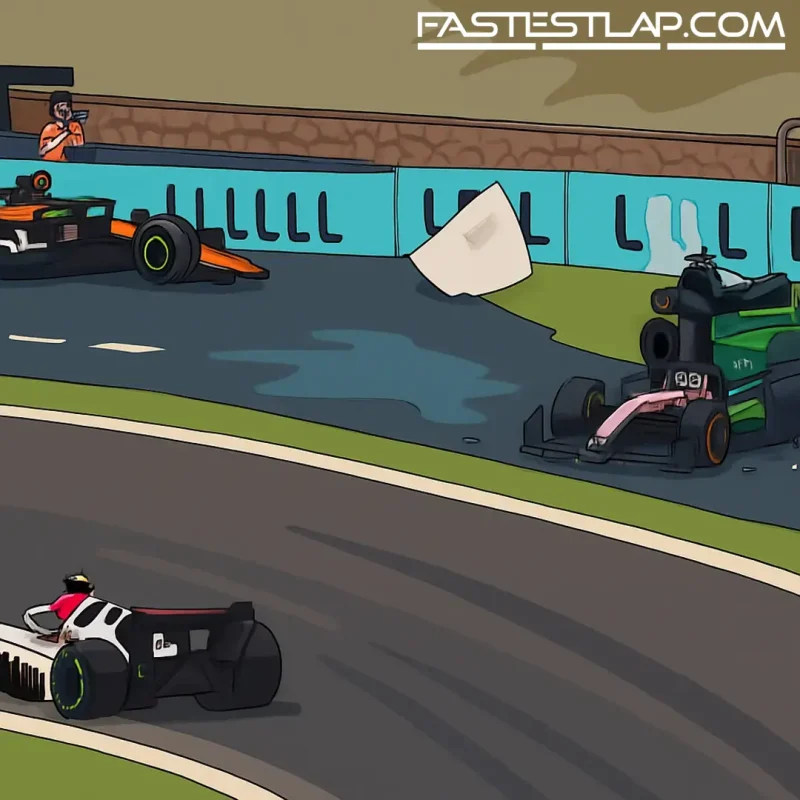
Interlagos did what Interlagos does best in the Sprint: offer a sliver of grip, then snatch it away. In the space of a few seconds at Turn 3, Oscar Piastri, Nico Hülkenberg and Franco Colapinto all found the same damp patch, skated the same line, and met the same barrier. Red flag, marshals sprinting, and a paddock full of drivers quietly checking how close they’d come to the same fate.
One of them was Max Verstappen. Running fifth behind George Russell, the Red Bull driver clipped the same offending kerb and felt the RB21 step out in a sharp, familiar snap. The Dutchman caught it with the sort of fast hands you can’t teach, straightened the car, and lived to tell the tale—then brought it home fourth when the Sprint finally settled down.
Piastri didn’t get that luxury. The McLaren driver had started third and was pressing Kimi Antonelli when he used the Turn 3 kerb one time too many. What had been just-about manageable a lap earlier became glassy with extra water dragged on by cars ahead, and the Australian looped off. Hülkenberg and Williams rookie Colapinto followed him into the same wall moments later, backing up the idea that Turn 3 was less a corner and more a well-disguised trap.
“I used it the lap before,” Piastri said afterwards. “A couple of the guys ahead also used it and potentially put a bit more water where I went. Probably shouldn’t have been on the kerb anyway, but the track was different to the lap before—and clearly I wasn’t the only one that got caught out.” It wasn’t a wild line, he added, just an ordinary approach with unusually heavy consequences.
The Sprint result ultimately tilted McLaren’s way, thanks to Lando Norris converting control into victory while Verstappen’s recovery to P4 limited the damage for Red Bull. But Piastri’s Saturday set the tone for a bruising Sunday. He finished fifth in the grand prix after a 10‑second penalty for contact with Antonelli, who keeps collecting experience—and elbows—from the sharp end of F1’s new order.
Norris, meanwhile, did the double at Interlagos, adding the grand prix win to his Sprint success, and Verstappen joined him on the main-race podium. In championship terms, that’s a meaningful shove. Norris heads the standings on 390 points, Piastri 24 back, and Verstappen another 25 behind the Australian. The margins are still tight enough to matter, but in a year defined by small swings, Brazil felt like a two‑race momentum play that landed squarely on the papaya side of the garage.
The broader takeaway from the Sprint was simple: conditions were on a knife-edge, and Turn 3 demanded a level of precision that left no room for curiosity. Touch the kerb by a few centimeters and the car would breathe out, then spin—all while the place looked benign enough to lull even the best into trusting it. Piastri’s explanation tracked with the visuals: each pass dragged more moisture onto the line, and what looked like a standard line became a booby trap.
Verstappen very nearly learned the same lesson the hard way. He didn’t, because he usually doesn’t. But the video that’s done the rounds of his snap and save tells the rest of the story: Interlagos was a little wild on Saturday, and you needed a wide skillset just to keep the thing pointing the right way.
For McLaren, it’s the duality of a title bid in two acts. Norris leaves Brazil with a spring in his step and a bigger lead; Piastri leaves with scuffs on the scoreboard and a memory of a kerb he won’t be revisiting any time soon. The difference between the two? About as much as a few drops of water and a kerb width. In 2025, that’s plenty.