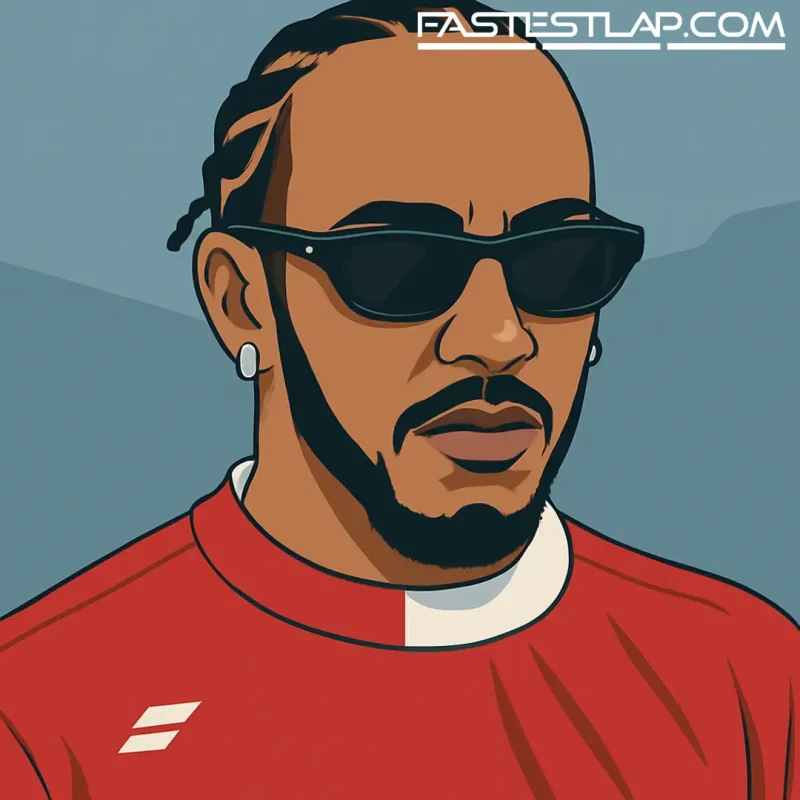
Bernie Collins sees a familiar story playing out at Ferrari: a world champion walks through the door with a bulging notebook, a clear view on how to sharpen the team, and the patience to push until people listen. The twist, of course, is that this time it’s Lewis Hamilton.
Hamilton’s first season in red was bruising. Beyond a lone bright flash — a Sprint win from pole in China — the results were bare, and the seven-time champion ended the year without a podium for the first time in his career. In the background, though, the work never stopped. Hamilton has been handing Ferrari a steady stream of documents and debrief notes, a roadmap of where he believes the team can find gains. The question lingering over Maranello is whether those ideas are being absorbed quickly enough.
Collins, Aston Martin’s then-strategy chief when Sebastian Vettel arrived in 2021, admitted on Sky F1 she had braced for friction. Vettel, like Hamilton, doesn’t shy from challenging strategy calls. Instead, he embedded, watched, and steadily fed in improvements. They found common ground, took the best from both sides, and moved forward. That, Collins said, is the playbook Ferrari must follow with Hamilton — and fast.
Because the signs of strain have been there. Over the radio, Hamilton’s exchanges with race engineer Riccardo Adami were sharper than anything we grew used to in the Mercedes era. Elsewhere, Ferrari chairman John Elkann made headlines with a blunt “focus on driving, talk less” message to his drivers after São Paulo. Those aren’t the sort of optics that say “perfectly aligned.”
None of this is simple. Ferrari is, as ever, Ferrari — the closest thing F1 has to a national team — and Hamilton turned up largely without his old guard. There’s history with team principal Fred Vasseur from Hamilton’s junior days, and chassis chief Loïc Serra knows him well from Mercedes. But Peter Bonnington, the trusted voice in his ear for a decade of title fights, stayed put. As Collins pointed out, “Bono” was never likely to uproot his family to Italy. The upshot for Hamilton has been a new voice on the radio, a new garage rhythm, and a new culture to sync with, 24 weekends a year.
Vasseur didn’t duck that reality. He conceded the team underestimated how heavy the culture change would feel — the people, the processes, the way information flows. Yes, the collaboration and car understanding improved as the season wore on, he said, but the adaptation was tougher than they’d called.
That’s why Collins’ Vettel comparison matters. She remembers worrying about a driver who’d often torn into strategy on the radio. What actually happened was constructive: he watched first, then suggested, then built. Hamilton is doing the same. And if he doesn’t sense those suggestions turning into action, that’s where the real concern lies. It’s not the criticism — it’s the silence that can follow when a driver stops believing he’s being heard.
Ferrari can’t rewrite the chassis on a Friday night, and nobody knows that better than Hamilton. But teams do evolve weekend to weekend with process, preparation, and decision-making — the soft tissue of a title bid. That’s the space where a driver of Hamilton’s calibre traditionally makes a team better, the area where the big gains are invisible until the results stop being.
Does this all land neatly alongside Charles Leclerc? On track, the scorecards didn’t flatter Hamilton in year one. Off it, Leclerc’s not been shepherding his new teammate with advice — and why should he? Their job is to make Ferrari quicker, not to make each other comfortable. The responsibility for integration sits with the team as much as the driver.
Ferrari has been here before with champions and star signings. Sometimes the chemistry clicks; sometimes it takes an extra winter. The encouraging bit is that Hamilton hasn’t stopped feeding the machine, even when the execution hasn’t matched the intent. That suggests he still thinks there’s a lot of lap time sitting on the table if they can line up how they prep, how they decide, and how they race.
In the end, Hamilton didn’t join Ferrari to be a consultant; he came to win in red. The documents, the debriefs, the firm nudges over the radio — they’re all part of the same push. If Maranello moves with him, the 2025 pain can be the prelude. If not, as Collins hinted, the frustration becomes harder to ignore — and the calendar isn’t kind to teams that wait too long to listen.