‘Our backs have taken a toll’: Gasly, Leclerc and Stroll lift the lid on the ground‑effect grind
From the grandstands, the porpoising storm that defined 2022 has long since blown over. Inside the cockpit, the aftershocks never really stopped.
Pierre Gasly says the ground‑effect era has been tougher on drivers’ bodies than most realise, with the Alpine driver admitting the physical wear has lingered even as the cars look calmer to the naked eye.
“It’s definitely been rougher for us inside the car — especially with all that bouncing and porpoising,” Gasly said when asked to reflect on the rules cycle that wraps at season’s end. “Our backs have taken much more of a toll than what people could imagine, and what it looks like from the outside. So I’m pretty happy that we’re kind of going away from that.”
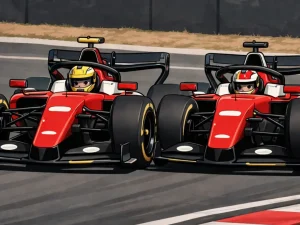
The visual of drivers’ helmets bobbing down straights became the unwanted postcard of 2022, Mercedes the most high‑profile case study. The FIA eventually stepped in with tighter limits and changes aimed at curbing oscillations and forcing teams to run a touch higher. It worked — mostly. The bone‑rattling images faded. The stiffness didn’t.
Gasly framed the era as a bargain F1 took and, to a point, enjoyed. The cars were brutally quick. Lap records fell. The sensation through high‑speed corners has been outrageous. “Driving‑wise, we beat a couple of track records on some tracks,” he said. “In terms of actual driving and speed we carry through the corner — it’s pretty incredible on some occasions. Pretty amazing feeling inside the cockpit. But I’m sure there are different ways of achieving it. And I’m sure we can do better — on the weight and the way we achieve the performance.”
He’s not alone. Charles Leclerc called 2022 the least enjoyable season of this ruleset from a driver’s perspective, even if Ferrari’s peaks that year still sting for different reasons. “I didn’t really enjoy the first year, especially,” Leclerc admitted. “Obviously, there was quite a bit of bouncing, and that wasn’t the best thing I’ve had in racing. After that, it got a little bit better on our side. Sure, it’s still stiff. I’d love to have a lighter car, but I actually kind of enjoyed the last three years. The car got better, faster, and it’s still extremely fast in high‑speed corners. Probably not as enjoyable as the previous generation of cars, but still — I enjoyed it a lot.”
If Leclerc’s verdict is nuanced, Lance Stroll’s is less so. “I’m not going to miss it,” the Aston Martin driver said bluntly. “I think the cars — they’ve been very stiff these last few years. The idea behind this regulation change was to make racing better. I don’t know if we really achieved that. They’ve gotten heavier. They’ve just been too heavy and too stiff. Even throughout the last few years, battling injuries and stuff has become more of a thing.”
There’s a running joke in the paddock that F1 drivers don’t complain unless a rule costs them a tenth; talk to a physio and you get a different edge to the punchline. The reality is that the combination of stiffer floors, low‑slung ride heights and soaring weights has asked a lot of spines, necks and hips, particularly over street circuits and serrated kerbs. And while the spectacle at times has been excellent — DRS trains and tyre preservation gripes aside — the day‑to‑day grind has been real.
Whether the outgoing era achieved its primary aim of improving racing will remain a debate for the winter. The drivers’ verdict on comfort is clearer. “I’m probably not the biggest fan of this set of regulations,” Stroll added. “But we’ll see what next year brings. Whoever’s going to be competitive I’m sure is going to love the regulations. That’s how it works in this sport.”
That last line is the catch. F1 romance lives on feel — and on lap time. The next rules reset promises answers on both fronts. The challenge will be retaining the head‑spinning speed without the head‑banging ride, trimming weight and downforce without neutering the show, and letting drivers climb out after 90 minutes without feeling like they’ve just done 12 rounds with a concrete floor.
For now, one more season’s worth of kerbs, street bumps and flat‑out commitment remains. The lap times will be outrageous. The highlights will look slick. Just don’t be fooled by the smoother footage — the chiropractor still knows who’s been driving a ground‑effect car.