Leclerc lifts the lid on Ferrari’s knife-edge SF-25 as Hamilton ends podium-less debut season
Ferrari brought the star power in 2025. The results? Far less glamorous.
Lewis Hamilton’s first year in red ended with 156 points, a lone Sprint win and, for the first time in his 19-season Formula 1 career, no grand prix podiums. That’s a stat that sits uncomfortably next to the seven-time champion’s name, and it colored a campaign that often felt more like firefighting than front-running.
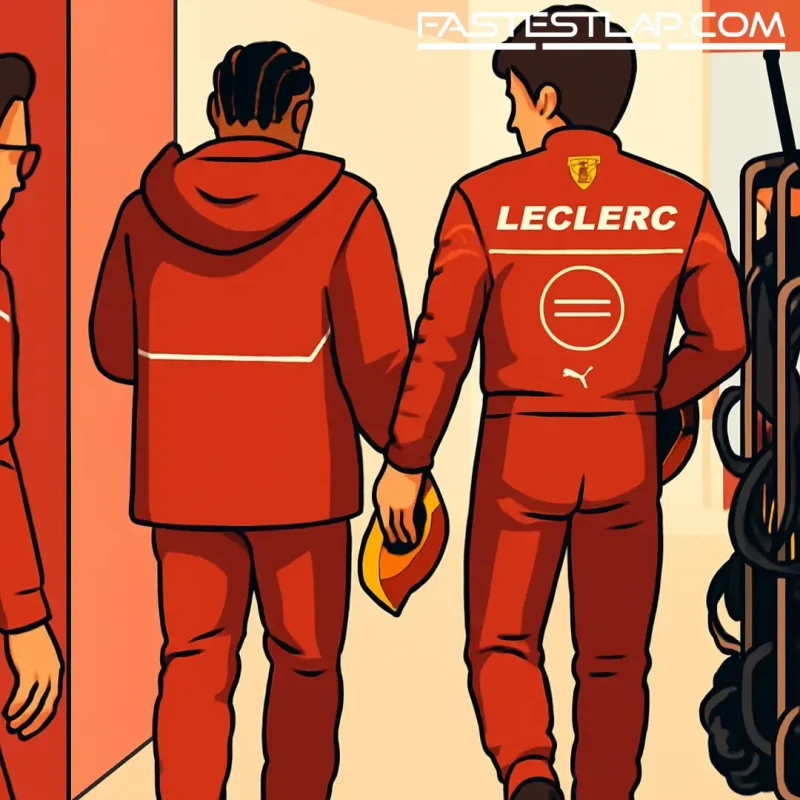
But inside the garage, Charles Leclerc insists there’s a simple explanation: the SF-25 was a car you had to manhandle. And even then, it didn’t always play nice.
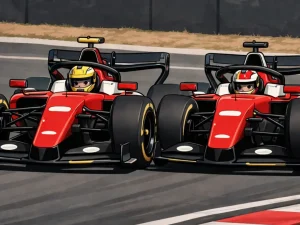
Speaking after the season finale, Leclerc painted a vivid picture of a Ferrari with speed in it, but only if you danced on a razor’s edge. Qualifying, in particular, was like tightrope walking without a safety net. If you didn’t wring every last drop out of it, you were nowhere. If you did, you risked swapping a front wing for a new one.
Ferrari’s No. 16 said the margins were so fine that he often felt like he was one misstep from the barriers while trying to drag the car through each phase of qualifying. That kind of approach is exhilarating when it works, but it’s a poor foundation for understanding a car and making it better week to week. Meanwhile, rivals like Red Bull and McLaren could take a breath in Q1 and Q2, gather data, and build a platform for Sunday. Ferrari had to throw the kitchen sink at Saturdays just to stay in the fight.
That dynamic did Hamilton no favors. The 40-year-old carried the weight of expectation that comes with a move to Maranello and the permanent buzz of an eighth title chase, only to find a package that wanted to overstep before it wanted to behave. The radio traffic sometimes got sharp, the interviews occasionally flat. It didn’t look or feel like the dream.
Hamilton’s plan now is straightforward: put the phone down and disappear for a bit. He’s talked about needing a proper reset after a season that seemed to run on photo shoots and pressure. What he hasn’t done is waver on the long game. With F1’s all-new car and power unit rules landing in 2026, there’s no hint of a driver who’s had his fill.
Leclerc, for his part, isn’t throwing haymakers at the year gone by. He’s candid about the SF-25’s traits but keeps the focus forward. Ferrari opted early to pivot resources toward the next car, and Leclerc won’t hang promises in the air before the lights go out. First qualifying next season will do the talking, he says. If that early bet pays off, Ferrari could finally start the year on the front foot rather than chasing it.
For all the frustration, there’s a certain logic to Maranello’s approach. If your car demands qualifying heroics just to hold track position and offers little headroom to learn, you either fix the concept or commit to the future. Ferrari chose the latter.
And that’s the context Hamilton deserves. He didn’t forget how to race. He and Leclerc were wrestling a car that rewarded risk and punished nuance, and that’s a brutal way to live across 24 rounds. When it clicked, it looked quick. When it didn’t, you saw the narrowness of the window.
Ferrari’s 2025 driver pairing was always going to be the story. In the end, the SF-25 became it. Now the question is whether all those sacrificed evenings at the factory turn into something with a broader operating range—and, finally, the sort of Sundays Hamilton crossed continents to find.
If they get that right, we’ll all know by Q3. If they don’t, we’ll know even sooner.
Note: Ferrari’s 2025 driver line-up is Charles Leclerc and Lewis Hamilton, as confirmed on the 2025 Formula One World Championship entry list.