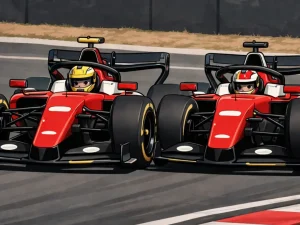
Las Vegas qualifying left Charles Leclerc cold, wet, and furious. The Ferrari driver hauled the SF-25 into Q3 on a treacherous Friday night but could do no better than ninth on a rapidly changing track — and that was only half the story. Somewhere in the middle of a push lap, his engine simply… went to sleep.
“Engine switched off,” Leclerc reported, abruptly and disbelieving, as he coasted. Race engineer Bryan Bozzi told him to bring it back to life, which Leclerc managed on the fly. It was the kind of gremlin that turns a knife‑edge qualifying session into a white‑knuckle ride, and the mood post-session matched it. His assessment over the radio after taking P9 was unfiltered: embarrassing, no grip, nowhere.
The result brought an old frustration right back to the surface. Leclerc didn’t sugarcoat Ferrari’s long-running wet weakness — not this car, not this season, but a pattern dating back to his arrival at Maranello in 2019. For a driver who made his name in the junior ranks with outrageous feel in slippery conditions, nights like these sting.
“We’ve been struggling massively in the wet since I joined,” he said. “We’ve tried like crazy, different things with warm-up, approaches, it just doesn’t switch the tyres on and there’s very poor grip.” He doesn’t believe it’s only an activation problem either; Ferrari has chased that avenue before without cracking it.
The context didn’t help. The Las Vegas Strip Circuit already forces teams into low-downforce trim to survive the 1.9km blast down the boulevard. Add cold asphalt, night-time temperatures and the sort of standing water that terrifies carbon fibre, and it’s a lottery where energy in the tyre is king. Ferrari, again, held a weak ticket.
Leclerc made Q3 while teammate Lewis Hamilton fell at the very first hurdle, but the Monegasque’s lap-by-lap picture didn’t paint any confidence. He described the SF-25 as extremely difficult to drive in these conditions — snappy, inconsistent, never quite in the window — and wished he was at least “as competitive as the guys in front,” such was the gulf he felt on a lap that needed commitment.
Ferrari hadn’t made sweeping set-up swings before qualifying, simply because the window to do so never really existed. “FP1 and FP2 we were actually quite competitive,” Leclerc noted. “FP3 had some wet running but it wasn’t fully wet. Once the rain really arrived for quali, there was no way to change the car by then.” That’s parc fermé reality biting hard.
Leclerc also pointed to a broader reference pool that underscores his point. With Hamilton now in red and Carlos Sainz having left it behind, both have lived on both sides of the fence in wet-weather machinery. The feedback, he says, is consistent: Ferrari has ground to make up when the sky opens. And while the 2026 rules promise a reset, he worries the trait has persisted through generations of car — something deeper than mere architecture.
The engine hiccup won’t help trust either. It was a brief cutout, yes, but exactly the sort of moment that shreds rhythm in a session where the track evolves by the corner and drivers juggle brake temps, tyre temps, and visibility while guessing at grip. Ferrari will dig into the data. Leclerc will have filed it under “please don’t do that again.”
All of this lands in the middle of a late-season Constructors’ fight where every point matters. Ferrari’s form in the dry has been strong enough to keep them in the mix, but the wet once again exposed a ceiling that Leclerc has been trying to smash through for years. He sounded clear on what he needs from the car to go faster in these conditions. Achieving it is the hard part.
Vegas will offer chances in the race if the surface dries and strategy opens up. The SF-25’s single-lap troubles in the wet don’t automatically translate to Sunday pain, and Leclerc can scrap from ninth. But the bigger picture lingers. On nights like these, when the sport becomes a feel game, Ferrari still look like they’re playing catch-up. And Leclerc, never one to hide his standards, is done pretending otherwise.