Mercedes might be setting the pace in Formula 1’s first season under the 2026 ruleset, but Helmut Marko’s picked out the one area that can turn a dominant car into an expensive disappointment: keeping it running.
The W17 has looked like the class of the field since the new cars and power unit formula arrived, stringing together six straight wins from pole before Lewis Hamilton finally broke the sequence at the Barcelona Grand Prix. Even with that interruption, Mercedes still sits on comfortable leads in both championships — Kimi Antonelli holds a 41-point advantage over Hamilton in the drivers’ standings, and Mercedes is 72 points clear of Ferrari in the constructors’.
And yet the story of Mercedes’ year so far isn’t quite as watertight as those margins suggest. Two retirements — both tied to electrical issues — have quietly put a crack in the team’s armour, the kind rivals don’t need to exploit with raw speed if they can just hang around and collect the points Mercedes leaves on the table.
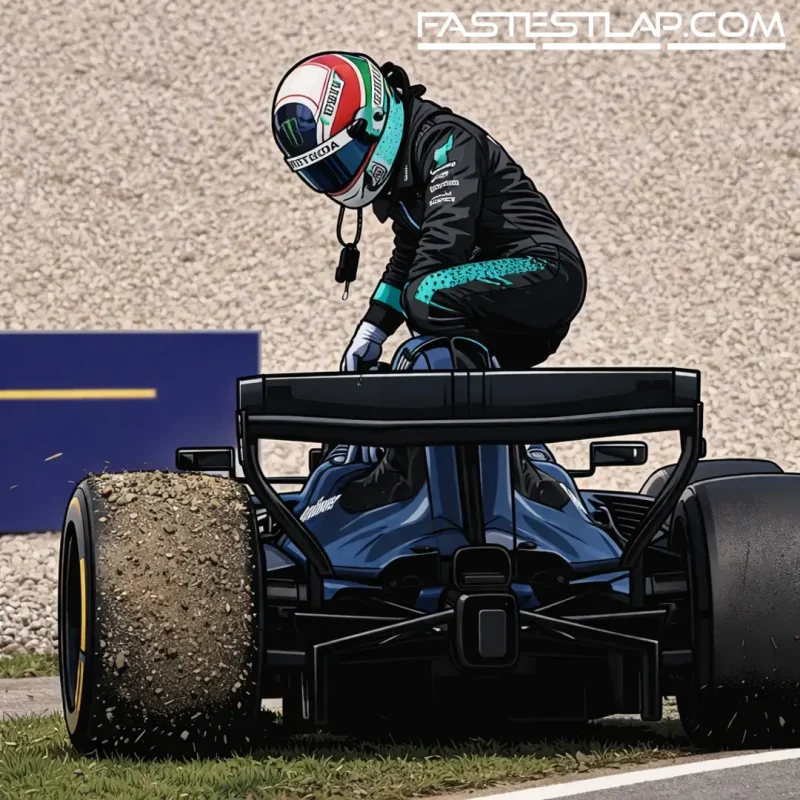
George Russell’s came first in Canada, where a “catastrophic” battery failure ended his race while he was in the thick of a fight with Antonelli. Antonelli went on to win that Grand Prix, but the bigger picture was obvious in the moment: the quicker car doesn’t always bank the bigger haul if it can’t be relied upon. Then in Barcelona, it flipped — Antonelli suffered an “electrical shutdown” late on, climbing out of the car in frustration as Russell carried the team’s flag to second.
In both cases, the DNFs landed at precisely the wrong time: during an on-track scrap between the Mercedes pair. That’s not just bad luck, it’s lost insurance. When you’ve got two cars at the front, the points buffer is supposed to be a safety net for the weekends when something goes sideways. A retirement is how that net disappears.
Marko, speaking to *Kleine Zeitung*, didn’t dress it up. He sees Mercedes as the benchmark under the new regulations — but also as a team already flirting with the kind of reliability record that can turn a title campaign into a tightrope walk.
“The new regulations clearly put Mercedes in the favourite’s role,” Marko said. “However, they’ve already had their second engine failure, which is unusual for them.”
That last line is the key sting. Nobody in the paddock doubts Mercedes can build a quick package — they’ve demonstrated it emphatically — but Marko’s pointing at something more uncomfortable: for a team that built much of its modern-era reputation on clinical execution, two serious electrical failures in seven rounds is the sort of trend that gets noticed.
It also changes the dynamic of how rivals approach the season. If you’re Ferrari and you can’t consistently beat Mercedes on pure pace, you can still keep the championship alive by forcing them to keep finishing. You don’t need to win every Sunday if the favourite occasionally scores zero.
Marko also flagged the other pressure point that comes with year one of a new regulation cycle: development. The cars are still young, meaning gains can arrive in chunks rather than crumbs, and teams willing to push updates early can move the competitive order quickly. In Marko’s view, the rewards right now are huge.
“Generally speaking,” he said, “updates are certainly more effective at this stage of the regulations; you can gain five-tenths of a second in one go.”
Ferrari, he noted, has already rolled out two major upgrade packages, while others have been more conservative. That’s not necessarily a criticism of caution — sometimes it’s just a team making sure it understands what it’s bolting on — but it does underline how much is still in flux. If the front is leaving points on the floor through reliability, and the chasing pack is still finding big performance, a “healthy lead” can start to look smaller in a hurry.
Marko’s comments inevitably fold back into Red Bull’s own position, because his interest isn’t academic. Red Bull has had a muted start to 2026 by its standards: Verstappen sits seventh in the standings after seven rounds with 55 points and only one podium, while Red Bull is fourth in the constructors’ championship on 89 points — already 173 behind Mercedes.
Even so, Marko sounded encouraged by a detail that usually matters more than it reads on paper: weight. He says Red Bull has reached the weight limit with its car for the first time this season, and he’s optimistic that puts Verstappen closer to the sharp end.
“Red Bull is fielding a car at the weight limit for the first time, so they’ll definitely be there,” Marko said. “I hope Max can then be up front.
“Mercedes is the favourite, but the rest of the field is more than interesting.”
That’s a neat summary of where 2026 sits after the opening stretch. Mercedes has the scoreboard advantage and the outright pace, Antonelli has been imperious at times, and the team has enough points in hand that it can absorb the odd imperfect weekend.
But electrical failures don’t feel like “the odd weekend” when they start coming in pairs. If Marko’s right and this is more than early-season noise, the title fight may not be decided by who builds the fastest car — but by who builds the fastest one that actually makes the flag.