Verstappen vs Hamilton, Mexico edition: the guidelines game goes up a gear
Max Verstappen and Lewis Hamilton found each other again in the braking zone at the Mexico City Grand Prix, and—stop us if you’ve heard this one before—the fallout wasn’t about who was braver on the brakes. It was about the rulebook.
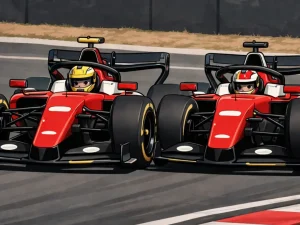
Verstappen lunged for Turn 1 with the kind of commitment that’s defined his prime years, Hamilton stood his ground, they touched, and the fight spilled down to Turn 4. There, Hamilton—now in Ferrari red—locked up, skipped across the escape road and rejoined ahead of the Red Bull. The stewards handed him a 10-second penalty for leaving the track and gaining an advantage. Verstappen, who’d set the tone with that audacious dive, got nothing.
That split call lit the tinder. Hamilton was seething at what he framed as opaque officiating. “There isn’t any clarity,” he said afterward, arguing that decisions “steer careers” and “can decide results of championships,” all made, in his words, behind closed doors. The message was clear: he felt he was racing the car in front and the text between the lines.
TV pundit Karun Chandhok put a slightly different lens on it. Forget just the stewards, he said; start with the playbook itself. “At the moment, Verstappen is the master of driving to the guidelines. He’s exploiting the guidelines to the fullest extent,” Chandhok told Sky F1.
His point hinged on the FIA’s driving standards document—touted as a live, evolving guide when it landed—whose critical paragraphs focus on car positioning from braking, through turn-in, to the apex. It’s vague about what happens after that. So if a driver gets his nose far enough alongside by the apex, as the stewards judged Verstappen had (“front axle ahead of [Hamilton’s] mirror” was the thrust of their reasoning), the onus falls on the other guy to leave room. And if that other guy then bounces across the run-off and stays ahead? That’s where the hammer drops.
In other words: Verstappen’s move might look like a dive-bomb to some, but under today’s rubric, it’s legal if he’s there in time. Hamilton, forced wide and then penalised for how he rejoined, becomes the one with the number next to his name on the stewards’ sheet. It’s cold, it’s clinical—and it’s exactly the sort of edge Verstappen has built an empire on.
Jamie Chadwick, offering a calmer counterweight in the studio, sympathised with Hamilton. Guidelines matter, she said, but so does common sense. “As a driver, you look at a guideline and you drive to that… from their point of view, they’re not doing anything wrong as such. But equally… most people can see what they think should be a penalty.” In other words, if the sport wants fewer Monday-morning arguments, the rules can’t just be technically correct—they need to feel right in real time.
The irony is that the FIA billed these guidelines as a living document. Through a long season, “living” hasn’t meant “changing.” Drivers have adapted to the letter of the law; Verstappen in particular has made an art of arriving exactly where the text says he’s allowed to be. That’s not a criticism—it’s a superpower. But it does leave the rest of the grid deciding whether to follow him into that grey area or keep appealing to the spirit of racing and hope the stewards come with them.
Zoom out, and you can see why Ferrari weren’t thrilled. Hamilton’s Mexico penalty cost him on the day and sharpened a wider frustration: a title fight—or even a constructors’ swing—can hinge on how strictly the apex gets policed. Red Bull and Verstappen won’t apologise for mastering the boundaries. Nor should they. The best always bend the game to their will, and right now, the game rewards the driver who reads the fine print at 300 km/h.
Expect this to land squarely on the drivers’ briefing agenda. Do you rewrite the wording to include the exit? Clarify what constitutes a “dive-bomb”? Or accept that the rub of the green belongs to the braver car on the brakes, provided it makes the apex?
Until something shifts, don’t be surprised if the next Hamilton–Verstappen skirmish plays out the same way: Max on the absolute edge of legality, Lewis backing his instincts—and the stewards deciding which interpretation wins the day. It’s compelling, infuriating, and, frankly, very F1.