Jos Verstappen calls McLaren’s Vegas DSQ a “huge blunder” as Max claws back title ground
McLaren turned a strong Las Vegas haul into a stomach‑punch of a night, losing second and fourth on the road to post‑race disqualifications — and handing Max Verstappen a timely opening in the title fight.
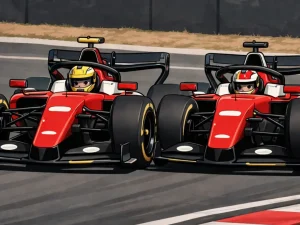
Under the neon glare, Lando Norris started from pole and went in hard on the defence, cutting across to fend off Verstappen. He overdid it. Too hot into Turn 1, Norris ceded the lead to the Red Bull and even slipped behind George Russell. He finally cleared the Mercedes on lap 35 and trailed Verstappen home by a chunky margin at the flag.
Then came scrutineering.
Both McLarens failed the plank wear checks. The FIA’s 9mm minimum was breached in multiple places: Norris’s front right measured 8.88mm and the right rear 8.93mm; Oscar Piastri’s car returned 8.96mm on the front left, 8.74mm front right, and 8.90mm right rear. Out they went.
Team boss Andrea Stella pinned it on unexpectedly savage porpoising on the bumpy street layout. “During the race, both cars experienced unexpected, high levels of porpoising not seen in the Practice sessions, which led to excessive contact with the ground,” he said. “We apologise to Lando and Oscar for the loss of points today, at a critical time in their Championship campaigns.”
The swing was brutal. Before the DSQ, Verstappen’s win had chipped away at a gap that stood at 42 points to the leading McLaren. After the officials got involved, he left Sin City 24 points behind Norris and tied with Piastri on 336 — a hefty gift at this stage of the season.
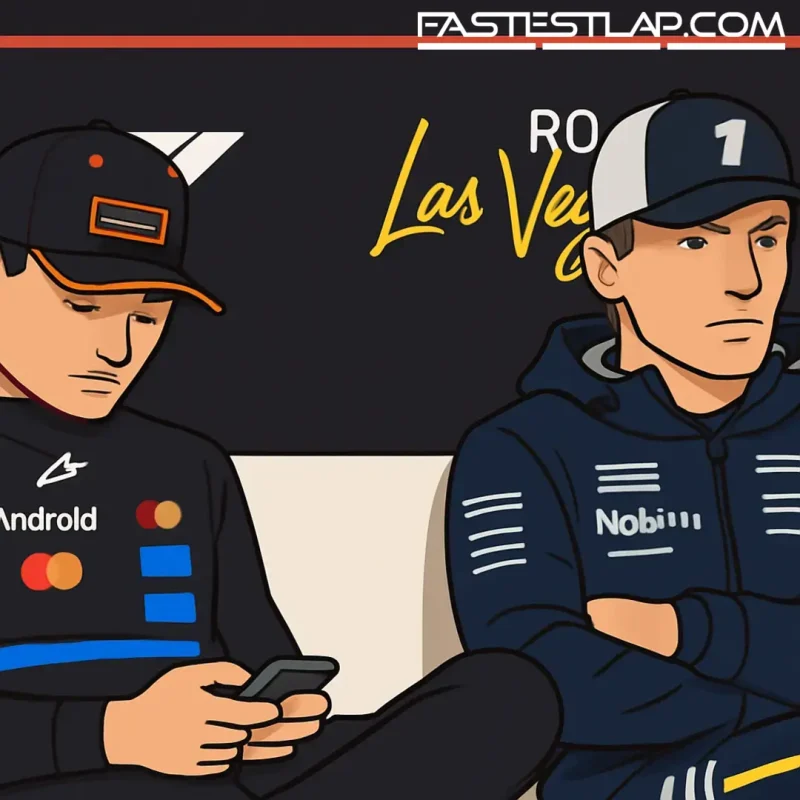
No surprise, then, that Jos Verstappen didn’t sugarcoat it. “This is a big mistake by McLaren, a huge blunder,” he told Dutch outlet Formule1.nl. “Why would you really push it to the limit like that? Maybe it was really a mistake, but maybe the car just doesn’t work as well otherwise and they had to do it.” He added that Max already knew about the looming disqualification before he left the circuit.
The elder Verstappen also didn’t love Norris’s first‑corner approach. “That was too aggressive. It was a close call, and both cars could have collided, which would have taken them both out of the race,” he said, claiming Lando was “only concerned with Max… and simply forgets to brake for the first corner. Max braked at least five meters earlier.”
There was a little needle, too. “Zak Brown has often talked about Max’s driving style, saying he finds him too aggressive at the start, but I’m sure he’ll be talking to his own driver about this now.”
It all piles pressure onto Woking at a delicate moment. The raw speed is clearly there — Norris and Piastri have traded blows all year — but Las Vegas exposed a setup gamble that went past the line and a start that gave Verstappen exactly what he needed: clean air, control, and a win that now counts double thanks to McLaren’s paperwork headache.
Even with the reset, the arithmetic still leans Norris’s way. As Jos acknowledged, if Max wins out and Lando finishes second every time, the McLaren driver will be world champion. But that’s not the mood music after Vegas. Piastri remains firmly in the chase, and the in‑team dynamic is worth watching. “You can see a clear difference between the two McLarens on the track, how they go through the corners. One slides, the other doesn’t, and that raises questions,” Jos noted, poking at a setup divergence that could become a storyline in the run‑in.
What’s undeniable is the shift in tempo. Verstappen needed a break; he just got a big one. The gap is manageable, the momentum his, and he can attack with nothing to lose — exactly the posture that’s made him so dangerous in the closing weeks of a campaign.
For McLaren, it’s a reset and refocus job: rein in the ride height risk, tidy up the first‑lap choices, and keep the points machine humming. They’ve had the faster package often enough this year to control their own fate. Vegas was a reminder that the fastest car doesn’t always win the weekend — the smartest one does.