Spa’s opening lap has a habit of turning small margins into big headlines, and Mercedes are discovering that the hard way.
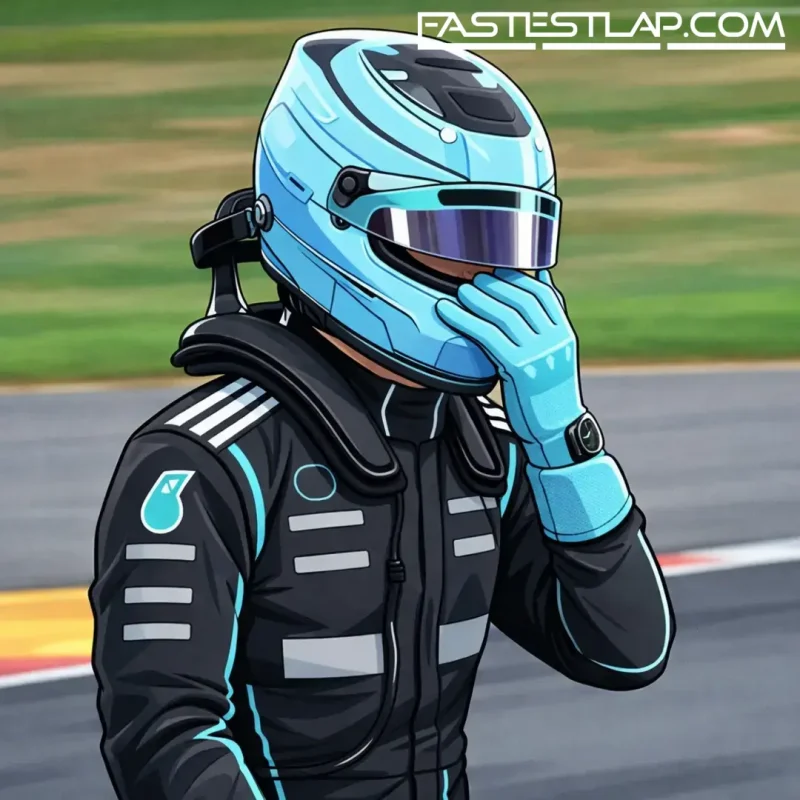
George Russell’s radio message — equal parts disbelief and fury — made it sound like his car had simply checked out at lights out. Now Mercedes deputy technical director Simone Resta has put a more technical label on what Russell felt in the cockpit: there were “deployment differences” between Russell and team-mate Kimi Antonelli off the line at the Belgian Grand Prix.
Mercedes’ first read was that it came down to how each driver was asking the car to do its work. Resta said the team’s analysis pointed to driving style as “one of the major contributors”, and that Russell had gone away, studied it, and adapted ahead of Spa. The awkward part is what comes next: even after Russell made those changes, Mercedes could “still see some difference of deployment between the two cars”.
In other words, this hasn’t been tidied away as a simple case of “George does it this way, Kimi does it that way”. For a team fighting at the front, the idea that two cars are not harvesting and deploying energy in the same way at the most critical metres of the race is the sort of detail that keeps senior engineers up at night — because it doesn’t just affect starts. It can bleed into how the car defends into the first braking zone, how it attacks out of slow corners, and how confident a driver feels in committing to the first lap’s knife-edge decisions.
And Spa, of all places, punishes any uncertainty. Russell’s compromised launch fed straight into the chain reaction that ended with him out of the race almost immediately after contact with Lewis Hamilton at Les Combes. Russell was left beached in the gravel, Antonelli went on to win, and what might have been a manageable points swing became a brutal one.
Ferrari, unsurprisingly, didn’t come away from the stewards’ room feeling particularly charitable about its part in that story. Team principal Fred Vasseur described Hamilton’s five-second penalty as “harsh”, arguing that the season’s general tone on Lap 1 incidents has been to lean towards racing incidents — and that this one didn’t follow that pattern.
Vasseur’s specific gripe was pointed: he felt Russell “had far enough space” and didn’t need to close the door as aggressively as he did. It’s the kind of argument that tends to land with teams even when it doesn’t land with officials; it’s not so much about relitigating one corner as it is about consistency, and about how drivers calibrate risk when the precedent feels like it shifts from weekend to weekend.
That said, Ferrari won’t get a lot of sympathy from Russell’s side of the garage. When a driver is already telling you the car felt flat at the start, the last thing you want is to be a passenger in someone else’s misjudgement a few corners later. Russell’s Spa became a perfect storm: a compromised getaway, immediate exposure in traffic, and then the kind of first-lap contact that leaves you staring at the sky and wondering what exactly you were meant to do differently.
For Mercedes, the bigger consequence is what Spa has done to the internal maths. Antonelli’s win — paired with Russell’s zero — has stretched the Italian’s championship lead to 50 points over his team-mate, and it doubled Russell’s deficit in a single afternoon. Yet Toto Wolff has shut down any suggestion that Mercedes will start managing this as “Antonelli’s title to lose”.
No team orders. No coded radio. No soft protection.
That stance will read as noble to some and naïve to others, but it’s consistent with the way Mercedes like to present themselves when both cars are in the hunt: race hard, don’t crash, let it play out. The difficulty, of course, is that “let it play out” works best when both cars are operating on the same page technically — and right now Mercedes are admitting they can see a measurable difference between the two in a key performance area.
If that gap is genuinely down to style, it’s coachable. If it’s something deeper in systems behaviour — even within tolerances, even intermittent — then the implications get sharper. A championship fight between team-mates doesn’t just amplify on-track moments; it amplifies every engineering meeting, every software tweak, every discussion about why one car felt a beat different at the worst possible time.
Elsewhere in the paddock, Red Bull are already thinking beyond the immediate. It’s emerged that Tom Hart is set to step in as Max Verstappen’s race engineer for the 2027 season, replacing GianPiero Lambiase. The timing is notable: Lambiase has been one of the defining voices of Verstappen’s Red Bull years, and any change in that relationship is never just a personnel note — it alters the cadence of a driver’s weekend, the flow of information, and the feel of the feedback loop that modern F1 lives on.
The wider subplot is that Red Bull’s performance engineer has opted against a move to Williams in order to stay put, a reminder that the market for experienced people is just as ferocious as the one for drivers. Teams aren’t only fighting over tenths; they’re fighting to keep the voices and brains that help them find those tenths.
Spa, then, has left the grid with a familiar mix: Mercedes trying to pin down an uncomfortable technical discrepancy, Ferrari frustrated at what it sees as a penalty out of step with the season’s trend, and Red Bull quietly rearranging future pieces behind the scenes.
And hovering over it all is the simplest truth of a title race: days like Sunday don’t just cost points. They change the temperature.