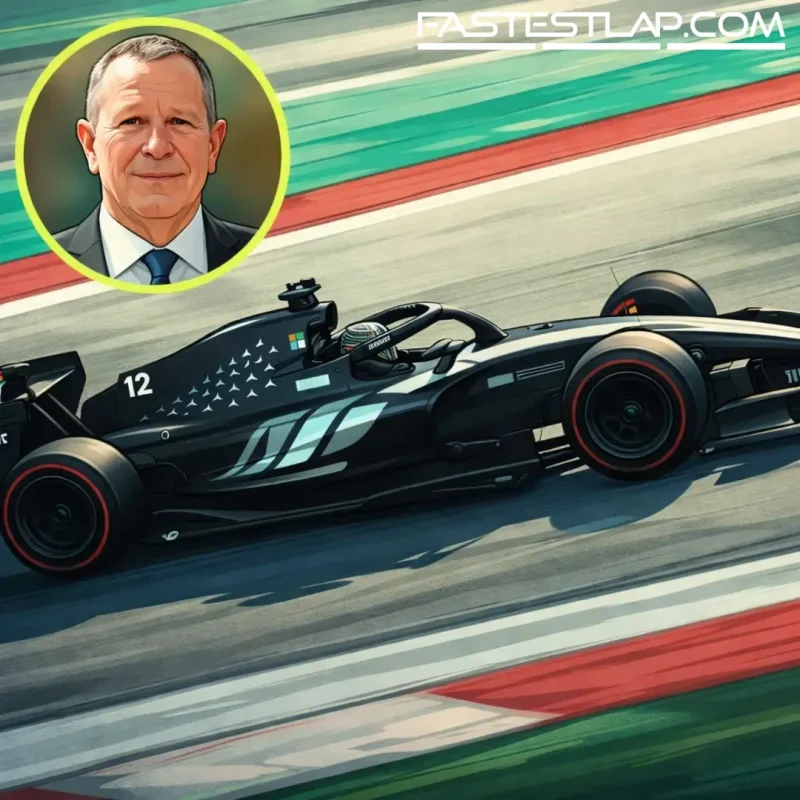
Mercedes arrived in Barcelona with a fresh sheet of paper and left with the paddock doing what it always does at the first sniff of form: getting carried away. The W17’s closed-door shakedown numbers were eye-catching — not just for pace, but for the kind of dull, relentless mileage that teams only manage when the car’s fundamentals are already in place.
Martin Brundle, watching it unfold from his Sky F1 perch, summed up the mood neatly: Mercedes looks like it’s landed on the right side of the 2026 reset. But he’s also urging everyone to take a breath before declaring anything more than an encouraging start.
The raw data points are hard to ignore. With teams allowed to run on three of the five days, Mercedes was unofficially credited with 502 laps — the sort of total that tells you the car isn’t spending its life on stands with bodywork off. It also tells you the team feels confident enough in what it’s learning to just keep circulating, iterating and banking information rather than firefighting.
On the stopwatch, George Russell’s reported 1:16.4 sat at the top for most of the week, only being nudged in the final moments of Day 5 when Lewis Hamilton delivered a 1:16.3. In a test where fuel loads, programmes and secrecy still muddy comparisons, lap times can be a trap — but they’re not meaningless, either, especially when paired with mileage and a sense of tidiness about how a car behaves.
Brundle’s read is framed by the scar tissue of Mercedes’ recent past. He pointed out that the team never truly “aced” the previous ground-effect era — the porpoising, the baffling swings in performance, the weekends where even Mercedes seemed unsure which version of itself would turn up.
“Obviously, it’s a completely different concept of aerodynamics,” Brundle said, and the subtext was clear: this is a regulation set that offers Mercedes a chance to reset its own internal narrative as much as its car.
Still, he’s not buying into early-season coronations. Barcelona in late January is its own environment, and that’s where the caution comes in. Brundle flagged the two variables that can quickly turn a winter hero into a spring headache: temperature sensitivity and tyre behaviour.
Mercedes has been down that road before — a car that looks sharp when it can switch tyres on in cooler conditions, then starts to slide into trouble as heat builds and the window narrows. A shakedown can flatter that kind of trait, and until the W17 has to operate in “normal track temperatures”, the picture remains incomplete.
Then there’s the 2026 energy story. Brundle highlighted that regeneration and keeping the battery topped up will be central to performance under the new rules. He expects Mercedes to be competitive there simply by virtue of what it’s always been strong at, adding that Mercedes-powered cars — and probably Ferrari-powered ones too — will likely extract similar gains in that area. In other words, if Mercedes does have an advantage right now, it won’t come just from being able to harvest energy. It’ll be in how coherently the whole package works together.
That word — “cohesive” — is what Brundle kept circling back to. Not that Mercedes is definitively quickest, but that the W17 looks like it’s hit a “sweet spot” early. In winter testing terms, that’s often the difference between a team that spends February chasing its tail and one that can actually go looking for performance.
Brundle’s warning was blunt: “Their concept looks good, but it’s too early to say that.” He’s right. Mileage and neatness can sometimes just mean you’ve built a car that’s easy to run, not necessarily one that’s going to win races. And a single track, particularly in atypical conditions, doesn’t interrogate a design the way a season will.
Inside Mercedes, the message has been similarly measured. Trackside engineering director Andrew Shovlin described the Barcelona running as “really impressive from a reliability point of view”, noting that the team kept making “progress” and went “quicker day by day”. That’s the language of a group that’s pleased with its foundations — but knows full well that foundations aren’t trophies.
The next reality check comes at the first official pre-season test in Bahrain from 11–13 February, where the W17 will have to perform in conditions far closer to what it’ll face when the championship begins. If Mercedes can translate Barcelona’s pace and bulletproof running into Bahrain without the tyre picture turning ugly, the “stay calm” messaging might get harder to stick to.
For now, though, Brundle’s advice is the right kind of scepticism. Mercedes may well have started 2026 with a car that makes sense — and after the confusion of recent seasons, that alone is a statement. But the sport has a habit of making early certainties look silly, and the W17 hasn’t yet been asked the questions that really matter.