Kimi Antonelli’s Miami win looked, on paper, like another clean conversion from pole. In reality, it was the sort of Sunday that tells you whether a title bid is built on pace alone, or on something sturdier.
David Coulthard reckons Mercedes has its answer — and it’s the teenager. Speaking on the *Up To Speed* podcast, the former Grand Prix winner said Antonelli has “absolutely earned the right to be leading this world championship”, and went a step further: the expectation now is that he’s effectively leading the team on results. That’s a sentence that lands with a thud when George Russell is the other driver in the garage.
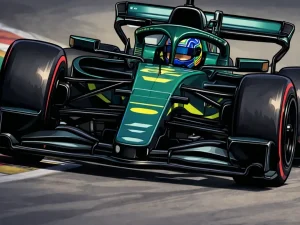
Antonelli didn’t arrive at this point via a neat, linear rise. Mercedes’ season began with a very public reminder that raw speed isn’t the same thing as operating at the sharp end. In Australia, just hours before qualifying, Antonelli clattered too much kerb, lost the W17 and destroyed it. Toto Wolff’s message was bluntly supportive — “analyse the data, keep the confidence” — and Mercedes’ mechanics performed the sort of time-crunch resurrection that used to be more common when cars were simpler and less tightly packaged.
Antonelli repaid it immediately. In a slightly delayed qualifying session, he stuck the rebuilt car on the front row alongside Russell. More importantly, that session turned out to be the last time Antonelli would qualify behind his team-mate for a grand prix.
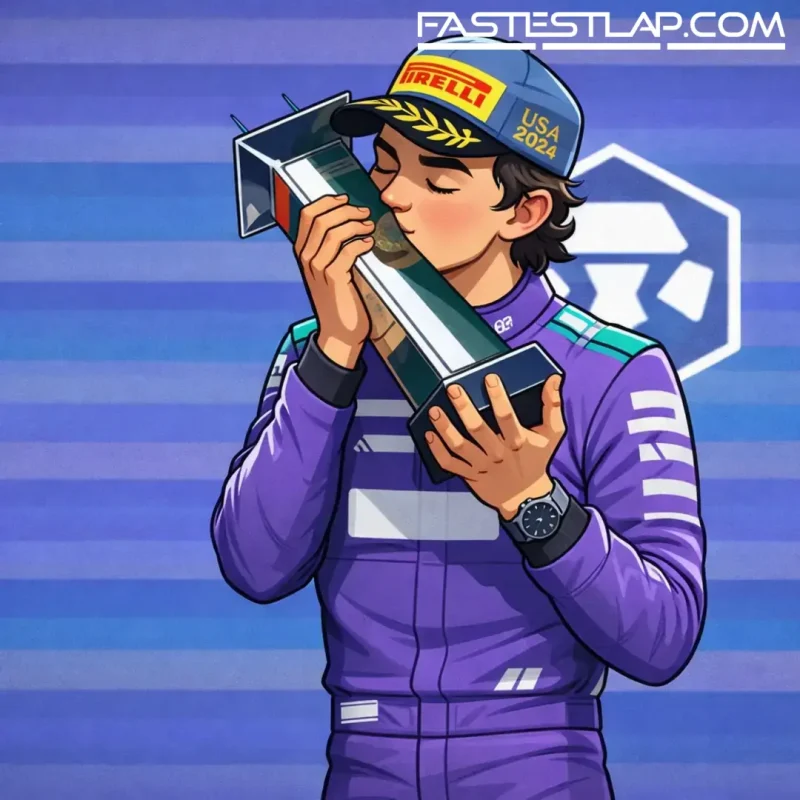
Since then, the pattern has been unmistakable. Poles in China, Japan and Miami. Wins in all three races. And in Japan he didn’t just beat Russell — he moved ahead of him in the standings and became Formula 1’s youngest-ever championship leader. Miami then stretched that advantage to 20 points.
If you’re looking for the moment Antonelli’s season stopped feeling like a hot streak and started feeling like a campaign, Miami is probably it. The headline is a three-second win over the reigning world champion, but the story is the last stint: Lando Norris parked his McLaren in that irritating window just close enough to apply pressure, not quite close enough to make it easy for the car in front to defend with tactics alone.
For lap after lap, Norris hovered at roughly two seconds, forcing Antonelli into that uncomfortable rhythm where you can’t relax for a corner, because the first compromise turns into the second and suddenly you’re in DRS range. Add a gearbox issue and steering concerns, and you’ve got the kind of race that can spiral quickly — not through a dramatic mistake, but through a series of slightly messy exits, a little frustration on the radio, and the creeping sense that the driver is driving the problem rather than the track.
Coulthard’s takeaway was less about lap time and more about how Antonelli managed the situation. He pointed to Antonelli’s elevated tone on the radio as he tried to understand inconsistent downshifts, and the way his engineer — Bono — calmed him. It’s a small detail, but it’s usually in those moments that you learn whether a young driver is still treating glitches as personal insults, or whether they’re starting to think like a championship leader: give the right information, keep the car on the road, and let the pit wall do its job.
Coulthard also made the point that there’ll be a conversation afterwards. Not as a telling-off, more as part of the maturation process: the problem is still the problem, but the way you communicate it can make the difference between a clean fix and a muddle.
The bigger picture, though, sits squarely across the garage. Coulthard’s line that this “will be uncomfortable for George” is about as understated as it gets. Russell isn’t short on experience, or speed, or self-belief — and Coulthard was careful to acknowledge that. The warning is simply that Antonelli has moved the centre of gravity at Mercedes. Not in a political, throne-grabbing way, but in the only way that really counts in Formula 1: he keeps starting ahead, and he keeps finishing first.
Coulthard’s challenge to Russell was straightforward: take ownership back. Because the reality of a two-car operation is that “they both cannot win. Someone’s got to be first. Someone’s got to be second.”
And that’s where the championship implications start to bite. Mercedes can live with an internal fight when it’s comfortably the quickest package. But Coulthard’s caution was aimed at the rest of the grid: if Antonelli and Russell begin shaving points off each other, the door opens for everyone else.
Miami is a timely reminder that nobody stands still. McLaren was right there in the second half of the race, Ferrari and Red Bull arrived with upgrades and made gains, and the margins that looked comfortable on Saturday can get uncomfortably small by Sunday afternoon. If Mercedes ends up managing a psychological and competitive tug-of-war between its two drivers while its rivals are harvesting points, it won’t matter who “leads the team” in May.
For now, Antonelli’s 2026 season has the feel of a young driver learning in public — and learning fast. He still hasn’t nailed his launches, and he’s still going to have weekends where the sharp edge cuts back. But in Miami, with a fast McLaren sat in his mirrors and a car giving him reasons to lose his cool, he did what champions do: he kept the whole thing moving in the right direction.
Russell, meanwhile, doesn’t need a reinvention. He needs a response — before a 20-point gap becomes a narrative Mercedes can’t unwrite.