Vasseur shrugs off TV-pen noise: ‘Say what you want — just push us harder’
Ferrari’s year ended with more angst than silverware, and with the chairman urging the drivers to keep quiet, you might’ve expected Fred Vasseur to fall in line. Not quite.
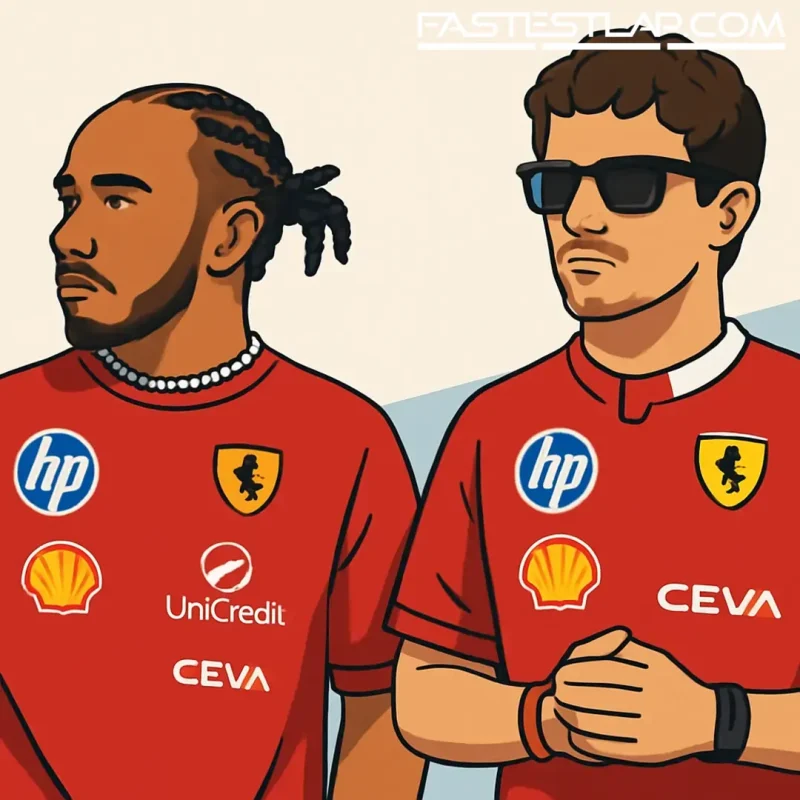
After Abu Dhabi, the team principal made it clear he’s not losing sleep over what Lewis Hamilton or Charles Leclerc fire off in the TV pen. If anything, he wants more of that energy — as long as the real push happens behind closed doors.
“I don’t pay attention to the reaction in the TV pen,” Vasseur said after the season finale. “The most important for me is to have a guy coming back to us and pushing the team to do a better job and to work all together to try to get better results.”
It was a neat deflection in a tricky week. Ferrari chairman John Elkann had publicly suggested his star pair should dial down the commentary following a bruising campaign, a remark that landed like a cold splash of water at Maranello. Vasseur, ever the pragmatist, didn’t bite. He knows drivers — especially these two — are emotional on the radio and direct in the media. He also knows that fire is useful when it’s channeled.
“All of you know Charles — he’s always a bit critical with himself first and with the team and with everybody, but it’s always with a positive dynamic,” Vasseur said. “I’ve known Charles for more than a decade and he was always like this. He’s always complaining about everything. But it’s a positive dynamic — we’re here to do a better job.”
Strip away the Ferrari drama, and Vasseur’s line is simple: vent if you must, then show up to the debrief and help fix it. “It doesn’t matter if you are P4, P3, P1. The DNA is to do a better job. I accept this perfectly and the most important thing for me is that they keep the same approach to the debriefing — to try to get a better car, a better team, a better everything. It’s like this that we will improve.”
Leclerc, for his part, leaned on that same theme when he faced the microphones in Abu Dhabi. The Monegasque didn’t sugarcoat the stakes, calling the next step a “now or never” moment for Ferrari as F1’s next era approaches.
“It’s tough, but at the same time, I think the whole team is hugely motivated for next year,” he said. “Because it’s such a big change, a huge opportunity to show what Ferrari is capable of and it’s now or never. I really hope that we will start this new era on the right foot, because it’s important for the four years after.”
Hamilton’s arrival has amplified everything — the scrutiny, the expectation, the demand for instant progress. That comes with the territory when you sign a seven-time World Champion, and Ferrari knew it. The pairing of Hamilton and Leclerc looks formidable on paper, but paper doesn’t finish ahead of Red Bull or McLaren. Ferrari needs the car, and it needs the culture to keep grinding when the headlines turn spiky.
Vasseur’s stance suggests he’d rather embrace the pressure than pretend it doesn’t exist. Let the drivers speak. Let them fume a little on the radio. Then get everyone in the room, sift emotion from information and turn it into lap time. It’s a fine line, but it beats sterility.
There’s also a note of realism in the messaging. Ferrari can’t talk its way out of an off year, and neither Hamilton nor Leclerc is interested in PR victories. They want a machine that stops flirting with potential and starts delivering points on Sundays. If a few frank post-race comments are the price of keeping the standards sky-high, Vasseur seems more than willing to pay it.
Ferrari’s story now pivots to the winter. The to-do list is long and obvious: low-speed balance, pit-stop consistency, race-day tyre life. Getting that right early will decide whether Abu Dhabi felt like a hard reset or just another rehash.
And if the TV-pen soundbites stay punchy? So be it. Ferrari’s boss isn’t listening — he’ll be in the debrief. The rest of us can tell from the stopwatch whether Maranello’s noise is finally translating into speed.