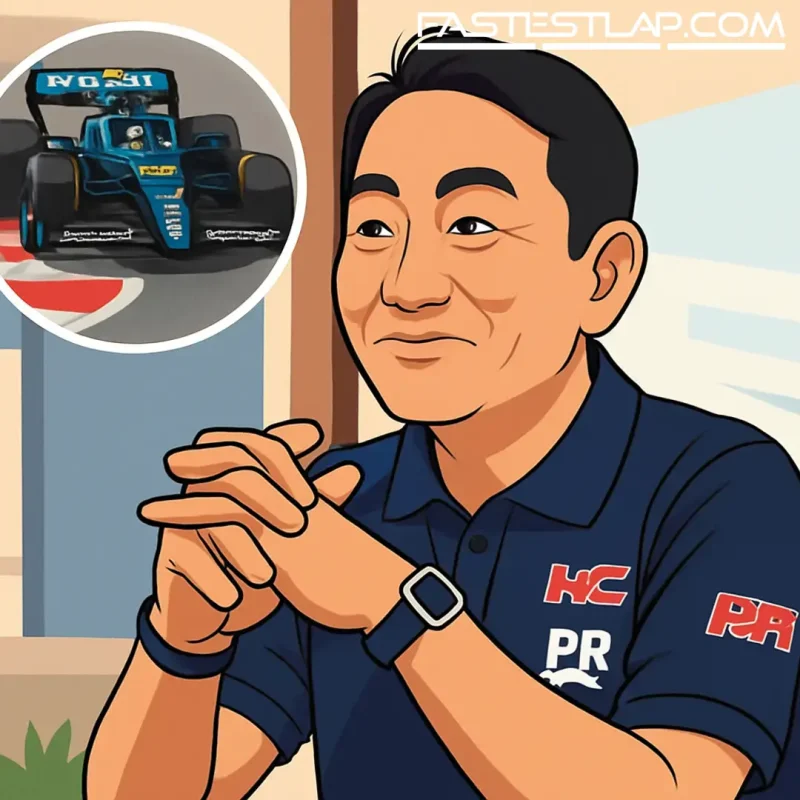
Koji Watanabe isn’t sugarcoating Honda’s 2026 push — and that’s a good thing. The HRC president says the new power unit for Aston Martin is behind where they want it, but crucially, nothing’s gone bang in a way that can’t be fixed. In a winter full of whispers and dyno graphs, that’s the line that matters.
“We still need more time,” Watanabe conceded, outlining a programme that’s inching its way toward the first big milestones of the new hybrid era. With F1’s 2026 rules splitting output roughly 50/50 between a 1.6-litre V6 and a much beefier electric motor, every manufacturer has a mountain to climb. Honda’s view from base camp? Steep, but climbable.
The Japanese marque returns as a factory entrant in 2026, paired with Aston Martin after spending the freeze years quietly (and successfully) servicing Red Bull and Racing Bulls hardware via HRC. Now the badge is back on the tin, and the schedule is tight. Specifications for early running are being locked in, assembly is underway, and homologation waits at the end of February. Before that, Honda plans a Tokyo reveal of its 2026 unit on January 20, with president and CEO Toshihiro Mibe, Aston Martin executive chairman Lawrence Stroll, and F1 boss Stefano Domenicali set to talk shop.
What’s hard? Pretty much everything that matters when you’re chasing heavyweight power from lighter, smaller pieces. “The motor is a new 350-kW, very compact one we need. Also, the lightweight battery — it’s not so easy to develop. And also the small engine with the big power,” Watanabe said earlier this year. A familiar refrain since then: integrate, test, learn, repeat. “Some prove successful, others fail unexpectedly – it’s a mixed bag.”
The honest summary lands in that grey area all power unit chiefs know too well: not where they want to be, but not in trouble either. “To be honest, not everything is going well, so there are many areas where we are struggling, but nothing fatal has happened that we cannot overcome. In this situation, we are quietly concentrating on improving performance and reliability.”
Aston Martin’s side of the garage adds another variable — and an opportunity. Watanabe says Honda is tuning its approach around the car concept, with a nod to Adrian Newey’s influence on the project. “Aston Martin also wants to keep building cars that reflect Adrian’s vision, so I think the next step for us on the power unit side is to figure out how to adapt to that. If doing so increases our competitiveness and makes us more likely to win, then we’ll do whatever it takes.”
Internally, the collaboration has clear lines. According to Watanabe, Andy Cowell is concentrating on power unit matters and the fluids package with partners Aramco and Valvoline, while Newey is overseeing the whole car and, as Watanabe put it, serving as team principal. It’s a heavyweight combination that looks potent on paper, even if both sides admit the partnership is still being built out. “We don’t believe the partnership is perfect at this stage. We believe it is something we will build upon going forward,” Watanabe said after conversations with Stroll.
As ever with a fresh power unit formula, the stopwatch will be ruthless. The FIA knows it, too. Acknowledging the risk of a big performance spread early on, the governing body has introduced additional development and upgrade opportunities through 2026 — a safety valve that should help any manufacturer that misses the initial target to keep digging.
Honda’s not banking on lifelines, though. The company that powered Red Bull to titles knows how quickly momentum can flip once a concept clicks and the reliability gremlins are evicted. Watanabe’s emphasis is long-term: build a structure with Aston Martin that lets them relentlessly chase performance without shutting promising avenues too early. “We have the technology and know-how accumulated over many years in Formula 1, so I believe we can ultimately reach a competitive position, and I think we must,” he said. “Rather than focusing only on the short term, we are aiming to create a framework to continue competing in F1 in close partnership with Aston Martin.”
Supplying another team down the line? Watanabe calls it “only natural” for a racing company, but it isn’t today’s priority. The engineers want all eyes on the works programme first. Management, he admits, sees the upside of expanding later.
So where does that leave Honda’s 2026 story right now? A candid assessment, a busy factory, and no alarm bells. The electric side is demanding, the engine’s a tight squeeze, and the integration work is never as simple as a slide deck. But Honda’s tone is steady. More time would be nice. In the meantime, they’ll take the small wins — and make sure none of the losses are fatal.