Aston Martin bets big on Honda focus: Cardile says single-team deal lets them “push more” for 2026
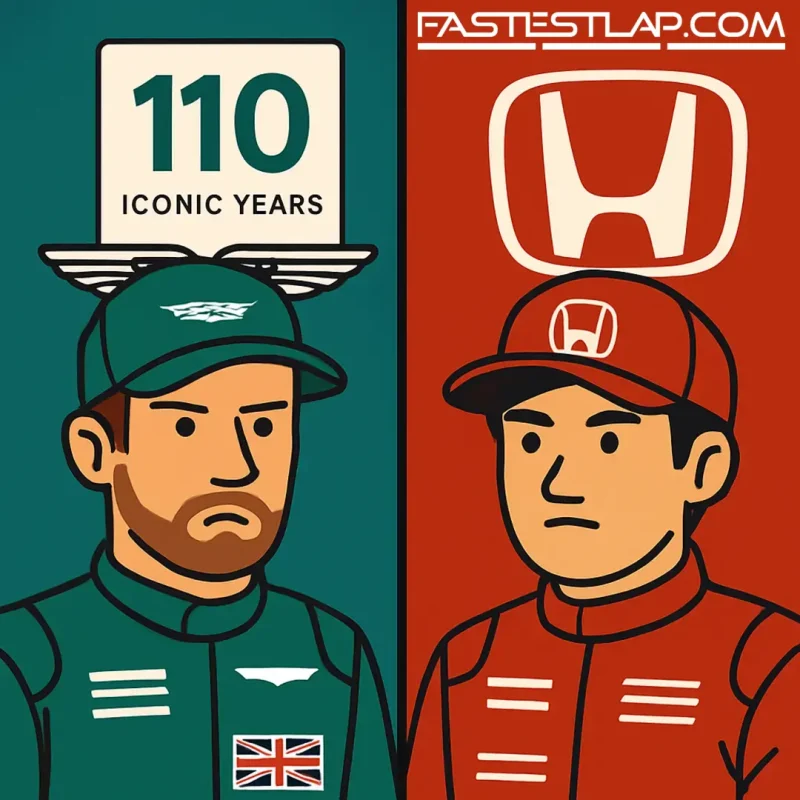
Aston Martin’s works-era reboot with Honda is gathering pace — and inside the Silverstone campus there’s a clear belief that being Honda’s only customer in 2026 is a competitive advantage, not a constraint.
Enrico Cardile, the team’s Chief Technical Officer and one of the headline arrivals in Aston’s recent hiring spree, says the exclusivity of the partnership is already paying off. Honda, which reversed its planned F1 exit and will part ways with Red Bull at the end of 2025, returns as a full manufacturer next year with Aston as its sole partner.
“During the development, they’re just trying to satisfy our request,” Cardile said on F1’s Beyond the Grid podcast. “They don’t need to find any compromise with different requests. And I guess they can push a bit more on development, because having to provide power units just to one team, the quantities are lower than having multiple teams, and this is allowing them to push more for the development.”
For Aston Martin, it’s the clean-sheet moment they’ve been building towards: a works power unit, a fresh aero concept under the 2026 rules, and the addition of two heavyweight names — Adrian Newey and Cardile — to shape the car around it. After years with Mercedes engines, the team finally gets to design the car from the crankshaft out, not the other way around.
The appeal of a Honda reunion is obvious. The Japanese manufacturer has powered the drivers’ title for the last four seasons heading into 2025, and while next year’s rulebook will force a reset, the pedigree is hard to argue with. Cardile, who joined from Ferrari to lead Aston’s chassis program, says what he’s seen from Sakura so far lives up to the reputation.
“Since I joined, I’m focusing my attention on the chassis, so just marginally I’m seeing what Honda is doing,” he said. “For what I see, I am surprised by the commitment and the aggressive approach they have. They’re very open to collaborating, to satisfying the requests we have on the chassis side.”
That last point matters. The 2026 regulations — with a lighter internal combustion engine, a bigger electrical contribution, and tighter packaging demands — make power unit and chassis integration less a handover and more a marriage. Cooling layout, battery placement, turbo architecture, exhaust routing: misjudge any of it and you’re carrying ballast in performance terms all season. Having a single power unit supplier willing to iterate to one team’s needs could be worth as much as a bold aero idea.
There’s been plenty of noise that the new cars could be overly restricted; some designers have called the regulations a straightjacket. Cardile isn’t buying it. He’s seen this movie before.
“I had the same feeling in 2021 with the new regulation coming,” he recalled. “They seemed oversimplified, extremely restrictive. Then when you start working on them, you find that, okay, they are restrictive but actually you have room for being creative, for finding new solutions, for getting load out of the development. I’m feeling the same now — at first it’s a bit sad that they’re over‑constrained, but when you work on them, you find the degree of freedom for developing the car.”
Aston’s next challenge is turning all that freedom into lap time on day one. The team has been competitive in bursts in the current era; the launch-spec 2023 car was the second-fastest for a spell, and 2024 brought flashes without the week-to-week consistency of the leaders. 2026, though, is a line in the sand — a chance to arrive as a true works operation with aligned hardware, philosophy and process.
Honda’s end is to deliver a power unit that’s efficient, drivable and robust in a formula that will demand energy management as much as peak output. Aston’s is to design a car that breathes easily around it and gives the drivers a platform that’s predictable in traffic and honest on the limit. Easy to write, brutal to achieve.
But Cardile’s message is simple: the right people are in the room, the dots are connected, and the partner on the other side of the videoconference is pushing as hard as they are.
That’s the point of going works. No compromises, no hand-me-downs, no if-it-fits-it-ships packaging. Just a single, sharp program pointed at 2026. For a team that’s spent the last few years building to this moment, you sense they wouldn’t have it any other way.