FIA hikes protest deposits for 2026 as paddock resets after a bruising summer
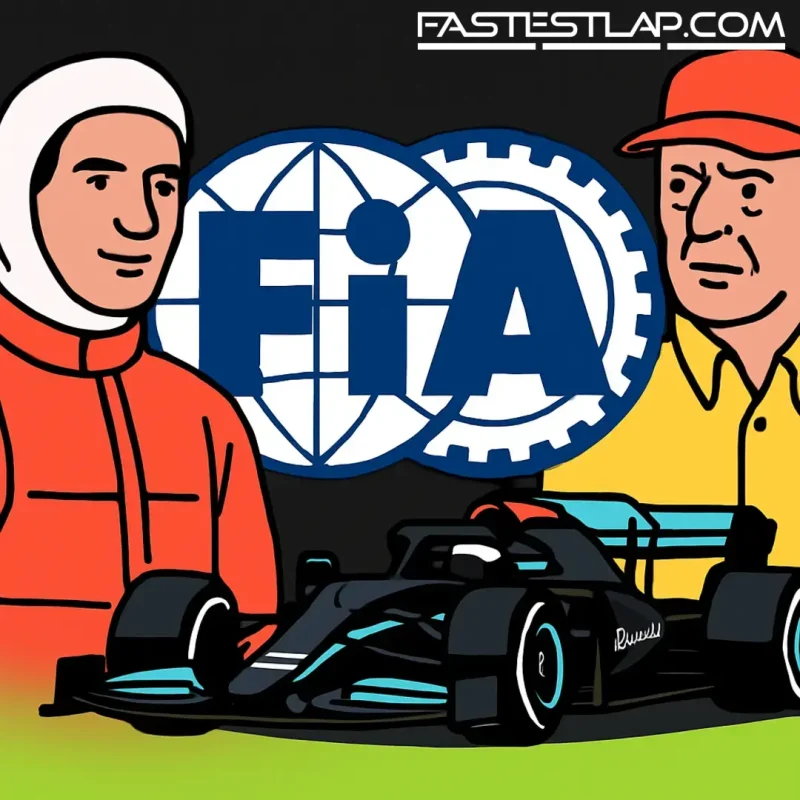
A little housekeeping before the next rules revolution: the FIA has quietly multiplied the price of taking a fight to the stewards. From 2026, the deposit for appeals and rights of review jumps from €2,000 to €20,000 — a tenfold hike that feels less like fine print and more like a shot across the bows after a string of flashpoints in 2025.
The timing isn’t subtle. Montreal’s Canadian Grand Prix turned into a paperwork pile-on when Red Bull lodged two protests against George Russell’s race-winning drive, arguing he’d behaved erratically behind the Safety Car and breached the prescribed distance to it. Both claims were thrown out. Multiply that sort of skirmish across a long season and you can see why the FIA wants to curb speculative claims and late-night legal theatre. Whether it deters chancers or just makes rich teams marginally poorer, the message is clear: bring a strong case, not a fishing expedition.
Elsewhere in the Red Bull orbit, the post-Horner chapter continues to settle. Sky’s Martin Brundle reckons Max Verstappen has looked “a lot more relaxed” since Christian Horner was dismissed in the wake of July’s British Grand Prix. Read into that what you will: a release of pressure, a cleaner line of command, or simply a champion getting on with the job in a reshaped team. Verstappen’s father, Jos, was one of Horner’s most vocal critics earlier in the year; now the dust has mostly settled, the paddock is watching how the triple World Champion channels the noise — or lack of it.
The other half of Red Bull’s future is the power unit. It’s one thing to dominate an era; it’s quite another to build the engine for the next one. Ford’s global racing boss Mark Rushbrook didn’t sugarcoat it, backing Toto Wolff’s “Mount Everest” analogy for Red Bull Powertrains’ 2026 project. That’s not trash talk, just the reality of a hybrid formula that devours resources and humbles even the giants. The upside is seductive: build it, and you control your destiny. Ford and both Red Bull teams will lift the curtain on 2026 plans at a Detroit season-launch next month. Expect a lot of confidence, some careful caveats, and as few technical specifics as they can get away with.
Away from the politics and power units, a needed jolt of perspective. Jennie Gow, a familiar voice to F1 fans since 2012, marked three years since the stroke that upended her life with a line that landed like a lead weight: “I will not let the stroke win.” If you’ve followed her recovery, you’ll know the grit behind that sentence. Motorsports can be an echo chamber; Gow’s resilience breaks through it, and the paddock is better for having her back in it.
And then there’s the “what if” that motorsport loves to revisit. Former Mercedes ace Bernd Schneider has been reflecting on the 1999 Le Mans 24 Hours — the race Mercedes quit after its CLR infamously took flight, three times, twice with a young Mark Webber at the wheel. Schneider’s point is plain: had those flips ended in tragedy, Mercedes’ trajectory could’ve bent a very different way, maybe far enough to alter the course that eventually paired Lewis Hamilton with the three-pointed star. Alternate histories are a parlour game, but anyone who remembers that weekend knows how close the sport comes to sliding doors.
What connects all of this? Control. The FIA wants more of it over disputes. Red Bull is trying to seize it with an in-house engine. Mercedes once nearly lost it at La Sarthe. And drivers — whether it’s the steely calm of Verstappen or the stubborn courage of Gow — are forever trying to locate it within themselves.
The 2025 season has already served its share of flashpoints and plot twists, and 2026 looms as a reset that’s bigger than a new car launch and a fresh set of press photos. Money is talking louder in the hearing rooms, manufacturers are betting on themselves, and even the sport’s most dominant figures are adjusting to new realities. The Everest metaphors might be a touch dramatic — until you stand at the bottom and look up.