Oscar Piastri doesn’t sound like a driver licking his wounds.
A year ago, this would’ve read differently. Seven wins, a 34-point championship lead at one stage, and a season that—on raw results—put him shoulder-to-shoulder with Lando Norris. Yet the scoreboard that matters has Piastri third overall, with Norris crowned world champion and ending McLaren’s long wait for a drivers’ title.
That sort of arc can leave a mark. It can also clarify a few things. And listening to Piastri ahead of 2026, the striking part isn’t the optimism—it’s how pointed it is. He’s not dressing up last season as “good experience” and moving on. He’s framing it as proof.
“I’m excited,” Piastri said. “I’ve had a good first three years in F1 and it’s my first regulation reset, so it’s going to be interesting to see where we come out as a team. But I feel like last year I really proved to myself the things that I’m capable of.
“Definitely still there are things I need to improve and work on as well, but I feel like I really took a good step forward. Those lessons I can take forward into whatever rules we get, so I’m excited.”
There’s a subtle but important psychology in that: he’s placing the emphasis on internal validation rather than external consolation. Third in the final standings might sting, but if you’re Piastri, you can still come out of 2025 convinced you belong at the sharp end—and that the ceiling is higher.
Martin Brundle certainly thinks so. The Sky F1 pundit has been quick to flag Piastri as one of the drivers likely to hit the ground hardest when Formula 1’s 2026 overhaul reshuffles the deck.
“I think he’ll come back with a vengeance, to be honest,” Brundle said. “It was partly painful, partly brilliant for him, last year. He learned a lot.”
Brundle’s point is less about generic “motivation” and more about the kind of seasoning you only get when you’ve actually been in it—when you’ve had a title fight in your hands, felt it slip, and had to sit with that all winter.
And Piastri does have a clear weakness to target. Brundle’s assessment—“openly accepted”, in his words—is that low-grip circuits have been the area where Piastri hasn’t consistently extracted the best from car and tyre. That’s not a terminal flaw, but it’s the sort of detail that separates “occasionally devastating” from “championship relentless”.
“I think that it’s openly accepted that on the really low-grip circuits, he’s not getting the best out of the car and out of the tyre, so he knows he’s got to fix that,” Brundle added. “But some of the victories he’s had were so dominant, so impressive.
“I’m sure it was painful in the end for him and I think that will be a driver [for him in 2026]. We’ve observed him. He’s an incredibly bright lad and he’s clearly competitive. He’s a worker. I think he’ll come back having made a big step forward.”
In a season defined by a regulation reset—50 per cent electrification, fully sustainable fuels, active aerodynamics—small margins in adaptability become big ones. The cars will behave differently, the deployment characteristics will change the rhythm of laps, and the tyre-management picture will inevitably shift. Drivers who can recalibrate quickly tend to find themselves in the conversation early, even before the rest of the grid has finished working out what “fast” looks like under new rules.
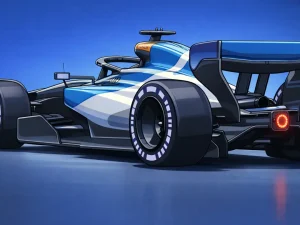
McLaren, for its part, has already put real mileage on the board in the first collective shakedown in Barcelona. The MCL40’s on-track debut came with Norris and Piastri logging 291 laps between them, based on verified unofficial figures. It doesn’t hand out points in February, but it does matter: early running is one of the few currencies that can’t be faked at the start of a new era. The more you learn now, the fewer ugly surprises you meet when the intensity ramps up.
For Piastri specifically, 2026 carries an extra edge because last year wasn’t just “a step forward” in performance—it was a glimpse of what he looks like with momentum. Seven wins in a season, matching a newly-crowned champion teammate, is the kind of statline that makes the rest of the paddock stop treating you as an emerging talent and start treating you as a problem.
But it also changes the dynamic inside the team. When Norris has the title and Piastri has the scar tissue of letting one get away, you don’t need to manufacture hunger. It’s already there, and it’s sharpened by proximity: same garage, same equipment, same targets.
The question, then, isn’t whether Piastri will be quick—he’s already been quick enough to lead a championship and win races in dominant fashion. The question is whether he can turn that pace into a season that doesn’t blink when the grip is poor, the margins are thin, and the pressure is constant.
Brundle’s “vengeance” line might be a little dramatic, but the underlying idea feels right. Drivers like Piastri don’t tend to respond to disappointment by shrinking their ambitions. They respond by getting specific, getting busy, and coming back with fewer holes in their game.
In a year when everyone is learning again, that may be worth more than raw speed alone.