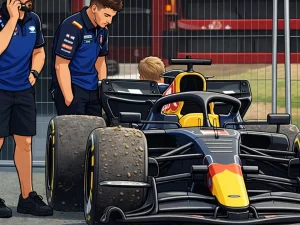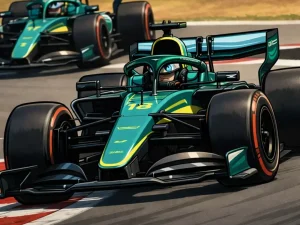
Franco Colapinto, the young talent behind the wheel for Alpine, has swiftly moved past a challenging tyre testing incident to resume his work at the Hungaroring. Despite an early setback where Colapinto veered off at Turn 11 in Alpine’s 2025 car, causing damage irreparable at the track, he managed to continue his testing duties in the 2023 Alpine A523 model later in the day. This incident briefly interrupted Pirelli’s rigorous testing schedule for the 2026 tyre compounds but did little to derail the overall plan.
Pirelli’s extensive testing agenda, aimed at refining compounds for the upcoming season, saw a diverse lineup of drivers, including Paul Aron for Alpine, Charles Leclerc for Ferrari, and Lando Norris for McLaren, each contributing valuable data. Although Colapinto’s mishap resulted in some lost mileage, Pirelli still gathered crucial insights from three other vehicles, mitigating the impact.
Alpine’s strategic approach involved Colapinto initially testing the A525, followed by a stint in the A523 post-repair efforts. This switch was part of a coordinated plan that also included team-mate Pierre Gasly. Despite the setback, the team is preparing for the mandatory 14-day shutdown, during which they will assess the damaged car back at their UK headquarters.
With future tests scheduled at Monza, Mugello, and Mexico City, Pirelli remains optimistic about continuing its compound evaluations, particularly the softer range. These tests are crucial as Formula 1 transitions to new aerodynamic regulations and power units by 2026, emphasizing the need for tyres that balance performance with durability.
The introduction of narrower tyres and moveable wings marks a significant shift in F1 dynamics, challenging teams and suppliers to adapt. Pirelli, navigating these changes, is relying on simulations and modified test cars to approximate the expected grip levels. However, the real track testing with representative cars remains a future goal.
As the sport evolves, Pirelli’s role as the sole tyre supplier until at least 2027 underscores its integral contribution to F1’s technological advancements, ensuring the tyres meet the demands of faster, more efficient cars.