Yuki Tsunoda’s Red Bull story is beginning to sound like the sort of F1 tale that never really ends — it just changes form.
On paper, the door back to a Red Bull Racing race seat in 2026 looks shut. Tsunoda finally got the call-up he’d spent years chasing, promoted at round three of the 2025 season after four seasons in the sister team. But the numbers weren’t kind: 30 points across 22 grand prix weekends, and Red Bull didn’t see enough to keep him in the second car. He was pushed into reserve duties, with Isack Hadjar elevated in his place.
That should’ve been that. Yet around Milton Keynes, Tsunoda hasn’t faded into the background the way reserve drivers often do. If anything, he’s become more relevant internally — just in a way that won’t satisfy a racer.
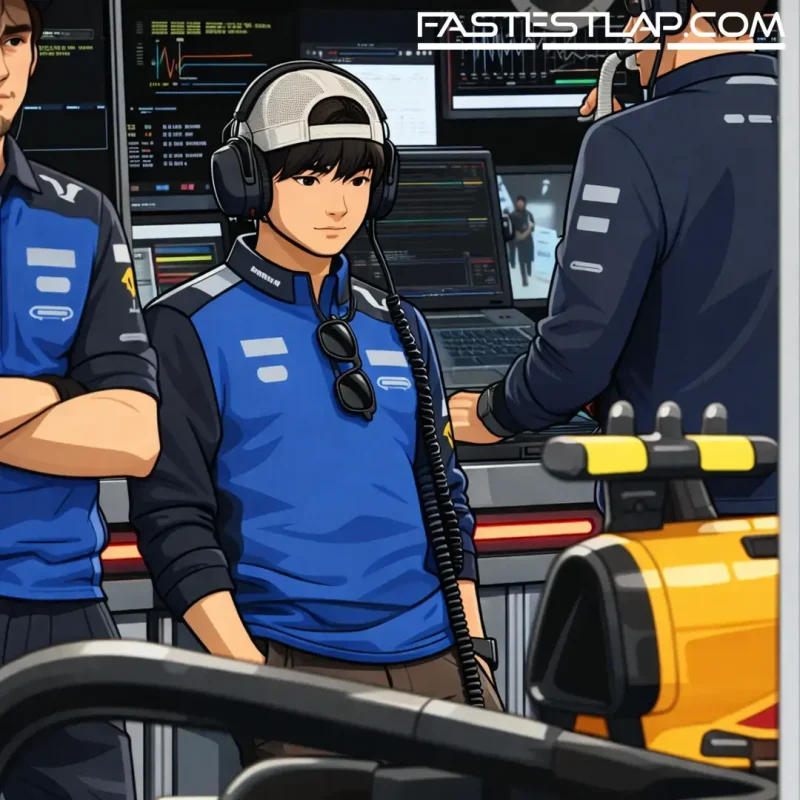
Now, he’s been folded into the behind-the-scenes push on Red Bull’s all-new RB22, leaning on the unusual value he offers: recent, direct experience of both Red Bull and Racing Bulls machinery. That sort of crossover knowledge is rare in modern F1, where driver line-ups are more stable and teams guard their interpretation of a car like it’s state intelligence. Tsunoda’s had a front-row seat on both sides of the garage divide, and Red Bull is clearly happy to use it.
Laurent Mekies, speaking on the *Beyond the Grid* podcast, was candid about what Tsunoda is doing day-to-day — and just as candid about the problem with it.
“Yuki is doing a great job with us, not only as a reserve driver, but also as a simulator driver,” Mekies said. “It’s great to have somebody that has such deep, recent experience of the car that can help us behind the scenes.”
In other words: Tsunoda’s useful. But “useful” is a loaded word in this sport, especially for a driver who’s already tasted a Red Bull promotion and then had it taken away. Mekies didn’t try to dress up reserve life as a happy ending.
“Of course, we wish for him that there is an opportunity that comes soon because racing drivers are meant to race,” he added.
That line matters. Not because it guarantees Tsunoda anything — it doesn’t — but because it’s rare to hear a senior Red Bull figure frame his situation as unfinished business rather than a neat, final verdict. Mekies went further, effectively putting Tsunoda’s name back into circulation by saying the quiet part out loud: the pace has been there, and Red Bull’s recent second-car performance hasn’t been good enough.
“We are conscious that we haven’t been as strong as we would have liked in the past in terms of the second-car performance at Red Bull Racing,” Mekies said. “It’s something we are taking the learnings, we are trying to improve day after day… Yuki has shown significant speed in the past and we wish for him that another opportunity comes along the way.”
That’s as close as you’ll get to an admission that the Tsunoda chapter wasn’t just about Tsunoda.
Still, none of it changes the immediate reality: Hadjar is the one in the car, and early signs suggest Red Bull has moved on — quickly.
Hadjar’s promotion came after just a single season at Racing Bulls, and he’s wasted no time making himself at home. Mekies described a driver who has treated the step like a full-scale life project, relocating to London in early January and essentially living at the factory when he isn’t travelling. The team boss painted a picture of obsessive integration: constant simulator time, deep dives with engineers, even flying back between the two Bahrain tests specifically to do more work on the sim before returning.
That’s not just box-ticking. With this generation of cars, and especially with an outfit as tightly wound as Red Bull, the speed is only half the job. The other half is earning the trust that you can steer the programme with the same clarity the lead driver does — in debriefs, in correlation, in the endless detail that decides whether an upgrade sticks or gets binned.
And in the headlines, Hadjar’s already delivered the sort of moments that buy you breathing room. He was fighting for a potential podium in Australia before an engine issue intervened. He scored his first points as a Red Bull driver in China. He finished 12th in Japan. Across all three grands prix, he’s also been inside the top 10 in qualifying — including a standout first weekend where Mekies noted a P3 in Melbourne.
Mekies’ verdict was straightforward: “Isack is in a great place right now.”
That’s the pinch point for Tsunoda. There’s no obvious crack to exploit, no “caretaker” vibe to Hadjar’s seat, no sense that Red Bull is waiting for Tsunoda to rescue them from their own decision. If anything, Mekies’ comments read like a team investing hard in the driver it’s chosen — and hoping Tsunoda lands on his feet elsewhere.
Which is why Tsunoda’s best argument for a 2026 grid return might end up being less about Red Bull and more about the wider market. Mekies didn’t promise anything, but he did something nearly as valuable in F1: he validated Tsunoda as a credible race driver in public, with enough speed to deserve “another opportunity”.
In this paddock, that sort of endorsement can travel. It also subtly reframes Tsunoda’s season in the Red Bull seat — not as a failed audition, but as a difficult stint in a car that demanded more than it gave, inside a team that admits it has work to do on its second-car performance.
For now, Tsunoda is stuck doing what reserve drivers do: adding value in private while watching the racing in public. But if Mekies’ message was meant to be heard beyond the Red Bull campus, it was clear enough — Tsunoda’s not being written off as a driver, just as a Red Bull race driver.
And in Formula 1, those are two very different things.