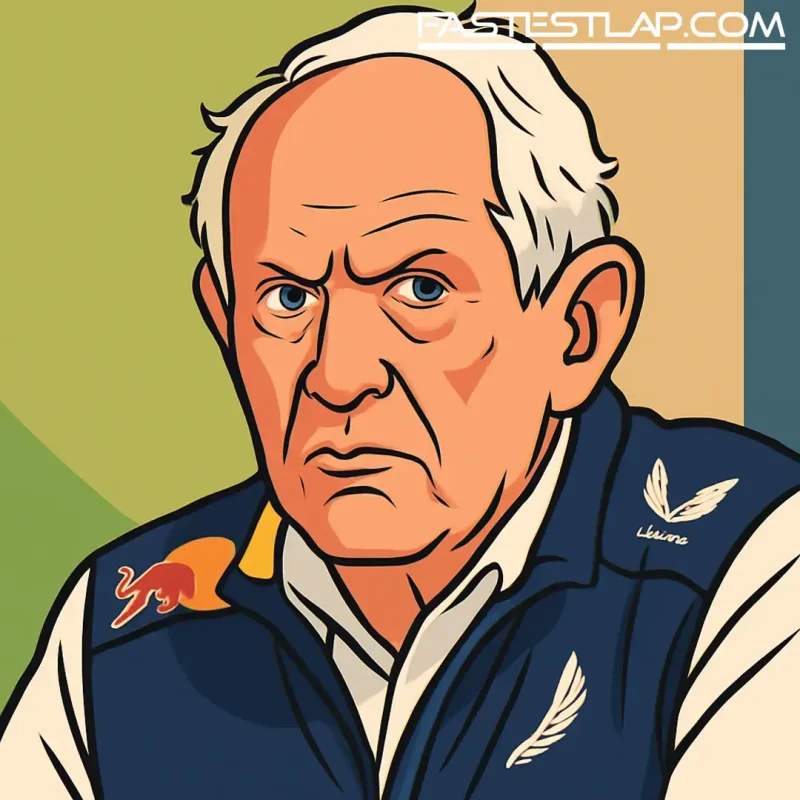
Helmut Marko steps aside: Red Bull’s kingmaker calls time after two decades
Helmut Marko has never been one for sentiment, but even he allowed a glimpse of it as he confirmed he’ll step down from his senior adviser role at Red Bull at the end of the year. Pride was the word he kept returning to — pride in the team, in the people who built it, and in a talent pipeline that changed the face of modern F1.
The timing is no coincidence. After a season that ended with Max Verstappen narrowly missing the 2025 drivers’ crown to Lando Norris and McLaren, Marko decided the chapter had run its course. Six decades in motorsport, more than 20 of them shaping Red Bull’s project, will do that. He leaves with the team still a benchmark operation and, crucially, convinced it will be back swinging for both titles next season.
Red Bull GmbH announced the move, noting that Marko had approached the company with the wish to end his role. The Austrian’s imprint is obvious. He oversaw the junior program that discovered and accelerated the careers of Sebastian Vettel and Max Verstappen — each now a four-time world champion — and he did it with a trademark decisiveness that altered careers overnight and rattled plenty of paddock coffee cups. The promotions were bold, the demotions sometimes brutal, but the hit rate? Undeniable.
Long before he was Red Bull’s talent whisperer, Marko was a racer: nine F1 starts in the early ’70s, and a Le Mans victory in 1971. An eye injury ended his driving, but not his competitive streak. That restlessness found its outlet in management, and ultimately in Dietrich Mateschitz’s grand experiment — build a team around young, hungry drivers and back them hard. The results fill a trophy cabinet and more than a few rival teams with envy.
Marko had hinted at uncertainty about his future after the Abu Dhabi finale. The final call came now, with the season still fresh and the what-ifs of a tight championship fight hanging in the air. He spoke of being moved by the near-miss — not out of regret, but as a sign that it was the right moment to hand over. He’s satisfied with the legacy and eager to watch the team fight on without him.
Red Bull’s leadership paid its respects. The company’s corporate chief, Oliver Mintzlaff, called Marko’s contribution incomparable: the guiding hand in strategic calls that built Red Bull Racing into a multi-title machine and a standard-bearer for driver development. His knack for spotting the exceptional — and backing it early — is the through-line from Vettel’s first world title run to Verstappen’s era-defining form.
What now? That’s the real intrigue. Red Bull’s junior system is more than a list of names; it’s a philosophy — aggressive scouting, rapid promotion, and a readiness to make big calls when the data and the gut align. Filling the vacuum left by the man who made those calls is no small task. The team hasn’t outlined a succession plan for the advisor role, and it wouldn’t be a surprise if the responsibilities were spread rather than handed to a single heir. The RB (formerly AlphaTauri) program, as ever, will be the pressure cooker where the next generation proves its worth.
Marko’s legacy isn’t tidy, and that’s partly why it matters. He championed Vettel early, pushed Verstappen into the Red Bull seat mid-2016 — a gamble that paid off immediately — and never shied from reshuffling line-ups when he thought the ceiling wasn’t high enough. Some drivers flourished, some didn’t, but the team’s competitive culture was unmistakable. If you wore a Red Bull crest, you were expected to deliver. Many did.
This exit also lands at a hinge point for F1’s balance of power. McLaren’s rise, Norris’s title, and Verstappen’s near-miss have tightened the top. Red Bull remains a force, its technical core intact and its star driver still at his peak. But the sport moves quickly, and the next decisions — on talent, on structure, on where to place the biggest bets — will be made without the man who so often set the tone.
Marko leaves with the kind of CV that doesn’t require embellishment. He helped build a winning machine and made sure it never got comfortable. You can disagree with the methods, but not the results. An era ends; the fight, as he would say, very much doesn’t.