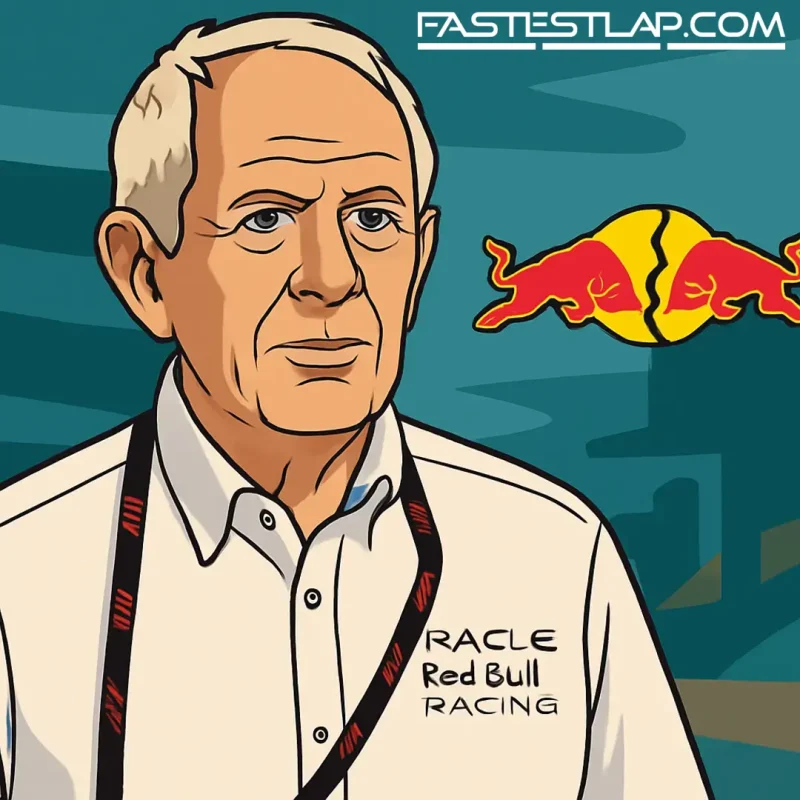
Helmut Marko exits Red Bull: the last freewheeler in a team that’s moved on
Helmut Marko is leaving Red Bull after two decades — and he isn’t going quietly. The 82-year-old Austrian, ever the straight talker and ever allergic to a press officer, follows Christian Horner out of the door just months after the team rewired itself under a more corporate, less personality‑driven regime.
The timing tells its own story. Red Bull’s post-Horner reset put Laurent Mekies into the big operational chair, reporting into Red Bull GmbH boss Oliver Mintzlaff. The brief was clear: less noise, more structure, and a team that’s about the brand, not any single figurehead. Marko, as entertaining as he was uncompromising, never looked like a neat fit.
His weekend media scrums — the unscheduled, unfiltered chats he’s held for years without a comms minder in sight — didn’t stop. Nor did the habit of sharing more than most senior figures would dare, whether on car bits, driver plans or internal politics. It was fun, famously quotable, and a migraine for anyone tasked with message discipline.
Once Horner was removed mid-season to calm months of rumbling discontent — and with McLaren’s form twisting the knife — Marko had room to move. He used it. He told Isack Hadjar he was being promoted to the senior team as early as Zandvoort and signed Irish prospect Alex Dunne to the junior programme. Both calls were made, insiders say, without looping in Mekies or Mintzlaff. Hadjar eventually did get the nod, but only after the new leadership aligned behind it. Dunne’s deal, agreed at speed, was promptly torn up at corporate level — an expensive message that unilateral calls weren’t on the menu anymore.
Frictions mounted. At Singapore, elements of Marko’s off-track behaviour are understood to have irked Chalerm Yoovidhya, the figurehead of Red Bull’s Thai majority shareholders. Then came Qatar, where Marko said on live TV that Kimi Antonelli had made a deliberate error to help Lando Norris, a line that suggested meddling in the title fight and triggered predictable blowback. Others who’d spouted in the heat of the moment apologised and moved on. Marko doubled down across TV hits and in print.
By Abu Dhabi’s end-of-season glow, the die was cast. Officially, this is his decision: a self-chosen exit, no matter how the championship ultimately fell for Max Verstappen. Privately, it’s hard to square that with the cadence of events. Marko had a contract into 2026 yet spoke of having to phone Verstappen to explain the timing, and of a melancholic call that wasn’t in his gift to schedule. There was no late show of force from the Verstappen camp this time either; while Max publicly backed Marko during the turbulent spring of 2024, the new leadership structure — Mekies, Mintzlaff, Ahmet Mercan — has the family’s confidence and the team’s momentum.
Marko’s parting shots were laced with familiar vinegar. In an interview over the Abu Dhabi weekend, he branded Horner a liar, accused unnamed rivals of “dirty games,” and revisited the 2023 Perez-nationality controversy that had already prompted a formal apology on Red Bull’s own airwaves. He also repeated the claim Horner tried to have him suspended at the 2024 Saudi Arabian Grand Prix — a saga that, at the time, was intertwined with a broader internal investigation and leaks. Back then, Verstappen’s line in the sand protected him. In 2025, the wind had changed.
Strip away the noise and the picture is straightforward. Red Bull after Dietrich Mateschitz is not the same Red Bull that Marko helped build. The company that once tolerated his mercurial management style and seat‑of‑the‑pants decision making decided it preferred clean lines and fewer surprises. The removal of Horner — as seismic and ruthless as any call in modern F1 — underlined the point. If the team could bench the most successful boss in its history, nobody was immune.
None of this erases Marko’s imprint. He was central to Red Bull’s driver machine, which discovered, funded, promoted and discarded with cold efficiency, and he helped shape an era that delivered an avalanche of wins and titles. But the final months were messy, and he’s chosen not to go softly. There may be non-disclosure agreements and eight-figure “golden handshakes” to navigate, but Marko’s never looked like a man interested in careful phrasing.
In the end, he outlasted Horner by a handful of races, not an era. The team he leaves behind is still Max Verstappen’s natural home and still a championship benchmark even as McLaren’s rise has sharpened the grid’s edges. What it won’t be, anymore, is a place where loose cannons write their own scripts.
Wars in F1 start when you want. They almost never end that way.