Daniel Ricciardo’s reappearance alongside the Red Bull and Racing Bulls operation in Detroit this week wasn’t a prelude to a comeback. It was a reminder of how quickly the sport moves on — and how deliberately he’s chosen not to chase it.
The Australian, who stepped aside from Racing Bulls after the 2024 Singapore Grand Prix with Liam Lawson taking over full-time, has been clear for some time now that his Formula 1 chapter is closed. Rumours have bubbled up now and then, as they always do when a popular driver keeps turning up in paddock-adjacent spaces, but Ricciardo has repeatedly described himself as retired. He even handed over his race number, 3, to Max Verstappen a year before it would’ve become available again — the sort of administrative detail that speaks louder than any social-media tease.
What Detroit underlined is the new version of Ricciardo: present, recognisable, and still orbiting the Red Bull universe — just without the weekly weight of performance and consequence. These days his link to that world runs through Ford, where he’s taken on an ambassador role that keeps him close to motorsport and the automotive industry without the ruthless churn of a race calendar.
And, by his own admission, it took time to settle into that.
“What is next for me is really just enjoying this pace of life I’m living now,” Ricciardo said in a Q&A with GQ Sports. “It took me a little while to adjust from retirement, but now I’m finding, let’s say, my pace and my happiness, and with Ford and being the ambassador for them, it’s a way to still stay in racing, in motorsport, in the automotive world, but without the pressure that I put on myself for many years.
“So, that’s a nice balance that I’m very happy with.”
There’s an honesty in the way he frames it — not the performative “I’m busier than ever” routine you often hear from ex-drivers keen to prove they haven’t slowed down. Ricciardo’s point is almost the opposite: he has slowed down, and that’s the appeal.
F1’s rhythm is uniquely invasive. Training blocks and sponsor appearances aren’t add-ons; they’re the scaffolding of the job. The travel is relentless, the preparation constant, the scrutiny total. When you step out of that, the emptiness can be as confronting as the freedom is intoxicating. Ricciardo’s comments acknowledge the awkward middle stage: the period after the last race, when the body still lives like it’s on a schedule but the schedule has disappeared.
Now, though, he sounds like someone who’s stopped waiting for the phone to ring.
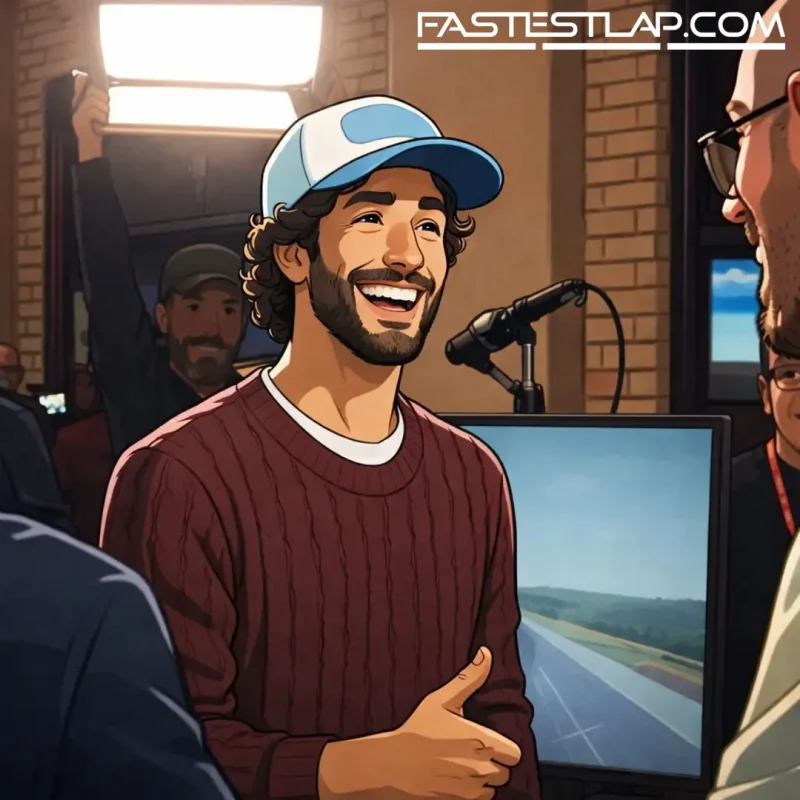
“Life has changed a lot, but it’s been good,” he added. “I’ve had a lot of time to myself, time to grow a beard, doing things that I didn’t really get a chance to do when I was racing and travelling so much, and that’s a lot of time with family and friends.
“So [I’ve] enjoyed it a lot, getting to put a lot of miles on my [Ford] Raptor.”
That throwaway line about “growing a beard” lands because it’s so mundane — and because F1 rarely allows mundane. Even his post-retirement paddock visits have come with that subtle visual punctuation: a different look, a different cadence, a driver who no longer has to be “on” for the next debrief.
Detroit, then, is better read as brand alignment and personal comfort than any sort of coded hint. Red Bull and Racing Bulls are entering a new era and a new cycle of narratives; Ricciardo, meanwhile, is enjoying the rare privilege of being adjacent to the circus without being swallowed by it.
In a sport that tends to define people by lap time until the very last day it can, Ricciardo seems content to define himself by something else — and, after the intensity of his F1 life, you can understand why it might take a while to feel normal.