Robo-racers return: A2RL’s AI field lines up for a 20‑lap Yas Marina rematch
Eighteen months after a debut that was part breakthrough, part blooper reel, Abu Dhabi’s Autonomous Racing League is back. Six AI-driven single-seaters will go wheel-to-wheel over 20 laps at Yas Marina this Saturday, with reigning champions TUM starting on pole and a $2.25 million purse up for grabs.
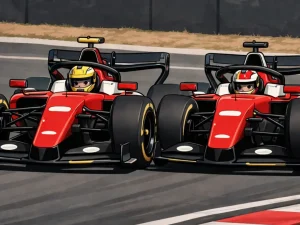
The cars are built from Super Formula’s SF23 chassis and reworked into cockpit-less, driverless missiles—no steering wheels, no human aboard—just a lid full of sensors, a brain full of algorithms and a team’s best attempt at teaching a racing instinct.
The essentials
– When: Saturday, 15 November
– Where: Yas Marina Circuit, Abu Dhabi
– How to watch: Broadcast and stream the day after the race from 11:00 UK on A2RL’s official YouTube channel, plus Abu Dhabi Media Network, StarzPlay and Motorsport TV
– Grand Final teams: TUM (on pole after a feisty multi-car qualy vs Unimore), Unimore, Kinetiz, TII Racing, PoliMOVE, Constructor
– Silver Race (classification event): RAPSON, Code 19, Fly Eagle, FR4IAV, TGM Grand Prix
A2RL launched two years ago under Abu Dhabi’s ASPIRE banner with a simple, slightly audacious brief: put multiple autonomous cars on a circuit together and make them race. The first go in April 2024 served up precisely that—and all the strange side effects of something entirely new. There were bursts of real pace, some smart spatial awareness and, yes, the odd robot gremlin: inexplicable straight-line wobbles, cautious indecision, even a car parking behind a rival as if queuing at a toll booth.
From a pure engineering standpoint, A2RL’s head of racing operations Josh Roles—ex-McLaren—calls that opener a win. “It was the first time multiple autonomous cars raced wheel to wheel at that speed,” he says. “Brutally difficult—and we did it.” Event-wise? “We learned a lot,” he adds. “This year we’ve scenario-planned the life out of it.”
Season 2 brings a new spec: the EAV‑25, an evolution of last year’s EAV‑24. Reliability was target one. The league has upgraded steering hardware, GNSS and 5G antennas, electronics and motorsport-grade looms, and layered in redundancy everywhere it matters—especially across the sensors feeding the AI stack. There’s a secondary IMU now, battery and emergency brake tweaks, plus selected powertrain changes (alternator, gearbox and a revised fuel line to mitigate leaks).
Last year exposed a nasty surprise: a commonly used IMU began delivering flaky data once mileage crested around 500 km. The teams didn’t just lose numbers; their AI lost trust in its own reality. “We’ve re-architected the car for solid redundancy and worked with teams so no one AI stack relies on a single point of failure,” says Roles.
Vibration has been the other silent assassin. Single-seaters are harsh environments; a rigidly mounted camera trying to read the world at 150 Hz of shake will only serve the AI a smear. The EAV‑25 adds vibration damping across the autonomous hardware, and the engine mapping has been refined to avoid the resonance ranges that upset sensors. Small but important bits—wiring, prototype components, fuel lines—have been toughened too.
The sporting side has had a rethink as well. Procedures, race control and direct-to-car flag systems have been revamped to make the “pack” environment more predictable for the software. The platform remains open by design—teams can choose which sensors to trust and build their own stacks around them—but there’s now a sturdier common spine underneath.
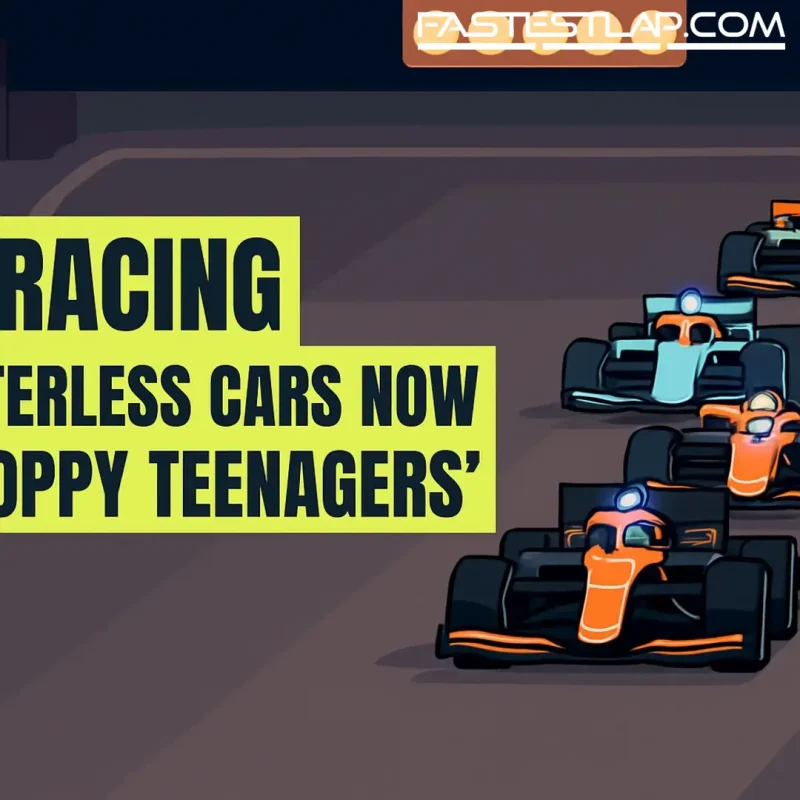
And the AI itself? If last year’s behavior was toddling, this year’s is teenage. “We’re in a really good place,” says Roles. “We’re now telling the AI what we want—and it’s starting to find ways to do it better.” A standout: teams felt confident enough to hand over braking points. Rather than pre-baking markers, some cars will now adjust their brake zones lap to lap, learning like a human would—overshoot, roll it back, try again. It means more speed, and the occasional spin. That’s development.
All of which sets up a tidy narrative for Saturday. TUM versus Unimore is the headline, but the intrigue is in the midfield, where close-proximity logic and sensor fusion will be stress-tested most. Can the cars draft without panic, commit to late moves without second-guessing, and accept side-by-side cornering without freezing or tripping over safety logic? Last year’s comedy cuts were a byproduct of pushing into new territory. This year, the expectation is fewer laughs and more laps.
A2RL’s model is unapologetically public. Iterate in the open, fix in the open, race in the open. Not unlike a certain rocket company, only with less kerosene and more carbon fibre. If it delivers, we’ll see an autonomous field that looks a little less uncanny, and a lot more like racing.
Grand Final goes off Saturday. If you miss it live, the re-run lands Sunday morning in the UK. Brew on, hit play, and see if the machines have learned how to fight.