Nico Rosberg isn’t buying the idea that Formula 1 has somehow lost its soul in 2026 — even if he understands why some drivers are rolling their eyes at what they’re being asked to do in the cockpit.
The sport’s new power unit era, built around a 50/50 split between electrical and combustion power, has dragged energy management out of the background and planted it right in the middle of the show. It’s not just a Sunday problem either. Qualifying has become its own little exercise in compromise, with drivers threading a single lap around the need to harvest and deploy at precisely the right moments.
That’s where the grumbling gets loudest. The sight of cars backing out of what used to be flat-out sections, or downshifting after a corner while still on the straight because the battery contribution has dropped away, simply looks wrong to people raised on the idea that an F1 qualifying lap should be a clean, violent, uninterrupted assault.
Max Verstappen’s “Mario Kart” label and Charles Leclerc calling it a “f**king joke” captured the mood: this is a generation of drivers who pride themselves on being able to live on the limit, and they don’t love being told the limit now comes with a spreadsheet.
Rosberg’s view is more pragmatic. The 2016 world champion accepts that, aesthetically, it can be awkward — but he’s far more interested in what it’s producing at the front of the field.
“There is a lot of criticism at the moment because you can see like at the last race, they go down the straight through a flat out bend, and have to downshift after the bend while still on the straight because the battery power switches off,” Rosberg said in comments to Bloomberg. “So, from a spectator’s point of view, it can be a bit awkward when you’re supposed to be going flat out with the highest-performing F1 car.
“Nevertheless, I am easy-going on that, from my point of view, as long as there are great battles between teams and other teams.”
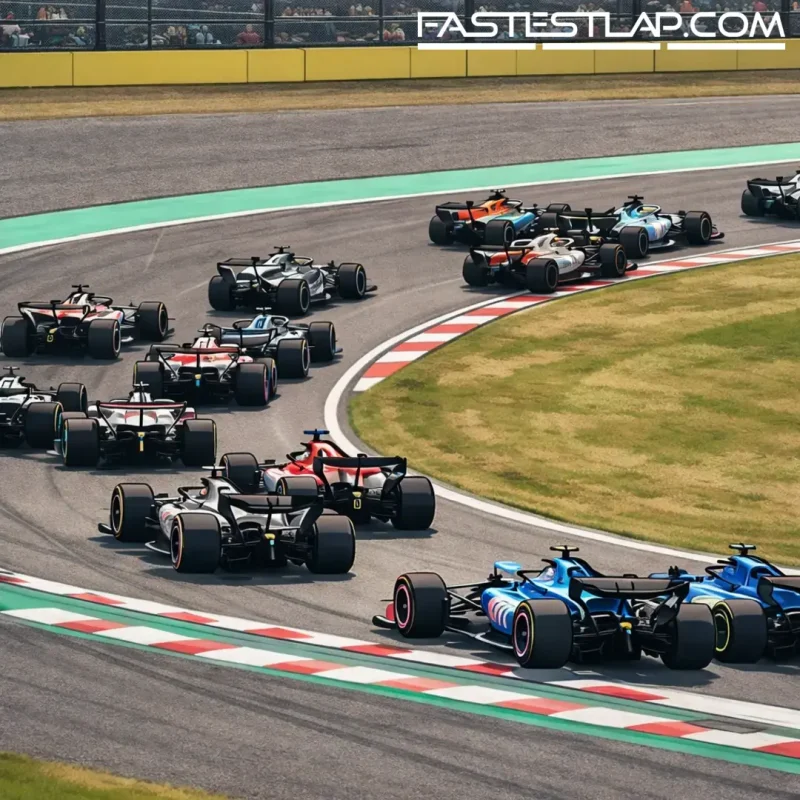
It’s hard to argue with the evidence so far. Three grands prix into the season — Australia, China and Japan — the new rules have delivered what F1’s been pleading for in recent years: genuine wheel-to-wheel movement at the very sharp end. Not just DRS fly-bys and pit-cycle reversals, but cars taking chunks out of each other in sequences of corners and trading the lead multiple times across a race.
Whether you see it as “artificial” or simply a different kind of performance envelope, the effect has been the same: the top teams are closer in the moments that matter, and drivers have more ways to attack and defend. If there’s a new lever to pull — deploy here, harvest there — it also means there are new ways to get it wrong. And when someone gets it wrong, the car behind suddenly isn’t just watching disturbed air; it’s sensing vulnerability.
Australia was the clearest early example. The lead changed hands repeatedly in the opening phase — nine passes in the first 15 laps — before Mercedes ultimately shut the door on Ferrari’s challenge. That kind of frantic, front-end churn is exactly what the sport’s decision-makers have wanted to bottle for years, and it arrived almost immediately with the new formula.
The broader competitive picture supports Rosberg’s point too. Mercedes have started the season with three wins from three, the first two as 1-2 finishes, and they lead the championship on 135 points. But they haven’t been alone in the conversation. Ferrari have been close enough to make it uncomfortable, and McLaren were involved in Japan, giving the season an early sense of a three-team scrap rather than a one-team march.
Ferrari sit second, 45 points behind Mercedes, with McLaren third — a gap that’s significant, but not so vast that the paddock can relax into inevitability in April.
None of this makes the drivers’ complaints irrelevant. There’s a legitimate argument that the purest expression of qualifying — the one-lap, no-excuses, flat-out hit — has been diluted by the need to satisfy energy targets and manage state-of-charge even when the stopwatch is all that matters. And when drivers talk about “super clipping”, the phenomenon of the hybrid system pulling power from the internal combustion engine to feed the battery while the driver is still flat, it’s not hard to see why they feel they’re being asked to perform a trick rather than just drive.
But Rosberg’s stance reflects an old racer’s truth: the sport doesn’t exist solely to deliver the most aesthetically pleasing onboards. It exists to create a contest. If the new era looks odd in places yet forces teams and drivers into closer, messier, more dynamic fights, there’s an argument that F1 has simply traded one kind of purity for another.
The question that will decide the tone of this season isn’t whether the “Mario Kart” jibes are funny — they are — but whether the early pattern holds. If Mercedes keep winning while everyone else is left managing batteries and frustration, the goodwill will evaporate quickly. If Ferrari and McLaren can keep sticking a nose in, and if lead battles remain a feature rather than a novelty, the complaints may end up sounding like the usual discomfort that comes when the game changes and the best in the world have to learn new ways to be the best.
For now, Rosberg’s message is simple: the cars might be doing some strange things, but at least they’re fighting. And after years of fans begging for a title fight that feels alive on track, that’s not a bad trade.