George Russell: ‘We nearly strapped a designer into the rig to show how brutal it was’
George Russell didn’t need the data traces to make his point about F1’s ground‑effect era. He’s got the bruises — and, apparently, a rejected health-and-safety request.
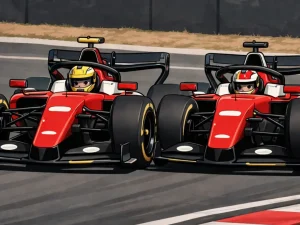
Reflecting on the first four seasons under ground‑effect rules, the Mercedes driver called the cars “brutal” and revealed he and then‑teammate Lewis Hamilton once tried to put one of Mercedes’ chief designers into the team’s motion rig for a full‑lap replay. The idea was simple: if you want to understand porpoising, feel it.
“We’ve got a rig that can replay a lap with all the suspension movement,” Russell said when speaking with media. “Lewis and I wanted to put one of our chief designers in for a Baku run to show how aggressive the porpoising was.” The plan never made it off the drawing board. “Health and safety shut it down. Too dangerous.”
That veto tells its own story. The constant oscillations, the bottoming out, the blurred vision — it wasn’t just drivers moaning on team radio. “You’re shaken for an hour and a half,” Russell added, recalling Las Vegas in particular. “I couldn’t see the brake boards because the car was striking the track so hard at 240 miles an hour. I spoke to a few drivers and half the grid said the same. I’m glad we’re moving away from this.”
F1 will indeed turn the page in 2026. The next-generation cars are set to be smaller and lighter with active aerodynamics, while the power units move to a roughly 50/50 split between electric and internal combustion running on sustainable fuels. It’s a clean break from the heavy, aero-sensitive machines that defined 2022–2025 and produced both spectacular speed and some fairly grim onboard footage.
For Russell, the era wasn’t all pain. Despite the punishment, the Brit quietly banked some notable markers alongside Hamilton. He outscored the seven-time World Champion in two of their three seasons together under these rules (2022 and 2024), and he’s described 2025 as his most complete campaign yet — a year that featured two grand prix wins and fewer unforced errors.
“I was really happy with ’22,” he said. “It was my first year at Mercedes, first year up against Lewis — a test of where I stood. And that was straight after ’21 when, in my eyes, he delivered some of the best performances I’ve seen from him across a season. But this year [2025] it’s been more points, more podiums, more consistency, fewer mistakes. Without doubt my strongest year.”
Strip away the porpoising headlines and there’s a clear through‑line to his progress: Russell has turned tough Sundays into tidy points. That’s the currency Mercedes will need as it tries to step back into a title fight it hasn’t properly contested since 2021.
The team’s next chapter arrives with Russell leading the line and teenage prodigy Kimi Antonelli stepping up alongside him for 2026. That pairing will take the wraps off Mercedes’ first active‑aero challenger and its new‑era power unit, and they’ll do it with a fresh regulation book that should reward efficiency and adaptability over ground‑effect trickery.
There’s a symmetry in the timing. The outgoing rules asked drivers to tolerate violent platforms in pursuit of downforce; the incoming ones should loosen the cars up and hand more responsibility back to the cockpit. Russell, who has built a reputation on clean execution and sharp feedback, looks like the sort who’ll welcome that shift.
If nothing else, the engineers can breathe easier. No one’s going to be ordered into the simulator rig for a Baku porpoising demo any time soon. And if the 2026 cars deliver on their promise, they won’t need to be.