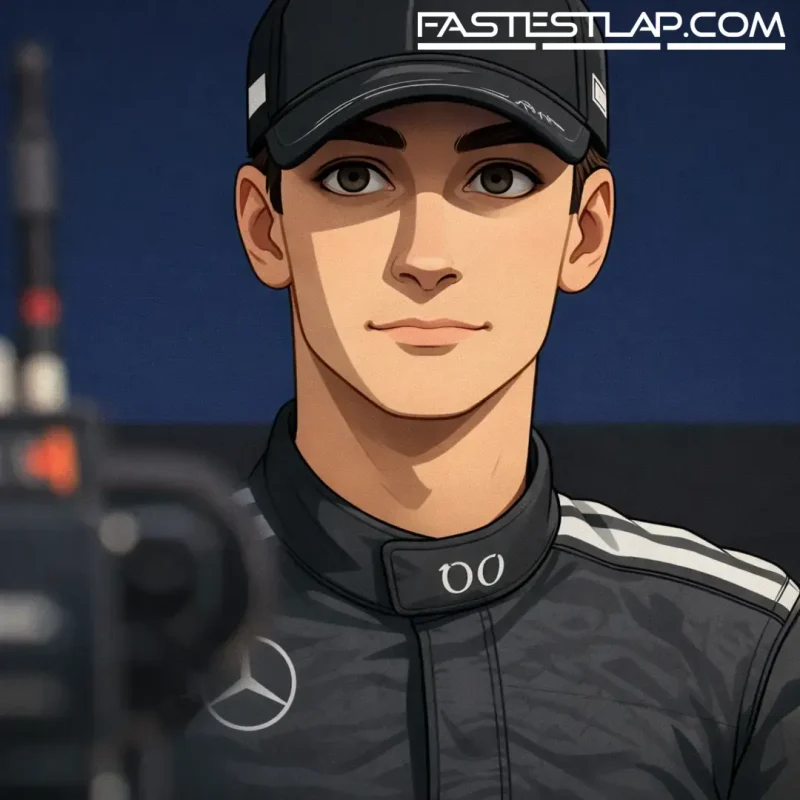
George Russell didn’t need the TV broadcast to tell the story of his Japanese Grand Prix. The untelevised radio does it for him — a slow boil of frustration, delivered in that dry, needling tone drivers reach for when the dashboard is lying to them and the race is slipping away anyway.
Mercedes left Suzuka with another win, Kimi Antonelli making it two on the bounce and, at 19, becoming the youngest driver to head the championship. Yet in the other side of the garage, Russell’s afternoon turned into the sort of damage-limitation exercise that stings more when your car is quick enough to do better.
Russell arrived in Japan still winless since the season-opening Australian Grand Prix, and he left having dropped the championship lead after a scrappy run to fourth — Mercedes’ first non-podium result of the 2026 campaign. The headline, as Mercedes later confirmed, was a “bug in the software” that contributed to him losing out in the Ferrari fight. But the radio reveals something more instructive: how unforgiving these new 2026 energy and deployment parameters can be when the system doesn’t do what the driver expects, and how quickly a small miscue can snowball into positions lost.
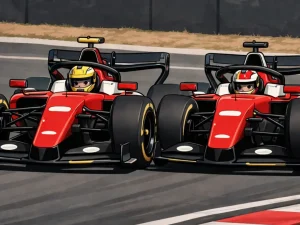
The slide began around the safety car sequence. Russell hit the harvest limit ahead of the restart on lap 28, which left him short of usable battery at precisely the moment you need it most — when everyone is bunched up, slipstreaming, and looking to pounce into Turn 1. Lewis Hamilton, in the Ferrari, did exactly that.
After Hamilton completed the move, Russell’s response cut through with the sort of blunt honesty teams dread hearing on an open channel.
“No f**king battery. Great,” he said.
Race engineer Marcus Dudley could only acknowledge what had happened. “Copy that. So we hit the harvest limit there.”
“F**king great…” came the reply — not really aimed at Dudley, more at the situation.
From there, Russell’s focus shifted to understanding why the Ferrari could place its deployment where it mattered most. Chasing Hamilton a few laps later, he asked for clarity on where he was bleeding time in the energy phase of the lap.
“Give me feedback on the deployment difference,” Russell said.
Dudley’s answer was telling in its specificity: “So getting it two tenths into Turn 1. Deployment the same around the rest of the lap other than Turn 8.”
That’s the new world in miniature. In 2026, when deployment windows and energy management are so central to both lap time and racecraft, being two tenths down into Turn 1 isn’t just a number — it’s a compromised defence, a shorter attack, a car that becomes predictable to the one behind. It also forces a driver into the worst place mentally: having to ask questions while trying to fight.
Then came the moment Mercedes identified as the key operational failure. On lap 37, Russell changed gear at the same time as he pressed a steering-wheel button. The combination confused the system and briefly triggered a super-clipping mode, leaving him effectively defenceless as Charles Leclerc swept by at Spoon.
Russell’s reaction was pure gallows humour as the Ferrari went through.
“Yep, that was good. Really good.”
It’s the kind of line that lands because it’s recognisably human: a driver who knows he’s just been mugged by something he can’t race against. Not tyre wear, not a better line, not a smarter strategy — just the car deciding, for a moment, it isn’t going to give him the tools he needs.
The earlier radio also offered a neat snapshot of how even experienced drivers are still calibrating to the 2026 operating logic. On lap nine, Russell suggested lifting and coasting into Turn 11 as a way to help the battery situation — an instinct that would’ve made sense under previous frameworks. Dudley shut it down quickly.
“Recommend the de-rate and then you can use the boost into 1. De-rate button into 16,” Dudley advised.
Russell pushed back, wanting to be sure they were talking about the same approach. “Lift and coast into… lift and coast into 11?”
“Affirm,” Dudley replied — then clarified the crucial point. “It used to be the de-rate button. Lift and coast will not help.”
Russell, still unconvinced, tried again: “I just want to confirm we’re chatting about the same thing here. Lift and coast into 11 is my suggestion.”
“It will not help, that will not help,” Dudley reiterated.
That exchange matters because it underlines where the sport is right now: the drivers are still learning what does and doesn’t move the needle with these cars, and the engineers are having to coach in real time while trying to keep them in the fight. It’s not about Russell lacking intelligence or commitment — it’s about a rules reset that has changed the relationship between technique and result.
For Mercedes, the bigger picture from Suzuka is slightly awkward. The team is clearly fast enough to win — Antonelli has proved that twice in succession — but Russell’s race showed how a single energy-management compromise can turn a podium into a messy fourth, and how a software gremlin can take a driver from “frustrated but still in it” to “sarcastic resignation” in one corner.
And for Russell, this was the sort of weekend that gnaws at a title bid. Not because fourth is catastrophic, but because it came with the sense that he didn’t just lose places — he lost agency. When you’re being told you’ve hit the harvest limit, when you’re watching a rival drive past while your deployment does nothing, when you press a button and the car briefly trips over itself, the sport starts to feel like it’s happening to you rather than being shaped by you.
Antonelli will rightly take the headlines for leading the standings, and Mercedes will enjoy the optics of momentum. But Suzuka also offered a reminder that in 2026, the margins aren’t only aerodynamic or mechanical. They’re digital, procedural, and brutally immediate — and Russell just lived the downsides, live on the radio.