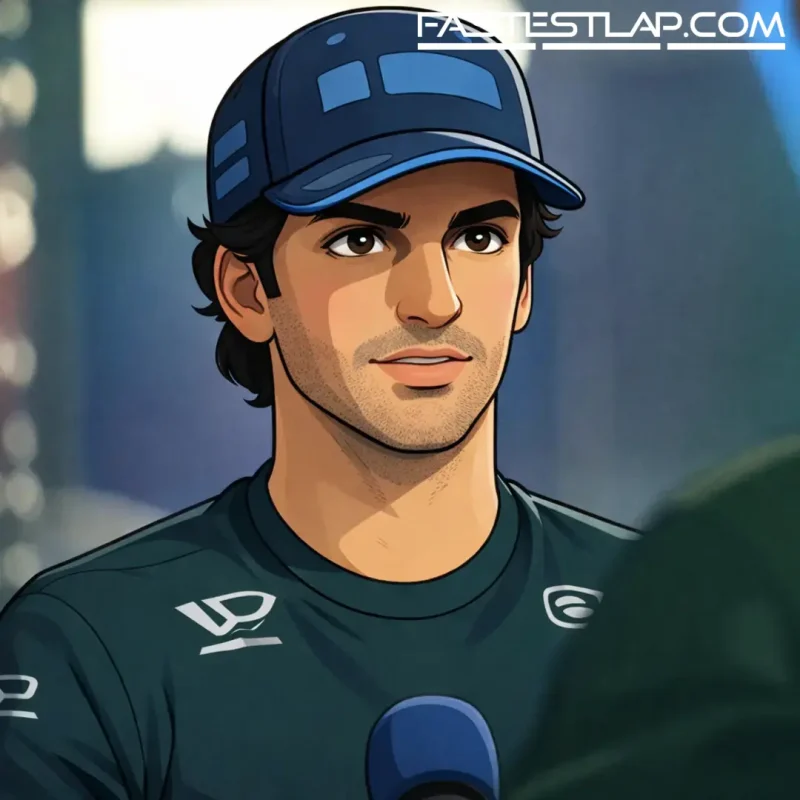
Carlos Sainz doesn’t sound like a driver asking for a favour. He sounds like one who’s watched the first laps of Formula 1’s new era and decided the sport is sleepwalking into a version of itself he doesn’t recognise.
Speaking in the paddock, the Williams driver laid out, in blunt terms, what’s bothering him about the 2026 package — and then went a step further, urging Formula 1 to stop hiding behind team politics if the racing needs correcting.
The new regulations have put the power unit front and centre. This season’s engines run on a 50/50 split between combustion and electrical power, and while the technical ambition is obvious, the on-track side effects have been hard to miss even this early. Drivers aren’t simply driving flat-out until the braking zone anymore; they’re managing where they are in the battery cycle, sometimes even downshifting near the end of straights to harvest energy. Corner speeds, by Sainz’s measure, are “slower than ever before”. And crucially, the ability to attack often hinges less on pure performance and more on whether the car behind has the right electrical deployment available at the right moment.
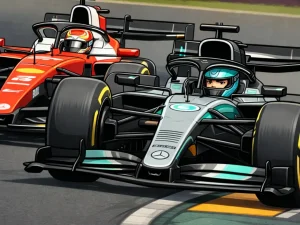
The Australian Grand Prix gave everyone a first proper look at how that dynamic plays out when it’s tight at the front. George Russell and Charles Leclerc traded the lead repeatedly — eight times in 12 laps — in what was undeniably dramatic. It also sparked the immediate paddock argument: was it “thrilling”, or was it a battery-led dance that looked like racing but didn’t feel like it?
Sainz isn’t shy about which side he leans toward.
He accepts the sport will improve as teams develop the engines, software and operational playbooks that decide how all this energy gets used. But he’s sceptical that natural development alone will fix what he sees as a philosophical problem.
“Development can only take you so far,” Sainz said, before pointing the finger at the rulemakers. In his view, the “formula” the sport has chosen for this era isn’t “the purest” and doesn’t follow “the DNA of Formula One itself”. His conclusion is straightforward: it needs tweaking.
And when he’s asked what, exactly, he’d change, he doesn’t hide behind vague references to “the show” or “the product”. He lists three very specific things he doesn’t like seeing from the cockpit.
First: top speed dropping partway down a straight because the car is forced into energy management. Sainz says he hates “seeing top speed decreasing in the middle of a straight” and having to bleed off “30, 40 kph” through what he describes as a “super clip” even during a qualifying lap.
Second: lift-and-coast in qualifying. Drivers have always managed tyres and fuel in races, but qualifying is supposed to be the purest expression of performance. Sainz’s complaint is that the new balance pushes drivers into backing out of the throttle mid-lap, not because they’ve made a mistake, but because the system demands it.
Third — and this is where his argument gets more pointed — the nature of overtaking when “boost mode” meets “overtaking mode”. In Melbourne, as in any early sample of these rules, the swings in straight-line speed were obvious. Sainz argues that when one car can arrive with a 60kph advantage, it stops being a genuine fight.
He’s careful with the wording, but the meaning is sharp. Overtakes that look like the car ahead is “completely stopped”, he says, aren’t “a real overtake of Formula One”. Call it artificial or call it something else — to Sainz, it’s simply not the sport’s identity.
His idea of what F1 should feel like is familiar to anyone who grew up on proper duels: set up the pass, force the other driver to defend, then complete it under braking or with a switchback. Energy deployment, in that world, is a tool to get you into position — not a button that makes the decisive moment almost irrelevant.
The more interesting part of Sainz’s intervention, though, isn’t the critique. It’s the warning about how hard it will be to fix anything once competitive self-interest kicks in.
He’s already been calling for the FIA and F1 to be “open-minded” if changes are needed, even before the first race of the season. Now he’s spelling out what open-minded actually means: the sport can’t wait for unanimous consent from teams that will inevitably view any mid-season tweak through the lens of who it helps and who it hurts.
“Not everyone will be aligned, but they shouldn’t be,” Sainz said, essentially acknowledging the obvious — teams will protect their own lap time. That’s precisely why, in his view, F1 should use its authority to act anyway. If the “formula is not correct”, he argues, the sport’s leadership shouldn’t be paralysed by complaints that a change doesn’t suit one car concept or another.
It’s a line that will resonate with some and irritate others, because it cuts to a recurring tension in modern F1: who is the championship ultimately for? The teams building the machines, or the sport trying to ensure the racing makes sense to the people watching?
Sainz’s stance is clear. If the early evidence suggests the rules have over-optimised for energy management at the expense of the very thing F1 sells — relentless speed and hard-earned overtakes — then he wants F1 to stop waiting for permission and start governing.
Whether the sport agrees is another matter. But in a new era still finding its feet, Sainz has already thrown down a marker: entertainment isn’t enough if it doesn’t look and feel like Formula 1.