Carlos Sainz’s messy Mexico unraveled for a simple, brutal reason: his pit limiter wasn’t telling the truth.
Williams traced Sainz’s pair of pit-lane speeding penalties back to wheel-speed sensor damage from his first-lap tangle with Liam Lawson, a knock that turned a salvageable afternoon into a write-off. What looked like clumsy execution was, in reality, a broken yardstick.
Sainz had started 12th after a five-place Austin carryover for his clash with Mercedes rookie Andrea Kimi Antonelli, but made Q3 and looked set for points after a strong post-summer run that’s included his first Williams podium in Baku and P3 in the United States GP sprint. Mexico, though, was chaos from Turn 1.
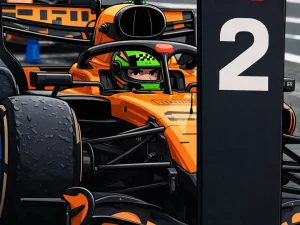
Pinned into the scrappy midfield accordion at the start, Sainz and Lawson made contact, and from there the Spaniard was fighting ghosts. The first stop brought a five-second penalty for creeping 0.2kph over the 80kph limit. Irksome, but survivable. The second stop did the real damage: with Williams aware the wheel-speed data was unreliable, Sainz was told to avoid the pit-limiter and manage it himself. He then breached by 9.8kph at pit exit, drawing a drive-through that erased the afternoon.
“I think I damaged my rim, which damaged the sensor and then the limiter wasn’t working,” Sainz said afterwards. “Even with the first five seconds we were still in the hunt, but once we pitted again and had the issue, the day got away. A shame, because the pace was there.”
It ended with a late spin and light wall kiss in the stadium section and a Virtual Safety Car, Sainz classified 17th after completing 90 percent distance. If you’re keeping track, that’s two penalties, one non-functioning limiter and zero points — all born from lap-one contact.
Lawson was unimpressed. The Racing Bulls driver felt Sainz misread the angle of the Turn 1 escape route and failed to clock the car outside him. “I left plenty of space,” Lawson said. “I think he decided to cut the chicane without looking left. He’s driven into the side of me and destroyed the floor and front wing. I don’t think it’s intentional, but you’ve got to be more aware.” Racing Bulls later retired Lawson’s car with heavy damage.
Sainz’s version was more diplomatic, calling Mexico’s pinched first corner “a melee” and one of those scrappy starts the Autódromo Hermanos Rodríguez seems to generate every year. But the consequences lingered. In modern F1, the pit limiter isn’t just a button; it’s a conversation between the control unit and wheel-speed sensors, and if those sensors are lying, the whole system is. When Williams spotted the bad data, they rolled the dice on manual control. On a long, deceptive pit exit like Mexico’s — where the limiter line sits awkwardly between the blend line and the run down to Turn 1 — that’s a tightrope.
The sting is sharper because Sainz has begun to look properly at home in Grove blue. After a slow start to life post-Ferrari, he’s built rhythm since the break, even overturning an FIA call earlier in the year on appeal — a sign both driver and team are learning how to fight their corners together. Mexico won’t break that trend, but it’ll test their appetite for risk around damaged systems.
There’s also a growing subplot with Lawson. The two clashed memorably at Zandvoort a couple of months ago; Mexico adds another asterisk. Neither driver framed it as malicious, but they don’t see the same pictures into Turn 1. With both often playing in that P7–P12 space, they’ll keep meeting each other at the knife-edge.
For Williams, the takeaways are clear. The FW47’s race pace is decent, Sainz is extracting it, and the team’s operational calls are generally sharp — but when your driver is instructed to run pit lane by feel, you’re one lock-up away from a penalty list that reads like a parking inspector’s notebook. The fix is straightforward: protect those sensors, or get faster at diagnosing them before you’re committed to a stop.
Mexico won’t define Sainz’s season. It will, however, sit on the debrief wall as the cautionary tale: in 2025’s midfield knife-fight, you don’t just need a fast car and a clever strategy. You need your instruments to tell the truth.