‘Sharper than Fernando’: Cardile’s intriguing take on Stroll as Aston Martin eyes 2026 reset
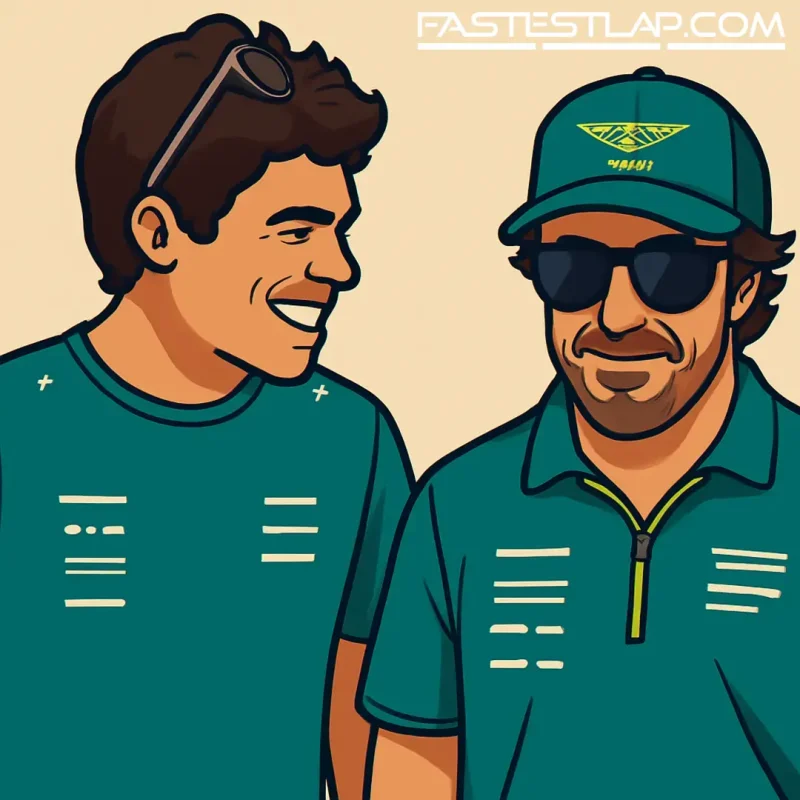
Enrico Cardile hasn’t been at Aston Martin long, but he’s already comfortable poking at one of the sport’s sacred cows: the idea that more words equal better feedback. According to the team’s chief technical officer, Lance Stroll’s economy of speech may actually be a strength — to the point he calls the Canadian “perhaps even sharper” than Fernando Alonso when it comes to the quality of what reaches the engineers.
That’s not a slight on Alonso. Far from it. Cardile, speaking on the Beyond the Grid podcast, painted a picture of a two-time World Champion who functions like a rolling reference library. Alonso can call up handling traits from years and cars gone by, matching sensations to solutions. “He has a very good memory. He’s a smart guy,” Cardile said, explaining how Alonso can triangulate the present with the past to give direction when it matters.
Stroll, meanwhile, keeps the radio quieter — and the debriefs too. But what does come out, Cardile suggested, tends to cut straight to the point. You can see why the comparison landed on Kimi Räikkönen, with whom Cardile worked during the Finn’s second Ferrari stint. Asked if Stroll’s less-is-more style reminded him of ‘The Iceman,’ Cardile didn’t hesitate: “Yes, definitely… You knew Kimi. Definitely, yes.”
Crucially, the two Aston Martin drivers are pulling in the same direction. Cardile described their feedback as “pretty much aligned,” the sort of phrase that means more to aerodynamicists and vehicle dynamicists than it does in the headlines. In a normal season that alignment is valuable. In 2026, with Formula 1 shrinking the cars, introducing active aero and moving to a 50/50 split between electric power and sustainable fuel, it could be gold dust.
Aston Martin’s transformation has been heavily trailed. The team steps into its Honda power unit partnership for 2026, and the first car of the new era will be the inaugural Aston designed under the guidance of Adrian Newey. Put that together with Cardile’s arrival and a driver pairing that blends Alonso’s bottomless catalogue of feel with Stroll’s distilled notes, and you start to understand why Silverstone’s expectations are — carefully — buoyant.
The engineering challenge is not subtle. The next-gen cars will be lighter and shorter, but the aerodynamic window will be managed in new ways thanks to active systems. The power unit will ask chassis teams to think hard about packaging and energy deployment, and the trade-offs between drag and downforce will have different answers from corner to corner. In that context, drivers who agree on cause and effect accelerate the loop between simulation, wind tunnel, and track.
Alonso’s skill is to provide that extra axis of interpretation — the “I’ve felt this before” angle that can narrow a development choice when there are 10 viable ones. Stroll’s is to trim the fat: fewer words, more signal. Put those styles in the same room and, if they remain aligned, engineers can filter faster and commit earlier.
Cardile was careful to stress the nuances. There are differences in the pair’s sensitivities — what one picks up more readily under braking or on entry versus the other in traction or high-speed balance — but he parked those as “details.” The headline is harmony. And for a team that started the current rules cycle brightly before tailing off, then stabilised, that kind of clarity is exactly what you want going into a blank sheet of paper.
None of this guarantees Aston will thread the needle when testing begins next year. Plenty of ambitious projects have found out the hard way that regulation resets can be cruel. But if you’re drawing a line from concept to competitiveness, having the most experienced driver in Formula 1 history in one seat and a Kimi-style editor in the other is a tidy place to start.
And the subtext of Cardile’s comments shouldn’t be missed. This wasn’t hype about raw speed or lavish praise of heroics. It was a window into process — how a modern F1 team intends to make fast decisions faster. For 2026, when the rulebook is rewritten and the chessboard is re-laid, process might be the most valuable performance upgrade of all.